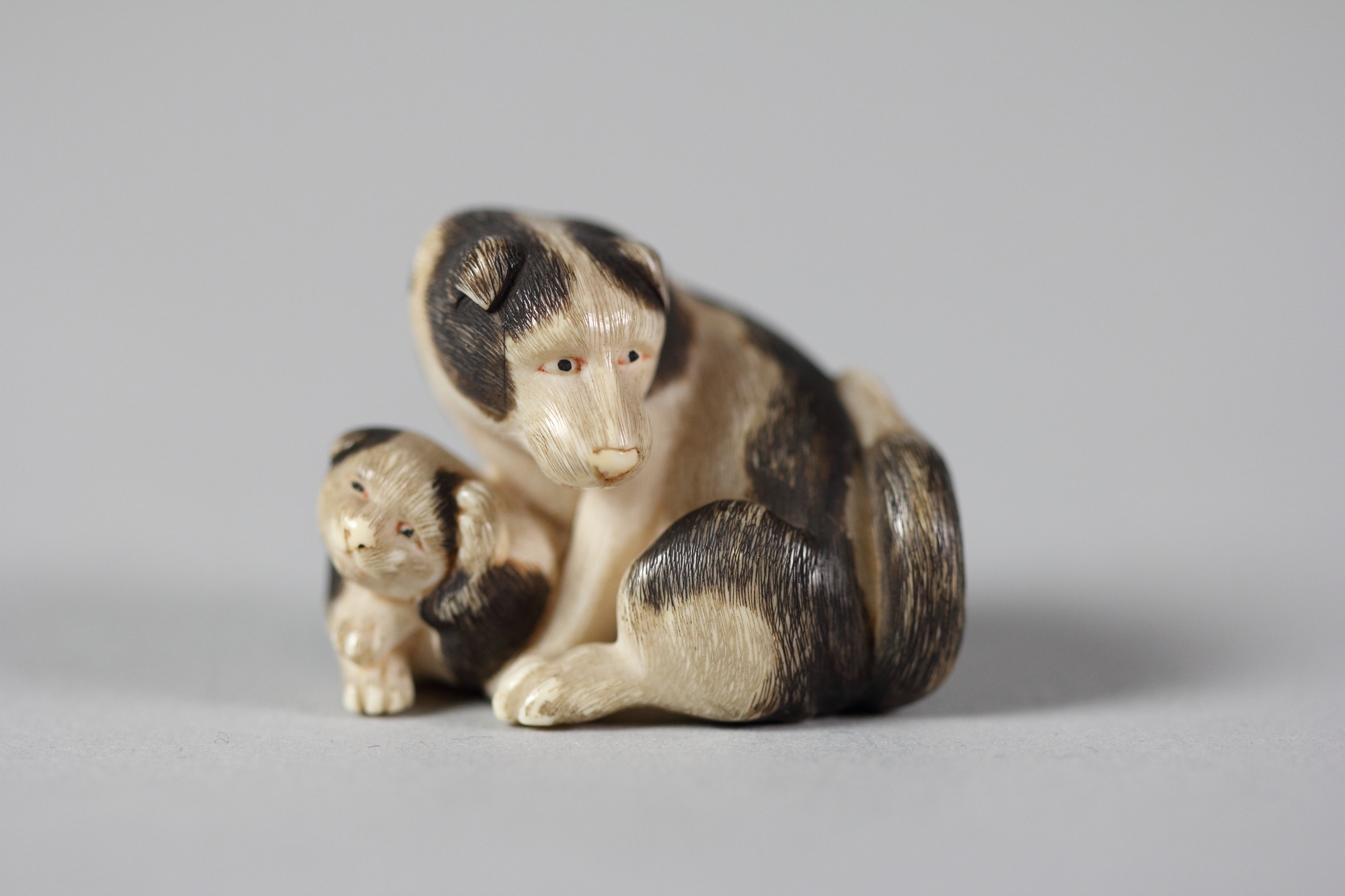
Executive Summary: Canine Symbolism in Japanese Ivory as a Strategic Heritage Lever
This strategic standalone research paper, prepared for the leadership of Katherine Fashion Lab, analyzes the confluence of Japanese canine symbolism and the historical medium of ivory as a potent, untapped heritage narrative for a 2026 high-end luxury strategy. Moving beyond superficial motif adoption, we excavate the profound symbolic power, spiritual meaning, and historical context of dogs in Japanese material culture, specifically through the lens of ivory adornment. This analysis positions these elements not as relics, but as a living semantic code—a system of meaning that can be translated into a contemporary luxury language of rarity, guardianship, and spiritual connection. The objective is to architect a collection and brand narrative that transcends trend, establishing Katherine Fashion Lab as a curator of profound cultural intelligence and a creator of modern heirlooms.
Historical and Cultural Context: The Canine in Japanese Semiotics
Within Japanese culture, the dog (inu) occupies a complex and revered position far removed from Western pet-centric associations. Its symbolic power is multifaceted, rooted in Shinto, Buddhist, and folk traditions. Primarily, dogs are seen as protectors and guardians. The ubiquitous komainu (lion-dog) statues that flank shrine and temple entrances are the most visible manifestation, warding off malevolent spirits. This role extends to the protection of children and safe childbirth, with dogs featuring in talismanic charms. Furthermore, dogs symbolize loyalty, fidelity, and virtuous service, epitomized by the legendary Hachikō. They are also considered messengers and guides between realms, capable of traversing the spiritual and physical worlds, a concept aligning with Shinto animism.
Ivory as the Chosen Medium: A Nexus of Status and Spirit
The selection of ivory as a medium is not incidental but integral to the narrative. Historically in Japan, ivory (zōge) was a luxury material par excellence, imported and reserved for the highest echelons of society—the imperial court, the shogunate, and wealthy merchants. Its use in netsuke (toggle), okimono (ornament), and inrō (seal case) during the Edo period established it as the material of choice for intricate, symbolic personal adornment. Ivory’s intrinsic qualities—its luminous warmth, smooth tactile nature, and capacity for exquisite detail—made it ideal for capturing the essence of revered subjects. A canine rendered in ivory was thus more than a depiction; it was a conduit of symbolic power. The material’s rarity and cost amplified the object’s talismanic function, transforming personal adornment into a portable guardian and a statement of spiritual and social standing.
Deconstructing Symbolic Power for Modern Luxury
For a 2026 luxury strategy, these historical elements must be deconstructed and re-coded. The symbolic portfolio of the Japanese dog offers a rich semantic toolkit:
Guardianship as Personal Sovereignty
The guardian (komainu) symbolism can be abstracted into a narrative of personal protection and sovereignty. In an uncertain world, the luxury consumer seeks not just products, but personal ecosystems of safety and integrity. This translates to designs that embody strength, boundary-setting, and resilience—perhaps through assertive architectural forms, clasp mechanisms that symbolize sealing and securing, or motifs of vigilant, stylized canine sentinels integrated into hardware.
Spiritual Meaning and Anima
The dog’s role as a spiritual guide speaks directly to the modern desire for mindfulness, connection, and intuition. This can be expressed through tactile, meditative design elements that encourage interaction—a smooth, ivory-like texture (achieved through innovative ethical materials), a form that fits perfectly in the palm, or a design that reveals its symbolism upon closer contemplation. The piece becomes a touchstone for personal journey and intuition, aligning with wellness-oriented luxury.
Fidelity to Craft and Legacy
The loyalty trope can be elegantly pivoted to represent fidelity to exceptional craftsmanship and sustainable legacy. Just as the dog is unwavering, so is Katherine Fashion Lab’s commitment to artisanal integrity and ethical material innovation. This narrative builds trust and aligns with the values of the conscious ultra-high-net-worth individual.
Strategic Application: The 2026 High-End Luxury Blueprint
The synthesis of this research must culminate in a actionable, high-end strategy that avoids pastiche and embraces conceptual rigor.
Material Innovation & Ethical Translation
"Ivory" must be reimagined. A 2026 strategy mandates the use of groundbreaking, proprietary alternative materials that capture the visual and tactile essence of historical ivory—its weight, warmth, and luminous patina—without the ethical burden. Investments in lab-grown organic composites, advanced resins fused with mineral elements, or sustainably sourced fossil mammoth ivory (with full transparency) could create a "Katherine Ivory." This material story, highlighting ethical innovation and technical mastery, becomes a core pillar of the brand’s luxury authority.
The "Heirloom Talisman" Collection
Launch a standalone, ultra-limited collection titled perhaps "Inu no Mori" (The Dog's Grove) or "Guardian Code." Each piece should be a contemporary okimono—a sculptural object of adornment. Think: a brooch that functions as a clasp on a cape, a pendant that unfolds to reveal a micro-sculpture, or cufflinks with abstracted komainu forms. Each must be accompanied by a "heritage dossier" explaining the specific symbolism (e.g., "The Messenger" pendant, drawing on guide symbolism; "The Gatekeeper" cuff).
Narrative & Experiential Activation
The launch should be supported by content that educates rather than merely markets. Collaborate with scholars of Japanese art history for a curated digital salon. Create an immersive installation that blends traditional Japanese garden aesthetics with futuristic material displays, positioning the collection at the intersection of heritage and avant-garde innovation. Client acquisition should focus on those who collect art and seek narrative depth in their possessions.
Conclusion: From Motif to Meaning-Making System
For Katherine Fashion Lab, the Japanese dog in ivory is not a theme but a meaning-making system. It provides a deep, culturally grounded framework to address core 2026 luxury desires: the need for personal guardianship, spiritual resonance, ethical clarity, and unmatched artistry. By strategically decoding the historical adornment’s symbolic power and spiritual meaning, and then re-encoding it through ethical material science and profound narrative, the Lab can launch a collection that does not merely reference heritage but actively constructs a new chapter of it. This approach positions the brand not as a follower of luxury trends, but as a visionary author of them, creating legible, resonant, and deeply valuable modern talismans for the discerning collector. The ultimate strategic stand is to sell not an accessory, but an endowed artifact—a guardian for our time.