Deconstructing the Global Heritage Piece: A Study in Silk, Metal, and Lace
In the rarefied world of haute couture, few garments transcend mere apparel to become artifacts of cultural dialogue. Katherine Fashion Lab’s latest standalone study—a singular piece titled “The Cartographer’s Veil”—achieves precisely this. At first glance, it appears as a masterclass in textile technique: a bodice and cascading train woven from the finest silk and metallic thread, punctuated by intricate bobbin lace. Yet, beneath the surface lies a profound meditation on global heritage, where every fiber tells a story of migration, trade, and the human hand’s enduring artistry.
Materiality as Narrative: Silk and Metal Thread
The choice of silk is deliberate and loaded. For centuries, silk was the commodity that connected East and West, from the ancient Silk Road to the opulent courts of Renaissance Europe. In this piece, the silk is not merely a fabric but a historical document. The lab sources a rare, raw silk from a cooperative in Uzbekistan—a region once at the heart of the silk trade—where artisans still practice hand-reeling techniques. The result is a filament with an irregular, organic luster, far removed from the sterile uniformity of industrial production. This silk is then dyed using a madder-root infusion, a technique that spans Persian carpets and Indian chintz, yielding a deep, sanguine red that evokes both imperial power and the earth from which it springs.
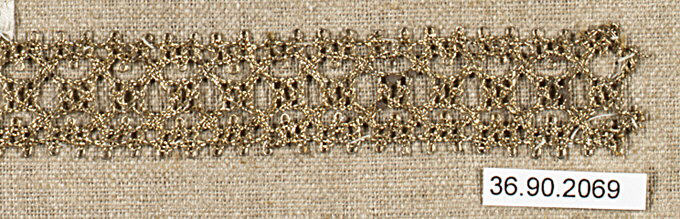
Interlaced with the silk is metal thread, a material with its own dense genealogy. The lab employs a custom blend of silver-gilt and copper, drawn to a hair-thin gauge. This is not the stiff, synthetic metallic of costume wear; it is a supple, almost liquid element that catches light with every movement. Historically, metal thread signified status—from Byzantine ecclesiastical vestments to the gold-embroidered sherwani of Mughal courts. Here, it serves as a cartographic line, tracing the routes of ancient caravans and colonial ships. The thread is woven into the silk in a pattern that mimics the “tree of life” motif, a symbol found in Persian, Indian, and European textiles, suggesting a shared visual language across continents.
The Architecture of Bobbin Lace
The most arresting element of “The Cartographer’s Veil” is its bobbin lace—a technique that demands an almost monastic patience. Each loop, twist, and crossing is executed by hand over a pillow, using dozens of wooden bobbins wound with silk and metal thread. The lab has revived a style known as “Flemish point”, a 17th-century lace that was once the currency of European nobility, crafted in convents and cottage industries across Belgium and France. Yet, the pattern is not European in origin. Instead, the lace forms a lattice of Mughal-inspired geometrics—octagons and intersecting stars that echo the jali screens of Indian architecture. This hybridity is intentional: it challenges the notion that lace is a purely Western achievement. The lab’s research reveals that bobbin lace’s origins are disputed, with evidence of similar techniques in pre-Columbian Peru and 16th-century China. The piece thus becomes a global palimpsest, where one region’s craft is overwritten by another’s design.
The structural complexity of the lace is breathtaking. It forms a second skin over the silk base, not as a mere overlay but as an integrated exoskeleton. In the bodice, the lace is densest, creating a cuirass-like rigidity that contrasts with the fluidity of the train. This tension—between armor and drapery, between protection and vulnerability—mirrors the duality of heritage itself: something that both fortifies and constrains identity. The train, by contrast, dissolves into a whisper of open lace, where the metal thread catches the light like scattered stars, suggesting the infinite possibilities of cultural exchange.
Standalone Study: The Power of Singularity
Katherine Fashion Lab has positioned this piece as a standalone study, deliberately removing it from the context of a seasonal collection or commercial runway. This curatorial choice is radical. In an industry obsessed with volume and speed, a single garment demands a different kind of attention. It asks to be read, not just seen. The piece functions as a thesis, arguing that couture can be a form of academic inquiry—a way to investigate how materials and techniques carry the weight of human history.
Consider the absence of a model. The piece is presented on a static form, lit from multiple angles to reveal the interplay of opacity and transparency. This is not a garment for a body; it is a sculptural document. The lab’s accompanying notes—displayed on parchment-like paper—detail the provenance of every material, the names of the lace-makers (a cooperative of women in Bruges and a master artisan in Jaipur), and the carbon-14 dating of the madder root. This level of transparency is a rebuke to the opacity of fast fashion’s supply chains. It elevates the piece to an object of study, akin to a museum artifact, yet it is undeniably contemporary in its conceptual daring.
Heritage as a Living Practice
What emerges from this analysis is a redefinition of global heritage. It is not a static repository of “traditional” techniques to be preserved in amber. Instead, the piece demonstrates that heritage is a dynamic, contested, and evolving dialogue. The silk from Uzbekistan, the metal thread from a family-run atelier in Florence, the bobbin lace from Belgium and India—these are not discrete “influences” but nodes in a network of exchange that has never ceased. The lab’s innovation lies in its refusal to privilege one origin over another. The piece does not “blend” cultures into a homogenized whole; it juxtaposes them, allowing the tensions and harmonies to coexist.
For example, the metal thread’s rigidity against silk’s softness is not resolved but highlighted. The lace’s geometric precision is offset by the organic, hand-dyed silk’s slight unevenness. These are not flaws but signatures of the hand, marking the piece as a human artifact in an age of algorithmic design. The lab’s curator notes that the piece took 1,200 hours to complete—a fact that is not a boast but a political statement. In a world where clothing is often discarded after a few wears, this piece insists on slowness, care, and the value of labor.
Conclusion: A New Lexicon for Couture
“The Cartographer’s Veil” is more than a garment; it is a manifesto. It argues that couture’s future lies not in novelty for its own sake but in a deep, scholarly engagement with the past. By elevating bobbin lace—a technique often dismissed as “craft” rather than “art”—to the level of high fashion, the lab challenges hierarchies of taste. By sourcing materials from multiple continents and honoring their specific histories, it proposes a model of globalization that is equitable, transparent, and collaborative.
For the discerning viewer, this piece offers a lexicon of new terms: “material cartography,” “heritage as dialogue,” and “slow couture.” It does not resolve the complexities of cultural appropriation versus appreciation; instead, it invites us to sit with that tension, to examine the threads that bind us across time and space. In the end, “The Cartographer’s Veil” is not a finished object but an invitation—to look closer, to ask harder questions, and to recognize that every piece of fabric carries the weight of the world.