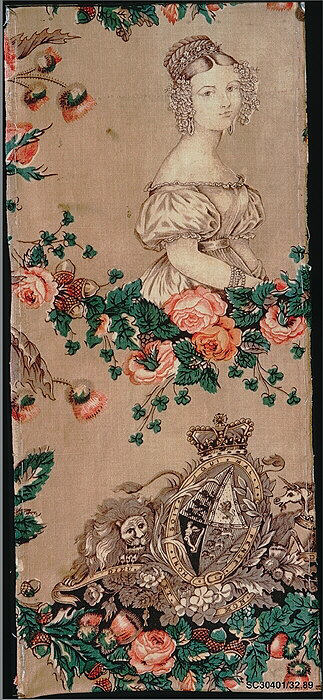
Heritage Analysis: The Fragment as a Portal to Ancient Civilization
For Katherine Fashion Lab, the concept of the Fragment—a remnant of an ancient civilization, preserved in cotton—represents more than a mere textile artifact. It is a strategic asset, a vessel of symbolic power, and a blueprint for 2026 high-end luxury strategy. This analysis deconstructs the fragment’s historical adornment, spiritual meaning, and its potential to redefine exclusivity in a contemporary market saturated with digital saturation and fleeting trends. The fragment, by its very nature, is incomplete, yet its power lies in what it evokes: a lost whole, a sacred narrative, and a tactile connection to human origins.
Symbolic Power of the Fragment
Imperfection as Status
In ancient civilizations—from the Indus Valley to pre-Columbian Mesoamerica—cotton fragments were not merely utilitarian; they were imbued with symbolic power through their scarcity and ritual use. A fragment, torn or frayed, signified a rupture in time, a moment of transition. For elites, wearing a fragment of a sacred textile (e.g., a priest’s garment or a royal shroud) communicated access to divine knowledge and ancestral lineage. The fragment’s symbolic power today lies in its authenticity of incompleteness. In a luxury market that prizes perfection, Katherine Fashion Lab can leverage the fragment as a counter-narrative: a deliberate, curated imperfection that signals rarity, depth, and a rejection of mass-produced homogeneity. The fragment becomes a talisman of authentic provenance, a material witness to a civilization’s zenith and decline.
Strategic Narrative for 2026
For 2026 high-end luxury, the fragment’s symbolic power translates into a narrative of exclusivity through decay. Unlike pristine, machine-made fabrics, a fragment carries the patina of time—fading, fraying, and staining—which can be reinterpreted as luxury patina. Katherine Fashion Lab should position the fragment as a status symbol of intellectual wealth: the wearer demonstrates not just financial capital, but cultural capital—an appreciation for history, archaeology, and the ephemeral nature of beauty. This aligns with the growing trend of quiet luxury, where subtlety and story outweigh logo-driven ostentation.
Historical Adornment: Cotton as a Medium of Power
The Materiality of Cotton in Ancient Contexts
Cotton, as a medium, held distinct advantages over wool or linen in ancient civilizations. In the Indus Valley (circa 2500 BCE), cotton was cultivated for its softness, breathability, and ability to be dyed with natural pigments. Historical adornment using cotton fragments was not casual; it was ceremonial. Fragments were often embroidered with gold thread, shell beads, or semi-precious stones, transforming a simple cloth into a canvas of cosmic geography. For example, in ancient Peru, cotton fragments from the Paracas culture depicted stylized animals and deities, worn by shamans to channel spiritual forces. The fragment’s role in adornment was thus performative: it was a wearable archive of a community’s cosmology.
Strategic Application for Luxury Adornment
Katherine Fashion Lab can reimagine historical adornment by using cotton fragments as archival accents within contemporary silhouettes. For 2026, high-end luxury strategy should emphasize bespoke fragmentation: each garment incorporates a genuine or artisanal reproduction of an ancient cotton fragment, treated as a signature motif. This could be a collar insert, a pocket lining, or a discrete patch on a tailored jacket. The fragment becomes a conversation piece, a tangible link to a civilization’s aesthetic principles. By referencing ancient adornment techniques—such as resist-dyeing or supplementary weft—Katherine Fashion Lab can offer clients a material experience that transcends fast fashion. The fragment is not just decorative; it is architectural, adding weight, texture, and historical resonance.
Spiritual Meaning: The Fragment as a Sacred Relic
Animism and Ancestral Connection
In many ancient civilizations, cotton was considered a living material, imbued with the spirit of the plant and the weaver. A fragment of a garment worn by a deceased ancestor or a priest was believed to retain spiritual essence. For example, in ancient Egypt, linen was preferred for mummification, but cotton fragments from trade routes were used in amulets and burial wrappings, thought to protect the soul in the afterlife. The fragment’s spiritual meaning lies in its liminality: it exists between the tangible and the intangible, the past and the present. This makes it a powerful symbol of transcendence—a reminder that luxury can be a conduit for meaning, not just materialism.
2026 Luxury Strategy: The Ritual of Acquisition
To capitalize on this spiritual dimension, Katherine Fashion Lab should develop a ritualized purchasing experience for fragment-based pieces. For 2026 high-end luxury, the fragment can be presented as a sacred object, accompanied by a certificate of provenance that details its symbolic meaning and historical context. This transforms a garment into a personal talisman, offering the client not just a product, but a spiritual artifact. The strategy should emphasize limited editions (e.g., 100 fragments per collection) to mimic the scarcity of archaeological finds. Marketing narratives should evoke archaeological discovery: each fragment is “unearthed” from a conceptual dig, with the client participating in a narrative of recovery. This aligns with the 2026 luxury trend of experiential ownership, where the story behind the object is as valuable as the object itself.
2026 High-End Luxury Strategy: From Fragment to Franchise
Product Architecture: The Fragment Collection
Katherine Fashion Lab’s 2026 strategy should center on a Fragment Collection, structured across three tiers: Archetype (ready-to-wear with fragment-inspired prints), Relic (limited-edition pieces with actual or artisanal cotton fragments), and Oracle (bespoke, client-co-created garments with hand-selected fragments). The Oracle tier, priced at a premium, offers a curatorial consultation where clients work with a heritage curator to select fragments based on personal symbolism (e.g., a fragment representing protection, fertility, or wisdom). This creates a behavioral lock-in: the client’s emotional investment in the fragment’s story increases brand loyalty.
Marketing and Positioning
Positioning should leverage cultural authority: Katherine Fashion Lab becomes a heritage interpreter, not just a fashion house. Collaborate with archaeologists, anthropologists, and museum conservators to validate the authenticity of fragment narratives. For 2026, high-end luxury consumers seek meaningful consumption; the fragment offers a moral and intellectual premium. Use digital storytelling (e.g., AR experiences that “reconstruct” the fragment’s original garment) to bridge ancient and modern. The fragment’s incompleteness should be marketed as a design philosophy: “Perfection is a myth; heritage is a fragment.” This resonates with Gen Z and Millennial luxury buyers who value transparency and narrative over polish.
Price and Scarcity
Price points should reflect the fragment’s archaeological value. The Relic tier, for instance, could be priced at $5,000–$15,000, with a maximum of 50 units per fragment type. Scarcity is further enhanced by time-limited drops tied to historical anniversaries (e.g., the founding of an ancient city). The fragment’s spiritual meaning justifies a premium: clients are not buying fabric; they are buying time, memory, and transcendence. This strategy positions Katherine Fashion Lab at the intersection of luxury, heritage, and spirituality—a market niche with high barriers to entry and deep emotional resonance.
Conclusion: The Fragment as a Strategic Imperative
The fragment from an ancient civilization, rendered in cotton, is not a relic of the past but a strategic catalyst for Katherine Fashion Lab’s 2026 luxury vision. Its symbolic power lies in its incompleteness, its historical adornment in its ceremonial weight, and its spiritual meaning in its liminality. By treating the fragment as a sacred asset—curated, ritualized, and narrated—Katherine Fashion Lab can offer a luxury experience that is both intellectually rigorous and emotionally profound. In a market where authenticity is the ultimate currency, the fragment is not a remnant; it is a foundation.