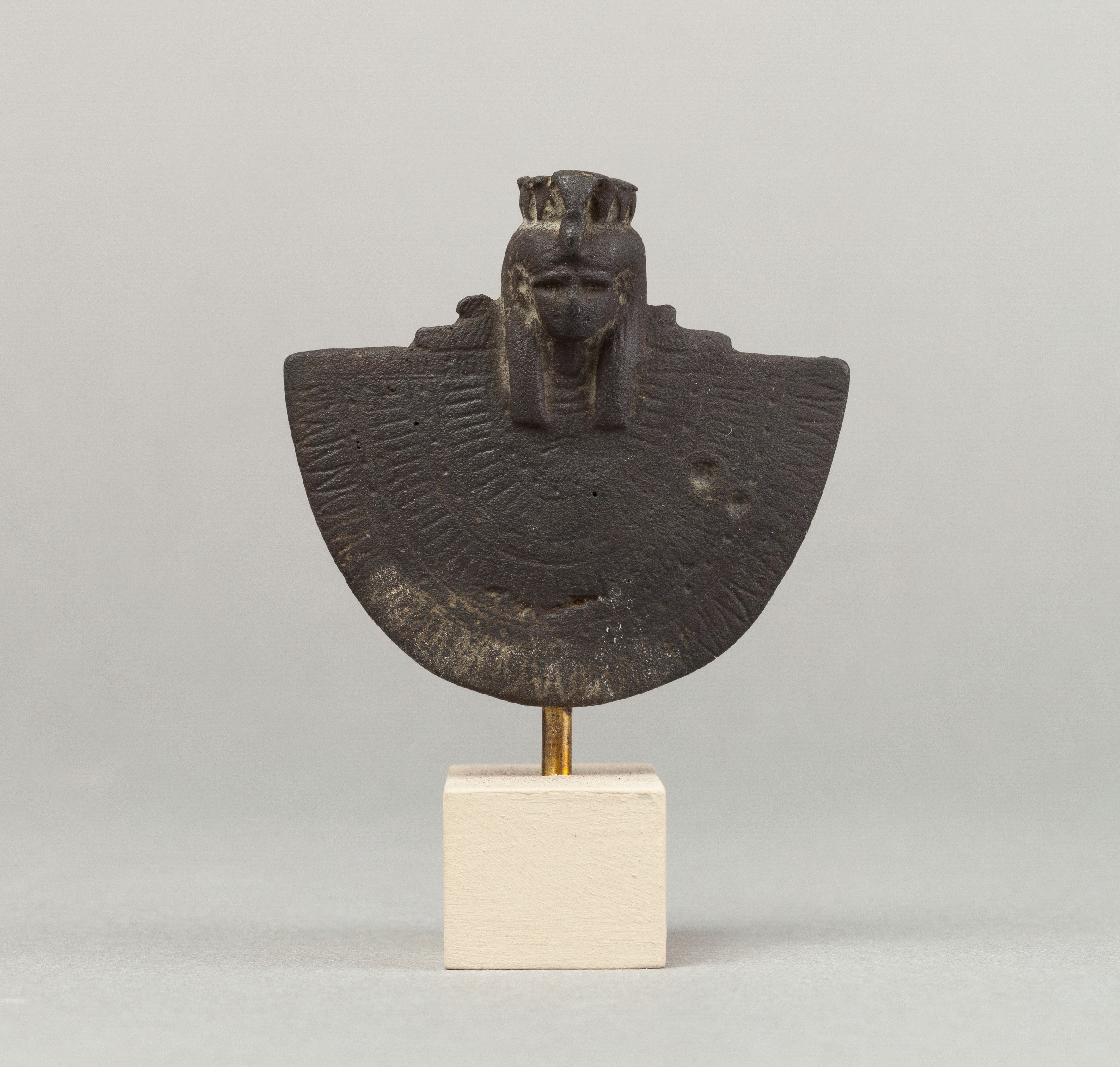
Heritage Analysis: The Aegis of the Female Goddess – Symbolic Power, Historical Adornment, and Strategic Luxury Positioning for 2026
As Lead Heritage Curator at Katherine Fashion Lab, I present this strategic standalone research paper analyzing the Aegis of a female goddess, crafted from cupreous metal in an ancient civilization. This artifact—a protective breastplate or shield emblematic of divine female authority—offers profound insights into symbolic power, historical adornment, and spiritual meaning. For a high-end luxury strategy targeting 2026, the Aegis serves as a potent archetype: a fusion of warrior strength, feminine grace, and transcendent protection. This analysis dissects the artifact’s cultural DNA and translates its legacy into a market-ready narrative for Katherine Fashion Lab’s next-generation collection.
Symbolic Power: The Aegis as an Emblem of Divine Authority
The Aegis, in its original ancient context—likely rooted in Mediterranean or Near Eastern traditions such as those of Athena or Isis—was not merely armor but a symbol of invincibility and sovereign will. For a female goddess, the Aegis represents the convergence of protection, wisdom, and fertility. Crafted from cupreous metal (copper or bronze), the material itself carries symbolic weight: copper, associated with Venus and Aphrodite, embodies love, beauty, and conductivity—both electrical and spiritual. The Aegis thus becomes a conduit for divine energy, shielding the wearer from harm while radiating authority.
In ancient civilizations, the Aegis was often adorned with the Gorgon’s head, a motif of apotropaic power—warding off evil and intimidating adversaries. For a female goddess, this imagery subverts traditional gender roles, positioning her as both nurturer and warrior. This duality is critical for luxury strategy: modern high-end consumers seek brands that embody paradoxical strength—softness with edge, tradition with rebellion. The Aegis’s symbolic power lies in its ability to protect without aggression, to command respect without domination. For Katherine Fashion Lab, this translates into designs that offer psychological armor—pieces that empower the wearer to face a volatile world with grace.
Spiritual Meaning: The Aegis as a Talisman of Transcendence
Spiritually, the Aegis functions as a threshold object—a bridge between the mortal and the divine. In ancient rituals, cupreous metal was believed to resonate with celestial energies; copper’s reddish hue evoked the lifeblood of the earth, while its malleability symbolized adaptability. The Aegis, worn over the heart, was a focal point for meditation and invocation, aligning the wearer with the goddess’s attributes: clarity, courage, and compassion.
This spiritual dimension is increasingly relevant in 2026’s luxury landscape, where consumers prioritize mindful materialism. The Aegis’s narrative of protection and transcendence aligns with wellness trends—jewelry as armor for the soul. For Katherine Fashion Lab, incorporating this meaning means designing pieces that are not just accessories but ritual objects. The cupreous metal can be finished with patina treatments that evoke ancient wear, signaling authenticity and timelessness. Spiritual meaning also invites storytelling: each Aegis-inspired piece can be accompanied by a digital or physical talisman card, detailing its protective symbolism and the goddess’s mythology. This transforms a purchase into a personal empowerment ritual.
Historical Adornment: Craftsmanship and Cultural Legacy
Historically, the Aegis was a masterpiece of metalworking artistry. Ancient civilizations, from the Minoans to the Etruscans, perfected cupreous alloys—bronze (copper with tin) or pure copper—using lost-wax casting, repoussé, and chasing. The Aegis’s surface often featured intricate reliefs: geometric patterns, celestial motifs, or mythological scenes. These were not decorative but mnemonic devices, encoding cultural knowledge and divine narratives. The cupreous medium also aged gracefully, developing a green patina that signified age, wisdom, and connection to the earth.
For historical adornment, the Aegis was worn by priestesses, queens, and warrior women—elites who embodied the goddess’s authority. It was a status marker that communicated lineage, piety, and power. The weight and sheen of the metal announced presence; the sound of it against armor or fabric was a sonic signature of authority. In luxury terms, the Aegis represents sensory storytelling: visual, tactile, and auditory. For Katherine Fashion Lab, replicating this multisensory experience is key. Cupreous metal can be used in bold cuffs, necklaces, or brooches, with textured surfaces that invite touch. The patina can be accelerated through controlled oxidation, creating unique color variations—each piece a one-of-a-kind artifact.
Strategic Luxury Positioning for 2026: The Aegis as a Blueprint for Heritage Innovation
To translate the Aegis into a 2026 high-end luxury strategy, Katherine Fashion Lab must adopt a three-pillar approach: narrative depth, material integrity, and experiential exclusivity.
Narrative Depth: The Aegis’s story of female empowerment, protection, and transcendence resonates with the 2026 consumer, who values purpose-driven luxury. The brand can position the collection as “The New Aegis”—a line of protective adornments for modern goddesses. Marketing campaigns should feature women in positions of power—CEOs, artists, activists—wearing the pieces as symbols of resilience. Collaborations with historians or spiritual leaders can lend authenticity, while digital content (short films, podcasts) explores the mythology behind each design.
Material Integrity: Cupreous metal, while ancient, aligns with 2026 sustainability trends. Copper is infinitely recyclable, and its antimicrobial properties add a functional layer—appealing to hygiene-conscious consumers. Katherine Fashion Lab can source recycled copper from decommissioned electronics or industrial scraps, emphasizing a circular economy. The metal’s patina can be marketed as a living finish that evolves with the wearer, creating a personal connection over time. Limited-edition runs with numbered pieces reinforce exclusivity.
Experiential Exclusivity: The Aegis’s spiritual meaning invites immersive retail experiences. Pop-up installations could recreate ancient sanctuaries, where customers participate in a “blessing ritual” before purchasing. Each piece might include a QR code linking to an augmented reality experience—viewing the Aegis on a virtual goddess or learning its symbolic history. For ultra-high-net-worth clients, bespoke commissions allow customization: selecting the goddess archetype (e.g., Athena for wisdom, Isis for magic) and adding personal engravings. This transforms the Aegis from a product into a heritage heirloom.
Conclusion: The Aegis as a Strategic Imperative for 2026
The Aegis of the female goddess, rendered in cupreous metal, is more than an ancient artifact—it is a strategic blueprint for Katherine Fashion Lab’s 2026 luxury offering. By weaving symbolic power, historical adornment, and spiritual meaning into a coherent narrative, the brand can capture the zeitgeist of a generation seeking armor for the soul. The cupreous medium, with its tactile warmth and sustainable potential, bridges past and future. As consumers increasingly demand meaning over materialism, the Aegis offers a path to differentiation: not just jewelry, but talismans of empowerment. This heritage analysis confirms that the Aegis is not a relic to be preserved but a force to be unleashed—a strategic asset for a new era of luxury.