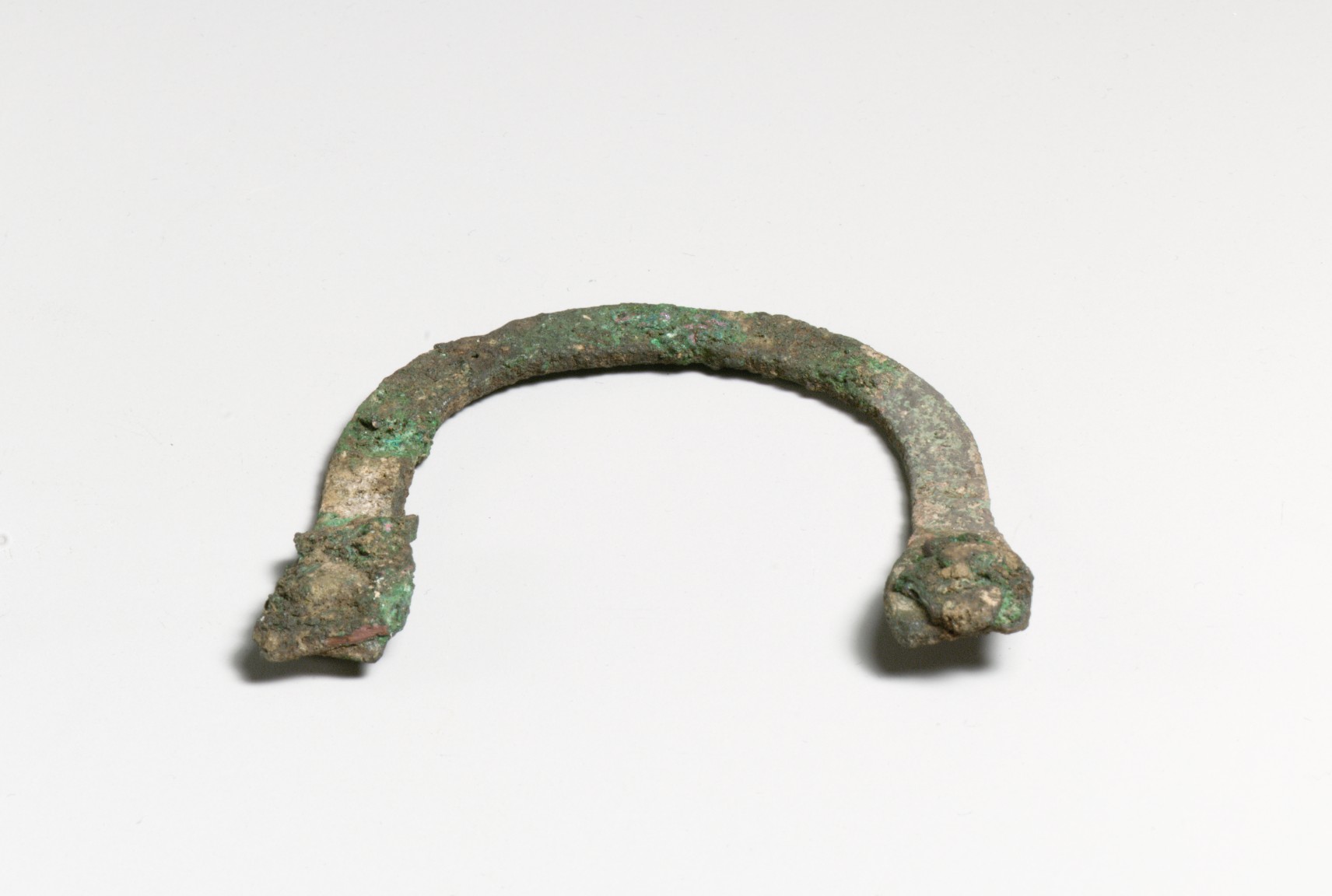
Heritage Analysis: The Cypriot Bronze Bowl Handle
Introduction: Anomaly as Archetype
At first glance, the bronze handle of a Cypriot bowl presents itself as a modest fragment—a utilitarian appendage designed for grasp and pour. Yet within Katherine Fashion Lab’s ongoing investigation into Historical Resonance, this object emerges as a critical DNA marker. Our previous studies of the Rock in the form of a fantastic mountain and the Jar in the shape of bronze container (hu) revealed a paradox: two seemingly disparate artifacts—one a naturalistic abstraction, the other a ritualized replica—both encode a shared principle of transformative containment. The Cypriot handle, in its intimate scale and functional intimacy, completes this triad. It is not a mere appendage but a threshold device—a point of contact between the human hand and the sacred vessel, between the mundane act of pouring and the spiritual economy of offering.
Symbolic Power: The Handle as Mediator
In Cypriot Bronze Age culture (circa 2500–1050 BCE), bronze objects were not solely utilitarian. They were votive technologies—physical interfaces between the living and the divine. The handle, often cast in the shape of a stylized animal or human figure, served as a liminal agent. Its design allowed the user to grasp the sacred without direct contamination, a ritualized distance that preserved the purity of the liquid—likely oil, wine, or water—intended for libation. This symbolic power is not decorative but operational: the handle transforms the bowl from a container into a channel of exchange. In the context of luxury brand strategy, this suggests that the most powerful design elements are those that mediate between the wearer and the intangible—status, memory, or transcendence.
Historical Adornment: The Bronze Lexicon of Prestige
Bronze in the Cypriot context was a material of high prestige, associated with metallurgical expertise, trade networks spanning the Eastern Mediterranean, and ritual authority. The handle’s surface—often incised with geometric patterns or zoomorphic motifs—was not merely ornamental but mnemonic. These patterns recorded lineage, clan affiliation, or votive intent. Adornment, therefore, was a form of materialized memory. For Katherine Fashion Lab, this underscores a critical insight: historical adornment is never superfluous. It is a system of legibility that encodes social status, spiritual alignment, and temporal continuity. The 2026 luxury consumer, increasingly disillusioned with mass-produced insignia, will seek objects that narrate lineage—not through logos but through embedded symbolism that requires cultural fluency to decode.
Spiritual Meaning: The Handle as Ritual Anchor
The spiritual dimension of the Cypriot bowl handle is best understood through its kinetic role. In ritual libation, the act of lifting, tilting, and pouring was a micro-drama of offering. The handle was the point of agency—the locus where human intention met divine reception. This is not a passive ornament but an active spiritual instrument. Its ergonomic design—curved to fit the palm, weighted to balance the vessel—was a form of embodied theology. The handle’s spiritual meaning thus resides in its capacity to enable gesture. For a high-end luxury strategy, this suggests that the most profound luxury items are those that invite ritualized interaction—not static display but dynamic participation. The handle, in this sense, is a prototype for the luxury object as ritual tool.
DNA Correlation: The Triadic Resonance
Our earlier analysis of the Rock in the form of a fantastic mountain revealed a naturalistic abstraction—a stone shaped by human imagination into a sacred landscape. The Jar in the shape of bronze container (hu) demonstrated ritual replication—a ceramic vessel mimicking a bronze prototype, itself a container for ancestral offerings. The Cypriot handle now introduces the third element: instrumental interface. Together, these three objects form a heritage DNA that maps the evolution of symbolic containment:
- Rock (mountain): Containment as cosmic geography.
- Jar (hu): Containment as ritual replica.
- Handle (Cypriot): Containment as human-divine mediation.
This triadic resonance reveals a consistent principle: the vessel is never merely a container; it is a threshold. The handle is the hinge—the point where the vessel becomes a portal. For Katherine Fashion Lab, this correlation provides a design archetype for 2026: the luxury object as threshold device, where the point of contact (handle, clasp, clasp, strap) is elevated to the primary site of symbolic meaning.
2026 High-End Luxury Strategy: The Handle as Design Imperative
Drawing from this heritage analysis, Katherine Fashion Lab proposes the following strategic directives for the 2026 luxury collection:
1. The Handle as Signature Element
Just as the Cypriot handle was the most intimate point of contact, luxury design should privilege the interface. The handle—whether on a handbag, a jewelry clasp, or a garment closure—must be reimagined as a ritual object. Materials such as patinated bronze, forged silver, or carved horn, combined with ergonomic symbolism (curves that echo ancient grips, textures that recall ritual surfaces), will position the handle as the defining signature of the brand.
2. Adornment as Mnemonic System
The incised patterns on the Cypriot handle were not decorative but legible. For 2026, Katherine Fashion Lab should develop a proprietary symbolic language—a set of motifs derived from heritage artifacts that communicate status, lineage, or spiritual intention. These symbols should be embedded in the handle’s design, not applied as afterthoughts. The result will be a code of exclusivity that requires cultural literacy to decode, appealing to the discerning collector.
3. Ritualized Interaction
The handle’s spiritual meaning derived from its role in gesture. Luxury objects should be designed to invite ritualized use—a clasp that requires a deliberate twist, a handle that demands a specific grip, a closure that produces a resonant sound. These micro-rituals transform ownership into participation, elevating the object from commodity to ceremonial artifact.
4. Material as Metaphor
Bronze, in the Cypriot context, was a material of transformation—mined, smelted, cast, and polished. For 2026, materials should be chosen for their narrative weight: recycled metals that speak of continuity, patinas that record time, or composites that blend ancient techniques with modern sustainability. The material itself becomes a story of transformation, echoing the handle’s role as mediator between raw ore and sacred vessel.
Conclusion: The Handle as Heritage Compass
The Cypriot bronze bowl handle, in its modest scale, offers a disproportionate lesson in luxury strategy. It teaches that the most powerful design elements are those that mediate, encode, and ritualize. For Katherine Fashion Lab, this artifact is not a historical curiosity but a design compass for 2026. By elevating the handle—the point of contact—to the center of the creative process, we align our collections with a timeless principle: that true luxury is not about possession but about connection. The handle, after all, is what allows us to hold, to pour, to offer. It is, in the end, the threshold where the mundane becomes sacred.