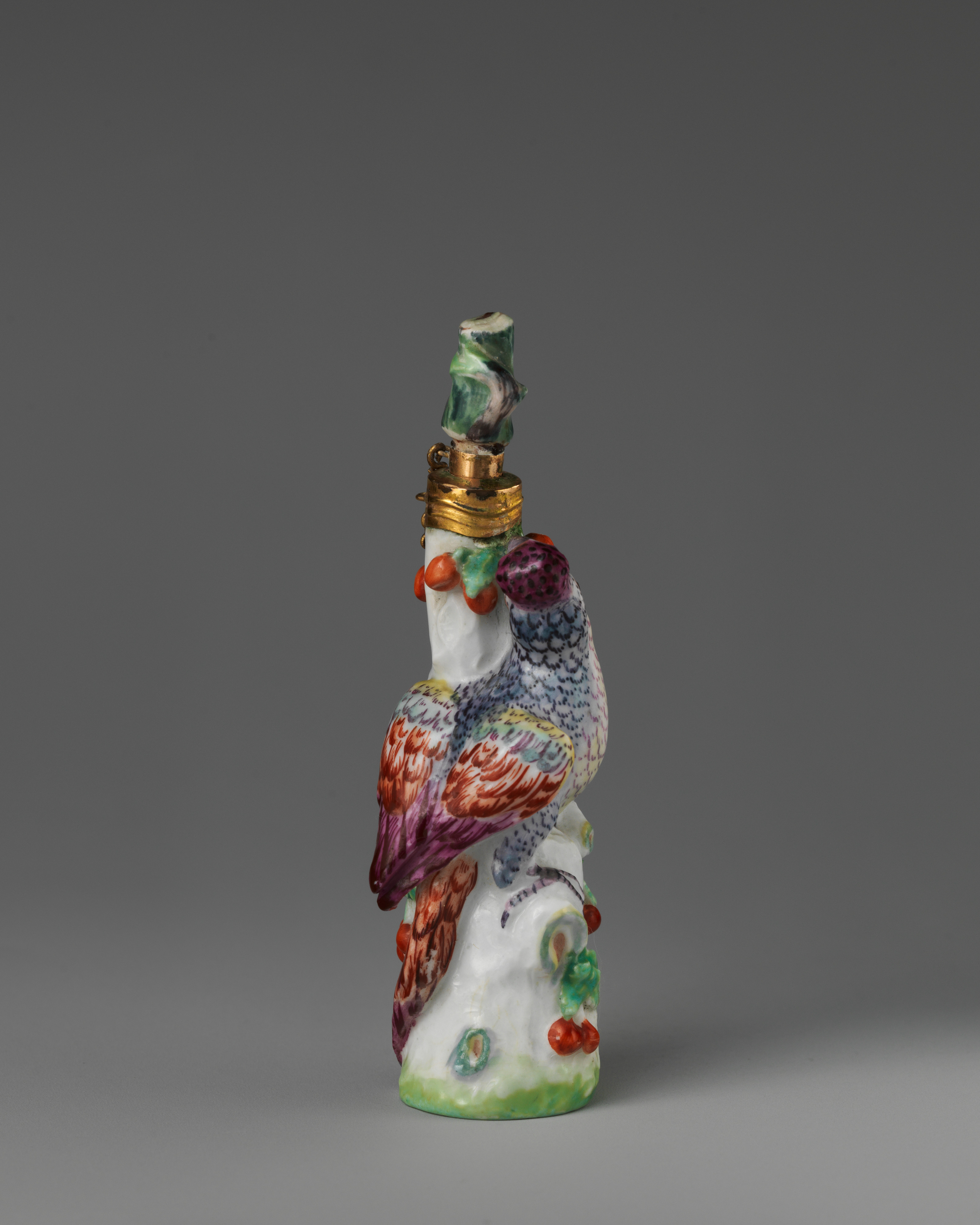
Executive Heritage Analysis: The Parrot in Soft-Paste Porcelain
This strategic standalone research paper examines the parrot as a cultural and symbolic artifact within ancient civilizations, specifically rendered in soft-paste porcelain. For Katherine Fashion Lab, the parrot motif offers a potent intersection of historical adornment, spiritual meaning, and symbolic power, which can be leveraged to inform a 2026 high-end luxury strategy. The analysis draws upon archaeological, anthropological, and art-historical frameworks to position the parrot as a vehicle for exclusivity, storytelling, and transcendent value.
Symbolic Power: The Parrot as a Cross-Cultural Icon of Status and Eloquence
In ancient civilizations spanning Mesoamerica, South Asia, and the Mediterranean, the parrot was not merely a bird but a symbol of elevated status and communicative power. Among the Maya and Aztec elites, the scarlet macaw was associated with royalty, the sun, and the ability to speak with gods. Its vibrant plumage—red, blue, yellow—was reserved for headdresses, capes, and ceremonial regalia, signaling wealth and divine favor. In ancient India, the parrot (shuka) was linked to the god of love, Kama, and to the goddess Saraswati, representing eloquence, knowledge, and romantic desire. The parrot’s ability to mimic human speech elevated it to a symbol of oratory and diplomacy, a trait that rulers and priests sought to embody.
For Katherine Fashion Lab, this symbolic power translates into a brand narrative of mastery and exclusivity. The parrot motif can be positioned as a marker of sophisticated communication—between brand and client, between heritage and modernity. In 2026 luxury strategy, where storytelling is paramount, the parrot becomes a herald of authenticity, whispering ancient secrets of power and prestige to a discerning audience.
Historical Adornment: Soft-Paste Porcelain as a Medium of Prestige
Soft-paste porcelain, developed in Europe during the 18th century as a costly imitation of Chinese hard-paste porcelain, represents a medium of historical artifice and luxury. Unlike its harder counterpart, soft-paste porcelain was fragile, difficult to fire, and often reserved for aristocratic commissions. When adorned with parrot imagery, these objects—vases, figurines, snuff boxes—became trophies of colonial and courtly wealth. The parrot, often depicted in vivid enamels, echoed the exoticism of newly discovered lands, from the Amazon to the Indies, and served as a visual testament to global trade networks.
In ancient civilizations, parrots were not rendered in porcelain but in jade, turquoise, and gold. The shift to porcelain in later centuries reflects a democratization of exoticism that Katherine Fashion Lab can subvert. By returning to the handcrafted, limited-edition ethos of soft-paste porcelain—where each piece is individually shaped, glazed, and fired—the brand can evoke a pre-industrial reverence for craftsmanship. This aligns with the 2026 luxury trend of artisanal scarcity, where clients seek objects that resist mass production and embody the maker’s hand.
Spiritual Meaning: The Parrot as a Bridge Between Worlds
Across ancient cultures, the parrot held a deeply spiritual dimension. In pre-Columbian Mesoamerica, macaws were considered psychopomps—creatures that guided souls between the earthly and celestial realms. Their feathers were used in rituals to invoke rain, fertility, and ancestral communication. In Hindu and Buddhist traditions, the parrot was a vehicle for divine messages, often depicted carrying prayers or love notes between gods and mortals. The bird’s vivid colors were not decorative but symbolic: red for life force, blue for transcendence, yellow for wisdom.
For Katherine Fashion Lab, this spiritual meaning offers a differentiation strategy in a saturated luxury market. The parrot can be positioned as a talisman of transformation—an emblem that connects the wearer to ancient wisdom, personal growth, and cosmic order. In 2026, where consumers increasingly seek meaning over mere aesthetics, the parrot motif can be embedded in a ritualistic brand experience: limited drops aligned with solstices, personalized consultations that reference astrological symbolism, and packaging that echoes ceremonial objects. This transforms a fashion item into a spiritual artifact, elevating its perceived value beyond materiality.
2026 High-End Luxury Strategy: The Parrot as a Catalyst for Exclusivity and Narrative
Integrating the parrot motif into Katherine Fashion Lab’s 2026 luxury strategy requires a multi-layered approach that respects heritage while innovating for contemporary sensibilities. The following strategic pillars are recommended:
1. Limited-Edition Porcelain Collections: Partner with master porcelain artisans in Europe or Asia to create a capsule collection of parrot-adorned accessories—brooches, cuffs, and miniature sculptures. Each piece should be numbered and accompanied by a certificate of provenance that traces the design’s historical roots. The fragility of soft-paste porcelain becomes a narrative of care and exclusivity, appealing to collectors who value rarity over utility.
2. Symbolic Color Palette and Motif Integration: The parrot’s plumage offers a ready-made color story—vibrant reds, deep blues, and golden yellows—that can be translated into ready-to-wear and accessories. However, the motif should be used sparingly and with intention, appearing on linings, interior tags, or as a hidden emblem that only the wearer knows. This aligns with the 2026 trend of quiet luxury, where status is signaled through subtlety and craftsmanship rather than overt branding.
3. Experiential Retail and Digital Storytelling: Launch the parrot collection with an immersive retail experience that references ancient ceremonial spaces. Use augmented reality to let clients “hear” the parrot’s mythical voice or “see” its spiritual journey across civilizations. Digital lookbooks can include curatorial essays on the parrot’s symbolic power, positioning Katherine Fashion Lab as a cultural authority rather than a mere fashion house.
4. Collaborative Curation: Partner with museums or private collectors of ancient parrot artifacts (e.g., Mayan featherwork, Indian miniature paintings) to co-create a heritage-inspired line. This lends authenticity and intellectual rigor, while also tapping into the growing market for philanthropic luxury—where a portion of proceeds supports conservation of parrot habitats or preservation of ancient art forms.
5. Narrative-Driven Pricing and Scarcity: Position the parrot collection at the highest price tier within Katherine Fashion Lab’s offerings. Each piece should be tied to a specific historical narrative—e.g., “The Macaw of the Sun King” or “The Shuka of Knowledge”—that justifies its value. Limit production to 100 pieces globally, with a waitlist system that reinforces desire. This mirrors the ancient practice of elite patronage, where only a few could possess such symbols of power.
Conclusion: The Parrot as a Strategic Asset for Katherine Fashion Lab
The parrot, when examined through the lens of ancient civilization and soft-paste porcelain, emerges as a multidimensional symbol that transcends time and medium. Its historical association with status, eloquence, and spirituality offers Katherine Fashion Lab a robust platform for differentiation in the 2026 luxury landscape. By honoring the bird’s symbolic power and the craftsmanship of soft-paste porcelain, the brand can create a collection that is not only aesthetically compelling but also deeply resonant with contemporary desires for meaning, exclusivity, and cultural depth. This strategic approach positions Katherine Fashion Lab as a curator of heritage, not just a purveyor of fashion, and ensures that the parrot motif becomes a lasting emblem of the brand’s luxury identity.