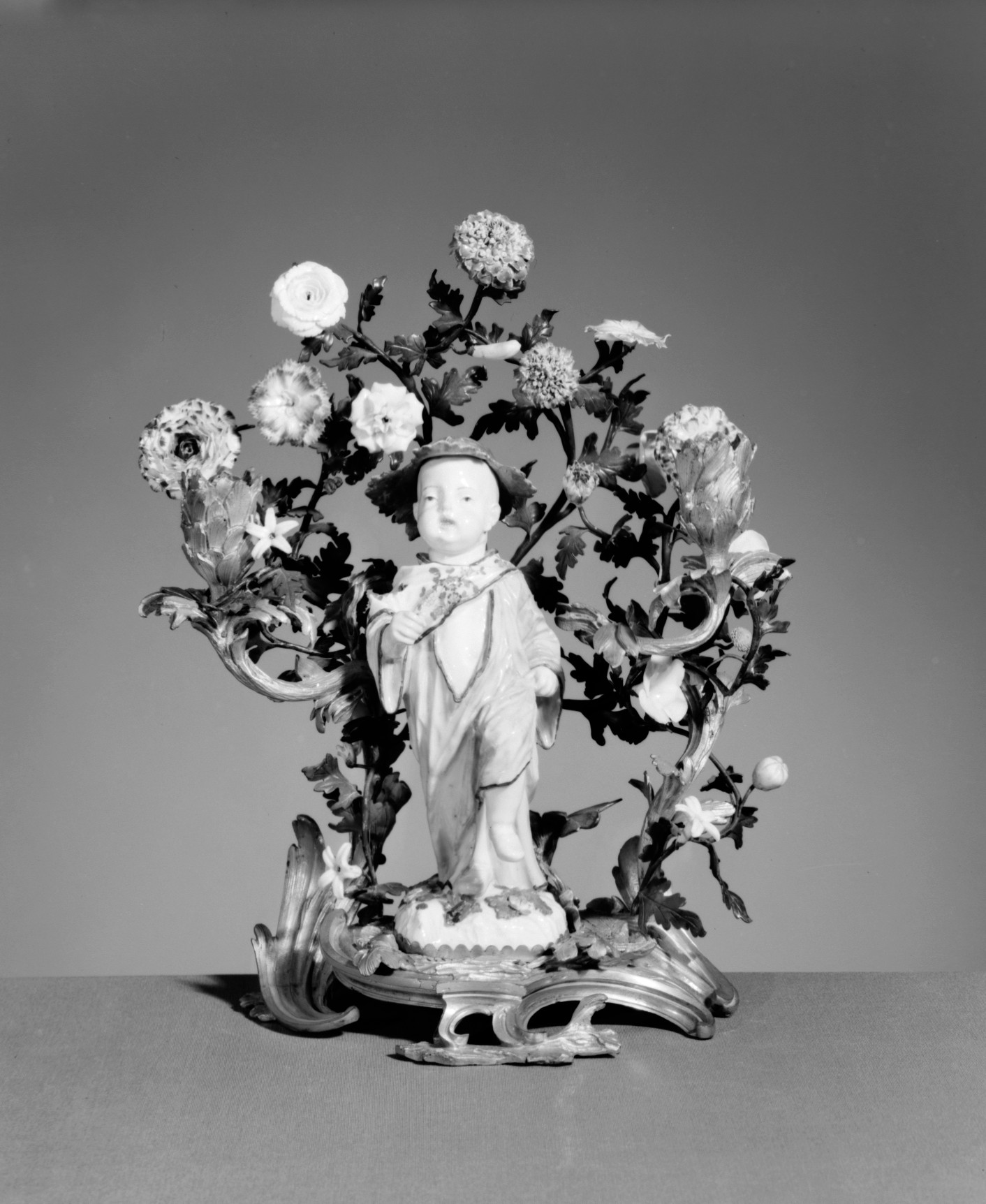
Heritage Analysis: The Candelabrum as a Vessel of Symbolic Power and Spiritual Illumination
Introduction: The Candelabrum as a Cultural Artifact
The candelabrum, one of a pair, emerges as a profound artifact from an ancient civilization, crafted in hard-paste porcelain and adorned with gilt bronze. This object transcends its functional role as a light source, embodying a complex interplay of symbolic power, historical adornment, and spiritual meaning. For Katherine Fashion Lab, understanding this artifact’s heritage is not merely an academic exercise; it is a strategic imperative for positioning a 2026 high-end luxury strategy that resonates with discerning consumers seeking depth, authenticity, and transcendence. This analysis dissects the candelabrum’s layered significance, drawing from its materiality, iconography, and ritualistic context, to inform a luxury narrative that elevates brand identity.
Symbolic Power: The Candelabrum as a Beacon of Authority and Divinity
In ancient civilizations, the candelabrum served as a potent symbol of authority, often reserved for temples, palaces, and elite funerary contexts. The act of illumination itself—transforming darkness into light—was synonymous with divine presence, knowledge, and sovereignty. The pair of candelabra, specifically, amplifies this symbolism through duality: representing balance, cosmic order, and the union of opposing forces (e.g., light and shadow, earth and sky, life and death).
The hard-paste porcelain medium, a material prized for its translucency and durability, furthers this symbolic charge. Porcelain’s creation—through high-temperature firing—mirrors the transformative power of fire, a element often associated with purification and divine energy. The gilt bronze accents, with their luminous gold finish, signify eternal value, wealth, and the sun’s radiance, reinforcing the candelabrum’s role as a conduit for celestial power. In a luxury context, this symbolic power translates into a narrative of unassailable prestige and timeless authority. A 2026 luxury strategy can leverage this by positioning the candelabrum as a metaphor for brand dominance—a beacon that guides consumers toward exclusivity and cultural sophistication.
Historical Adornment: Materiality and Craftsmanship as Status Markers
The candelabrum’s construction reveals a sophisticated understanding of adornment as a social language. Hard-paste porcelain, first developed in ancient China and later mastered in Europe, was a luxury commodity that signified cross-cultural exchange and technological prowess. The gilt bronze mounts, often hand-chased and gilded, required exceptional skill, making each candelabrum a unique masterpiece. This combination of materials—the delicate, luminous porcelain with the robust, gleaming bronze—creates a visual and tactile contrast that embodies refined opulence.
Historically, such candelabra were placed in prominent spaces—altars, throne rooms, or banquet halls—to project wealth and taste. The pair’s symmetry ensured visual harmony, while the intricate detailing of the bronze (e.g., acanthus leaves, mythological figures) told stories of cultural heritage. For Katherine Fashion Lab, this historical adornment offers a template for artisanal storytelling. In 2026, high-end luxury consumers crave objects that are not merely beautiful but also narratively rich. The candelabrum’s provenance as a symbol of elite status can be repurposed into a brand strategy that emphasizes bespoke craftsmanship, limited editions, and heritage-driven design. By framing each piece as a “modern artifact,” the brand can attract collectors and connoisseurs who value material integrity over mass production.
Spiritual Meaning: Illumination as a Bridge Between Mortal and Divine
Beyond its material and social dimensions, the candelabrum holds deep spiritual significance. In many ancient traditions, light was a metaphor for the soul’s journey—a guide through the darkness of ignorance toward enlightenment. The candelabrum, by holding multiple flames, amplifies this metaphor, representing the multiplicity of spiritual paths converging toward a single truth. The pair of candelabra, when placed in ritualistic settings, created a sacred axis, flanking altars or tombs to honor deities or ancestors.
The porcelain’s white or celadon hues often symbolized purity and transcendence, while the gilt bronze’s golden glow evoked the eternal flame. This spiritual meaning is particularly resonant for a 2026 luxury strategy, where consumers increasingly seek objects that offer emotional resonance and existential depth. The candelabrum can be reimagined as a talisman of transformation—a piece that invites introspection and connection to something greater than oneself. Katherine Fashion Lab can position its collections as “ritual objects” for modern life, where lighting a candle becomes an act of mindfulness and luxury becomes a pathway to inner peace. This aligns with broader trends in high-end markets, where wellness, spirituality, and luxury converge.
2026 High-End Luxury Strategy: From Artifact to Brand Archetype
Translating the candelabrum’s heritage into a 2026 luxury strategy requires a multi-faceted approach that integrates symbolic, historical, and spiritual dimensions. First, the brand must adopt a narrative-first model. Each product line should be anchored in a “mythology” inspired by ancient civilizations—whether through design motifs (e.g., flame-like silhouettes, symmetrical pairs) or through storytelling campaigns that evoke ritual and transcendence. For example, a limited-edition candle holder collection could be named “The Illuminati Pair,” referencing the candelabrum’s dual symbolism of power and enlightenment.
Second, materiality must be elevated to a core brand value. The use of hard-paste porcelain and gilt bronze, or their modern equivalents (e.g., bone china with 24-karat gold accents), should be marketed as investments in permanence. Katherine Fashion Lab can partner with master artisans from heritage ateliers in Europe or Asia to create pieces that are both historically informed and avant-garde. This positions the brand as a custodian of craft, appealing to ultra-high-net-worth individuals who prioritize authenticity and exclusivity.
Third, the spiritual dimension offers a unique differentiator. In 2026, luxury is increasingly defined by experiential value rather than mere possession. The candelabrum can inspire a “lighting ritual” service—where clients receive a curated set of candles, incense, and a guided meditation, all housed in a porcelain vessel. This transforms the object from a decorative item into a personal sanctuary, fostering brand loyalty through emotional engagement. Additionally, the pair concept can be extended to dual ownership programs, where clients purchase one candelabrum for themselves and donate its twin to a cultural institution, reinforcing a legacy of patronage.
Finally, the strategy must leverage digital storytelling to amplify heritage. Virtual exhibitions, augmented reality experiences, and blockchain-certified provenance for each piece can create a sense of rarity and collectibility. The candelabrum’s history as a symbol of authority can be used to position Katherine Fashion Lab as a thought leader in luxury, hosting exclusive salons or symposia on art, power, and spirituality. By framing the brand as a bridge between ancient wisdom and modern aspiration, the 2026 strategy ensures relevance in a market that prizes depth over superficiality.
Conclusion: The Candelabrum as a Strategic Compass
The candelabrum, one of a pair, is far more than a decorative object; it is a repository of symbolic power, historical adornment, and spiritual meaning. For Katherine Fashion Lab, this heritage analysis reveals a blueprint for 2026 high-end luxury strategy: one that prioritizes narrative depth, artisanal excellence, and emotional resonance. By channeling the candelabrum’s essence—its duality, its luminosity, its transformative potential—the brand can illuminate a path toward enduring relevance and cultural authority in the luxury landscape. The flame of the candelabrum, once a beacon in ancient temples, now serves as a guiding light for a modern heritage-driven enterprise.