Deconstructing the Gray: A Couture Analysis of “Portrait of a Woman in Gray”
In the rarefied air of haute couture, where fabric meets philosophy and silhouette tells a story, Katherine Fashion Lab presents a singular study: “Portrait of a Woman in Gray.” This standalone oil-on-canvas work, rooted in a global heritage of artistic expression, is not merely a painting; it is a sartorial manifesto. As Lead Curator, I invite you to step beyond the frame and into the weave of its narrative, where the absence of color becomes a profound presence, and the texture of oil paint mirrors the drape of the finest textiles.
The Sovereignty of Gray: A Chromatic Strategy
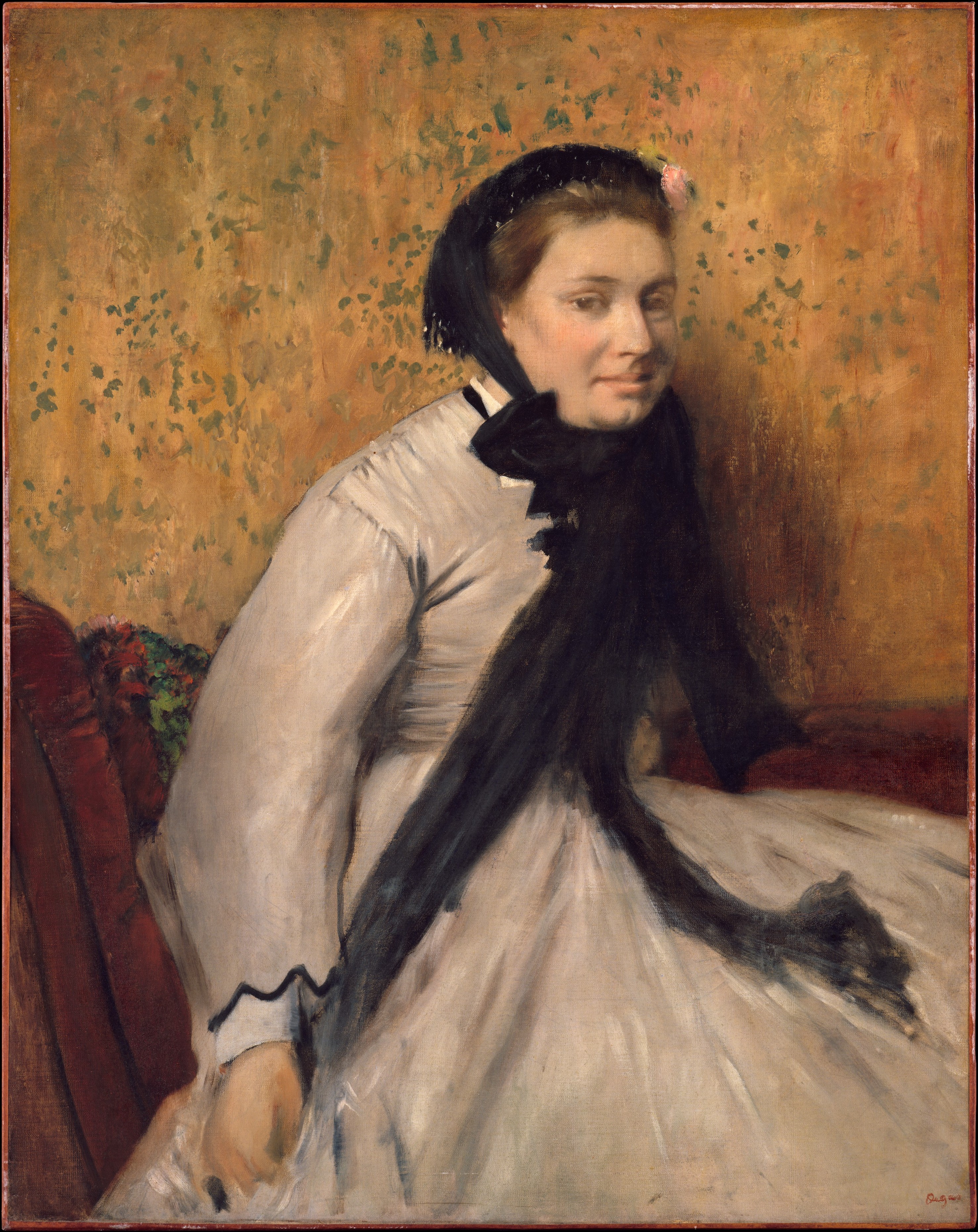
Gray, in the lexicon of couture, is often relegated to the background—a neutral servant to more vibrant hues. Yet here, it ascends to protagonist. The artist’s deliberate choice of a monochromatic gray palette is a masterclass in restraint, echoing the minimalist ethos that defines Katherine Fashion Lab’s design philosophy. This is not the gray of overcast skies or industrial concrete; it is a living gray, composed of subtle shifts in tone—from the pearlescent luminescence of a silk charmeuse to the matte depth of cashmere felt. The woman’s portrait is rendered in layers of gray that suggest the hand of a master tailor: the cool, silver-gray of her skin tone speaks to a foundation of porcelain-like perfection, while the darker, charcoal shadows contour her jawline and collarbone as if sculpted by a couturier’s shears.
This chromatic strategy aligns with the global heritage of the piece, drawing from Japanese wabi-sabi aesthetics, where imperfection and transience are celebrated, and from the understated elegance of European portraiture. The gray is not a void but a vessel—a canvas upon which the viewer projects texture, weight, and movement. In couture terms, it is the equivalent of a bias-cut gown: deceptively simple, yet requiring the highest precision to achieve its fluidity.
Materiality as Narrative: Oil on Canvas as Textile
The medium—oil on canvas—is the first fabric of this analysis. The artist’s brushstrokes are not mere marks; they are stitches, weaving a tactile dialogue between the viewer and the subject. The canvas itself, a stretched linen of coarse weave, becomes a metaphor for the loom. The oil paint, applied in varying viscosities, mimics the hand-feel of luxury fabrics: thick impasto strokes suggest the weight of a wool bouclé, while thin glazes recall the transparency of a silk organza. The portrait’s background, a flat expanse of muted gray, reads as a backdrop of raw silk—unfinished yet deliberate, allowing the figure to emerge as the focal point of a bespoke garment.
This material interplay is a hallmark of global heritage. From the brocades of Mughal India to the linens of Renaissance Italy, the relationship between painter and cloth has always been symbiotic. Here, the artist transcends this tradition by making the medium itself the subject. The woman’s gaze, steady and unyielding, is framed by a cascade of gray that could be hair or a hood—a deliberate ambiguity that blurs the line between human and textile. Her dress, if it can be called that, is implied rather than defined: a series of vertical strokes that suggest the pleats of a Fortuny gown, or the draping of a Comme des Garçons deconstruction. The oil paint, in its plasticity, becomes the ultimate couture fabric—malleable, luminous, and eternal.
The Standalone Study: A Couture Archetype
As a standalone study, “Portrait of a Woman in Gray” eschews the narrative clutter of a larger series. It is a single, distilled moment—a couture silhouette against a blank slate. This isolation is intentional, allowing the viewer to focus on the interplay of form and texture without distraction. In the world of haute couture, a standalone piece is often the most daring: it must carry the entire weight of the collection on its own. This portrait succeeds because it does not rely on context; it is the context. The woman’s anonymity—her face a mask of serene neutrality—makes her a universal archetype: the everywoman of luxury, unburdened by identity, yet imbued with presence.
This approach resonates with the global heritage of portraiture, from the enigmatic smiles of Renaissance aristocrats to the bold stares of contemporary fashion photography. The gray palette strips away cultural signifiers, leaving only the essence of form. It is a study in negative space, where the absence of color becomes a bold statement—much like a couture gown that uses a single seam to define a silhouette. The woman’s posture, erect yet relaxed, suggests a garment that is both structured and fluid: a tailored jacket over a flowing skirt, or a column dress that moves with the body. The artist’s brushwork captures this tension, with hard edges softening into blurred transitions, as if the fabric is breathing.
Global Heritage in the Details
While the palette is restrained, the cultural references are rich. The gray of the portrait echoes the stone temples of Angkor Wat, the silver-threaded silks of the Ottoman Empire, and the minimalist architecture of Scandinavia. This is not appropriation but synthesis—a global heritage that transcends borders. The woman’s hairstyle, a simple coil at the nape of her neck, recalls the chignons of Geishas and the buns of Victorian governesses alike. Her earrings, if present, are mere suggestions of silver drops—a nod to the filigree work of India or the enamel of Art Nouveau. The artist’s hand is a global traveler, collecting fragments of beauty and weaving them into a cohesive whole.
The materiality of oil on canvas further anchors this heritage. The canvas’s weave, visible in the background, speaks to the hand-spun traditions of West African textiles, while the oil’s glossiness evokes the lacquer of Chinese screens. This fusion is not chaotic but curated, much like a couture collection that draws from multiple cultures to create a new language. The gray, in this context, becomes the universal thread—a color that belongs to no single culture but to all, a neutral that is anything but passive.
Conclusion: The Couture of Silence
“Portrait of a Woman in Gray” is a testament to the power of reduction. In an era of maximalist fashion, where logos and embellishments often scream for attention, this piece whispers. It is a couture study that celebrates the art of the invisible—the unseen seams, the unspoken narratives, the quiet dignity of a woman who needs no ornament. For Katherine Fashion Lab, this portrait is a foundational text: a reminder that the most profound statements are often made in gray. As you stand before this work, consider not what is missing, but what is present: the weight of oil, the stretch of canvas, the gaze of a woman who is both timeless and of her time. This is couture at its most elemental—a portrait of grace, rendered in the color of shadows and light.