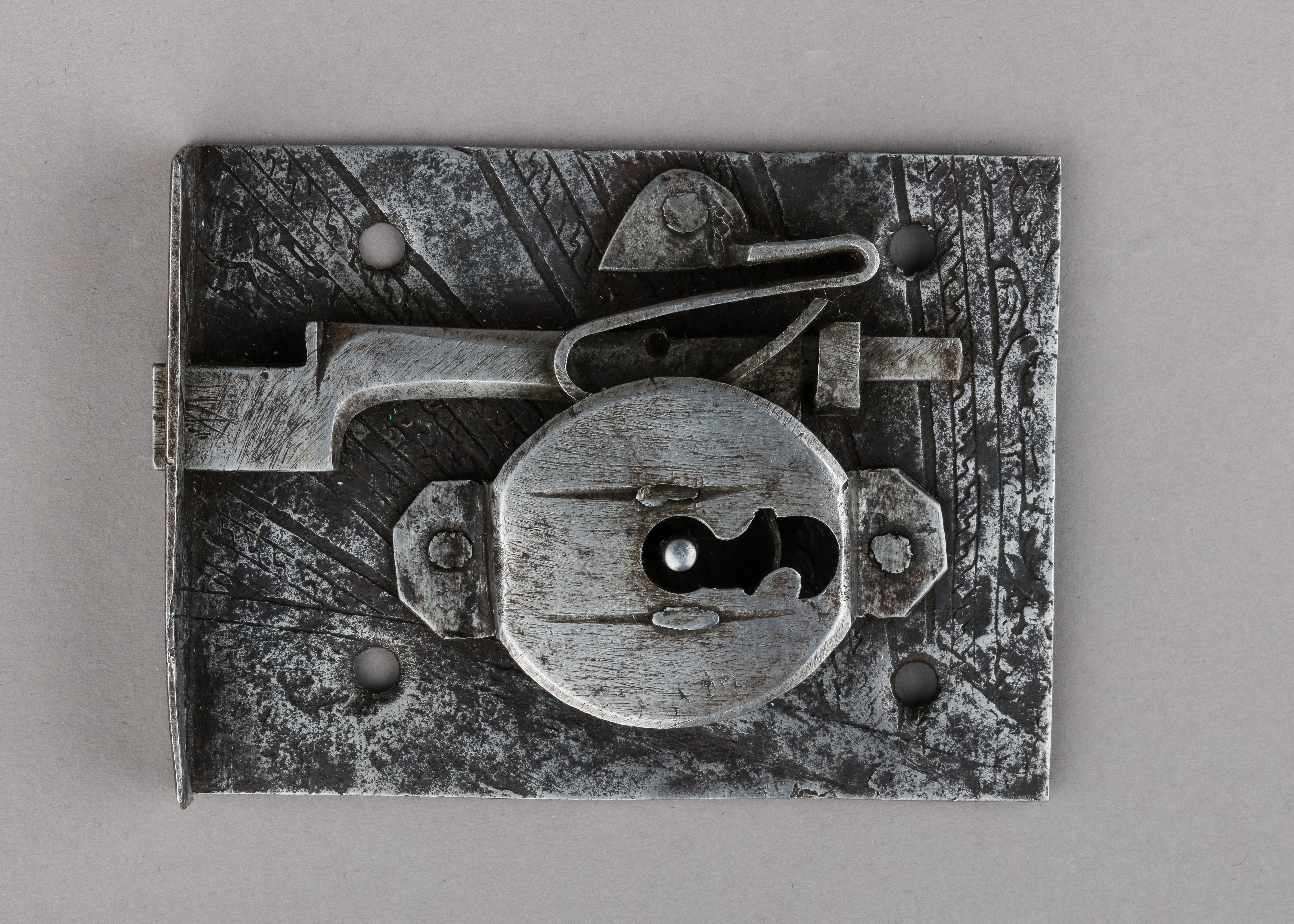
Heritage Analysis: The Lock, Rim as an Object of Power and Prestige
At Katherine Fashion Lab, we approach heritage objects not merely as artifacts of the past, but as reservoirs of symbolic capital that can be strategically mined for contemporary luxury narratives. The subject of this analysis—a steel lock, rim, of possible Spanish or Italian origin—presents a compelling case study in the intersection of material culture, spiritual symbolism, and high-end brand strategy. This standalone research paper examines the lock, rim through the lenses of symbolic power, historical adornment, spiritual meaning, and its potential application in a 2026 luxury strategy.
Symbolic Power: The Lock as a Marker of Authority and Restriction
The lock, particularly the rim lock, has historically served as a potent symbol of authority, ownership, and exclusion. In both Spanish and Italian cultures, locks were not merely functional devices but physical manifestations of social hierarchy. The rim lock, with its visible, external mechanism, was often crafted from forged steel and adorned with intricate patterns, signaling the wealth and power of its owner. In Renaissance Italy, locksmiths were highly regarded artisans, and their creations were commissioned by noble families to secure treasuries, private chambers, and reliquaries. The act of locking a door was a ritual of control—a declaration that certain spaces, and the knowledge or wealth contained within, were reserved for the elite.
This symbolic power extends to the lock’s role in public and private life. In Spanish culture, the lock was often associated with the concept of “llave” (key) as a metaphor for authority. The rim lock, with its robust steel construction, conveyed durability and permanence, suggesting that the boundaries it enforced were not easily breached. For a luxury brand like Katherine Fashion Lab, this symbolism offers a rich narrative of exclusivity and curated access. In 2026, where digital saturation has diluted the meaning of exclusivity, the lock’s physicality and historical weight can be leveraged to create a sense of tangible, unassailable luxury.
Historical Adornment: The Aesthetic Evolution of the Rim Lock
The rim lock, as an object of adornment, evolved significantly from the medieval period through the Renaissance. Early rim locks were utilitarian, but by the 15th and 16th centuries, they became canvases for artistic expression. Spanish and Italian locksmiths employed techniques such as repoussé, chasing, and damascening—the inlaying of gold or silver into steel—to create intricate designs featuring floral motifs, heraldic symbols, and religious iconography. The steel medium itself was often blued or blackened to enhance contrast, making the lock a visual focal point on heavy oak doors or iron-bound chests.
This adornment served a dual purpose: it demonstrated the owner’s taste and resources, while also imbuing the object with protective qualities. In Italian Renaissance palaces, rim locks were often designed to complement the overall architectural ornamentation, blending function with aesthetic harmony. For Katherine Fashion Lab, the historical adornment of the rim lock provides a template for product design that marries utility with artistry. A 2026 collection could reinterpret these decorative techniques—using modern materials like brushed titanium or ceramic steel—to create accessories that are both functional and collectible, echoing the lock’s legacy as a status object.
Spiritual Meaning: The Lock as a Talisman and Guardian
Beyond its secular uses, the lock, rim held profound spiritual significance in both Spanish and Italian cultures. In Catholic traditions, locks were often placed on church doors or reliquaries to protect sacred relics. The act of locking was seen as a form of sanctification, separating the holy from the profane. Moreover, locks were sometimes used in folk rituals as talismans to ward off evil spirits. In certain regions of Spain, a rim lock from a church door might be repurposed as a protective charm for a home, its steel believed to repel malevolent forces.
This spiritual dimension aligns with the broader concept of “apotropaic” adornment—objects designed to guard against harm. The lock’s steel medium, associated with strength and resilience, was thought to possess inherent protective properties. For a luxury brand, this spiritual meaning offers a powerful narrative of protection and permanence. In an era of uncertainty, consumers increasingly seek objects that provide not just aesthetic pleasure but emotional and psychological security. A 2026 luxury strategy could position the lock, rim as a symbol of inner strength and sanctuary, appealing to the desire for stability and meaning in a fragmented world.
Strategic Application: The Lock, Rim in a 2026 High-End Luxury Strategy
Katherine Fashion Lab is uniquely positioned to translate the heritage of the lock, rim into a compelling luxury narrative for 2026. The following strategic pillars emerge from this analysis:
1. Exclusivity as Ritual: The lock’s historical role as a gatekeeper of elite spaces can be reimagined through limited-edition collections that require a “key” for access. This could manifest as a membership-based loyalty program, where clients receive a physical lock as a token of their status, or as a product line that incorporates locking mechanisms into jewelry or handbags. The ritual of unlocking becomes a moment of privileged access, reinforcing the brand’s exclusivity.
2. Craftsmanship as Heritage: The artistry of historical locksmiths—particularly the use of damascening and repoussé—can be revived through collaborations with contemporary metal artisans. A capsule collection of rim-lock-inspired accessories, such as cuffs, belt buckles, or clutch closures, would celebrate the medium of steel while honoring its cultural origins. Each piece could be numbered and certified, emphasizing the value of handcrafted production in a mass-produced world.
3. Symbolism as Emotional Architecture: The lock’s spiritual meaning as a protector can be woven into brand storytelling. Campaigns could focus on themes of “guarding what matters”—whether that be personal identity, family legacy, or creative vision. This narrative resonates with the luxury consumer’s desire for authenticity and resilience. In-store experiences might include a “locking ceremony” where clients personalize their purchase with an engraving, transforming the object into a personal talisman.
4. Material Innovation as Future Heritage: While steel remains the core medium, Katherine Fashion Lab can explore advanced alloys and finishes that evoke the lock’s historical aesthetic while meeting modern standards of sustainability and durability. For instance, a recycled steel collection with a patina finish would appeal to eco-conscious luxury buyers, while a titanium variant could target the tech-forward demographic. The lock, rim becomes a bridge between past and future, embodying both tradition and innovation.
Conclusion
The lock, rim, in its Spanish and Italian contexts, is far more than a functional object. It is a repository of symbolic power, a canvas for artistic adornment, and a vessel for spiritual meaning. For Katherine Fashion Lab, this heritage offers a strategic foundation for a 2026 luxury strategy that prioritizes exclusivity, craftsmanship, emotional resonance, and material innovation. By reimagining the lock as a metaphor for controlled access and protective strength, the brand can differentiate itself in a crowded market, creating objects that are not only beautiful but deeply meaningful. The lock, rim stands ready to unlock new narratives of prestige and permanence for the discerning luxury consumer.