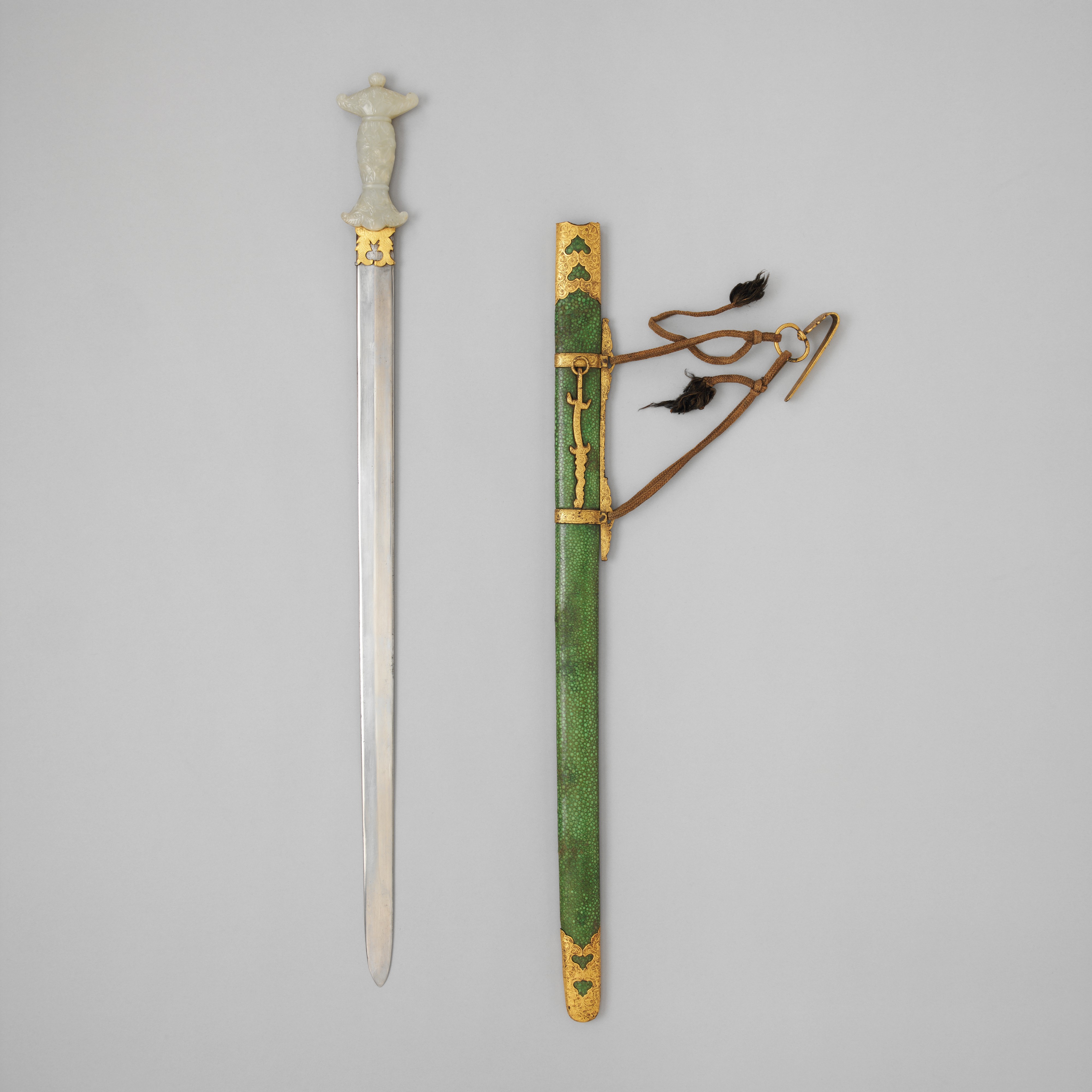
Heritage Analysis: The Chinese Sword with Scabbard
As Lead Heritage Curator for Katherine Fashion Lab, I present this strategic standalone research on the Chinese sword with scabbard—an artifact of profound symbolic power, historical adornment, and spiritual meaning. Crafted from steel, jade, bronze, sharkskin, textile, wood, and gold, this object transcends its martial function to embody a synthesis of aesthetic mastery and metaphysical authority. For a 2026 high-end luxury strategy, this analysis offers a blueprint for integrating heritage-driven symbolism into contemporary luxury narratives, emphasizing exclusivity, cultural resonance, and transcendent value.
Symbolic Power: The Sword as Imperial and Cosmic Authority
Imperial Sovereignty and Mandate of Heaven
In Chinese culture, the sword—particularly the jian (double-edged straight sword)—was not merely a weapon but a symbol of imperial legitimacy. The inclusion of gold and jade in the scabbard and hilt signified the ruler’s connection to heaven, as jade was revered as the "essence of heaven and earth," embodying purity and immortality. The sword’s steel blade, forged through meticulous craftsmanship, represented the unyielding strength of the emperor’s will, while the bronze fittings echoed the ritual vessels used in ancestral worship, linking the artifact to dynastic continuity. This symbolic power is critical for luxury branding: a 2026 strategy can position the sword as an emblem of sovereign authority, appealing to clients who seek objects that confer status and historical gravitas.
Cosmic Balance and Yin-Yang Duality
The sword’s dual-edged nature mirrors the Taoist concept of yin-yang—the balance of opposing forces. The blade’s sharpness (yang, active, aggressive) is tempered by the scabbard’s protective enclosure (yin, passive, nurturing). The sharkskin and textile wrappings, often dyed in deep reds or blacks, further encode this duality: red symbolizes vitality and protection, while black denotes mystery and the void. For high-end luxury, this duality offers a narrative of harmony and tension, appealing to discerning consumers who value objects that embody philosophical depth. A 2026 collection could reinterpret this balance through dual-material designs—hard metals juxtaposed with soft, organic textiles—creating products that resonate with spiritual equilibrium.
Historical Adornment: Craftsmanship as Cultural Capital
Material Hierarchy and Artisanal Prestige
The medium composition of the sword with scabbard reveals a deliberate hierarchy of materials that communicated status. Jade, often reserved for the emperor and highest nobility, was carved into intricate pommels or guard fittings, requiring weeks of labor by master lapidaries. Gold was applied as inlay or gilding on bronze mounts, signifying wealth and divine favor. Sharkskin, used for grip covering, was imported from Southeast Asia, demonstrating access to global trade networks. Wood, typically zitan or rosewood, was chosen for its density and dark luster, often lacquered to a mirror finish. This material hierarchy is a direct analogy for modern luxury: brands must prioritize rare, ethically sourced materials and artisanal techniques that cannot be mass-produced. For 2026, Katherine Fashion Lab could collaborate with heritage workshops in China to produce limited-edition pieces using jade, gold leaf, and hand-stitched sharkskin, ensuring exclusivity and authenticity.
Textile and Bronze as Narrative Layers
The textile elements—silk cords, brocade wraps, or tassels—were not merely decorative but encoded lineage and rank. A sword’s scabbard might feature embroidered dragons (imperial power) or phoenixes (empress consort), while bronze fittings often bore inscriptions of battles won or poems extolling virtue. These adornments transformed the sword into a biographical object, telling the story of its owner’s achievements. For luxury strategy, this suggests a shift toward "narrative customization": offering clients the ability to inscribe personal or familial symbols onto products, creating heirlooms with deep emotional resonance. In 2026, digital tools like laser engraving on precious metals or bespoke embroidery services could allow clients to co-create objects that mirror historical practices of personalized adornment.
Spiritual Meaning: The Sword as a Daoist and Buddhist Talisman
Daoist Ritual and Immortality
In Daoist tradition, the sword was a ritual implement used to exorcise demons and channel cosmic energy (qi). Jade and bronze were believed to possess protective properties: jade could absorb negative energy, while bronze, a sacred metal, resonated with spiritual frequencies. The scabbard’s wood core, often carved with talismanic symbols, served as a conduit for blessings. This spiritual dimension elevates the sword beyond materiality into a tool for transcendence—a concept highly relevant for 2026 luxury, where consumers increasingly seek objects that offer mindfulness and well-being. A brand could position its products as "modern talismans," using precious materials and symbolic engravings to invoke protection, clarity, or prosperity.
Buddhist Influence and Enlightenment
Buddhist iconography, particularly the vajra (thunderbolt scepter), often influenced sword designs, blending martial power with spiritual wisdom. The sword’s blade could represent the cutting of ignorance, while the scabbard symbolized the sheath of delusion. Gold and jade were used to represent the "three jewels" of Buddhism: the Buddha (gold), the Dharma (jade), and the Sangha (bronze). For luxury branding, this offers a narrative of enlightenment through craftsmanship—each piece designed to elevate the user’s consciousness. In 2026, Katherine Fashion Lab could develop a "Spiritual Artifacts" line, where each product includes a curated guide to its symbolic meaning, fostering a deeper connection between owner and object.
2026 High-End Luxury Strategy: Translating Heritage into Market Leadership
Exclusivity Through Heritage Authenticity
The Chinese sword with scabbard exemplifies the principle that true luxury lies in authenticity and scarcity. For 2026, Katherine Fashion Lab should adopt a "heritage-first" approach: source materials from historically significant regions (e.g., Hetian jade, Yunnan bronze), and partner with master artisans certified by Chinese cultural authorities. Each piece should be accompanied by a provenance dossier, detailing its materials, craftsmanship, and symbolic lineage. This strategy positions the brand as a guardian of cultural heritage, appealing to ultra-high-net-worth individuals who prioritize legacy over trend.
Symbolic Customization and Co-Creation
Drawing from the sword’s biographical adornments, a 2026 luxury service could offer "symbolic customization": clients choose from a lexicon of traditional motifs (dragons, clouds, lotus) and materials (jade, gold, sharkskin) to create a personal emblem. This co-creation model mirrors historical practices where swords were tailored to the owner’s rank and achievements. The process itself becomes a luxury experience, with consultations by heritage curators and artisans. For Katherine Fashion Lab, this could generate significant brand loyalty and premium pricing, as clients invest in objects that are uniquely theirs.
Spiritual Resonance as Brand Ethos
Finally, the sword’s spiritual meaning offers a powerful brand ethos for 2026 luxury. In a market saturated with material excess, consumers increasingly seek products that provide inner value. Katherine Fashion Lab can lead this shift by embedding spiritual narratives into its marketing: each collection could be themed around a Daoist or Buddhist principle—balance, protection, enlightenment—and designed to serve as a meditative object. Limited-edition releases, accompanied by ritual guides or meditation apps, would deepen the connection between product and purpose. This strategy not differentiates the brand but also aligns with the growing demand for conscious luxury.
Conclusion
The Chinese sword with scabbard is a masterclass in the fusion of symbolic power, historical adornment, and spiritual meaning. Its materials—steel, jade, bronze, sharkskin, textile, wood, and gold—are not mere components but carriers of cultural DNA. For Katherine Fashion Lab, this heritage analysis provides a robust framework for a 2026 high-end luxury strategy: prioritize authenticity through heritage partnerships, offer symbolic customization to create heirlooms, and embed spiritual resonance to meet evolving consumer desires. By channeling the sword’s timeless authority, the brand can transcend fashion to become a curator of meaning, commanding the highest echelons of the luxury market.