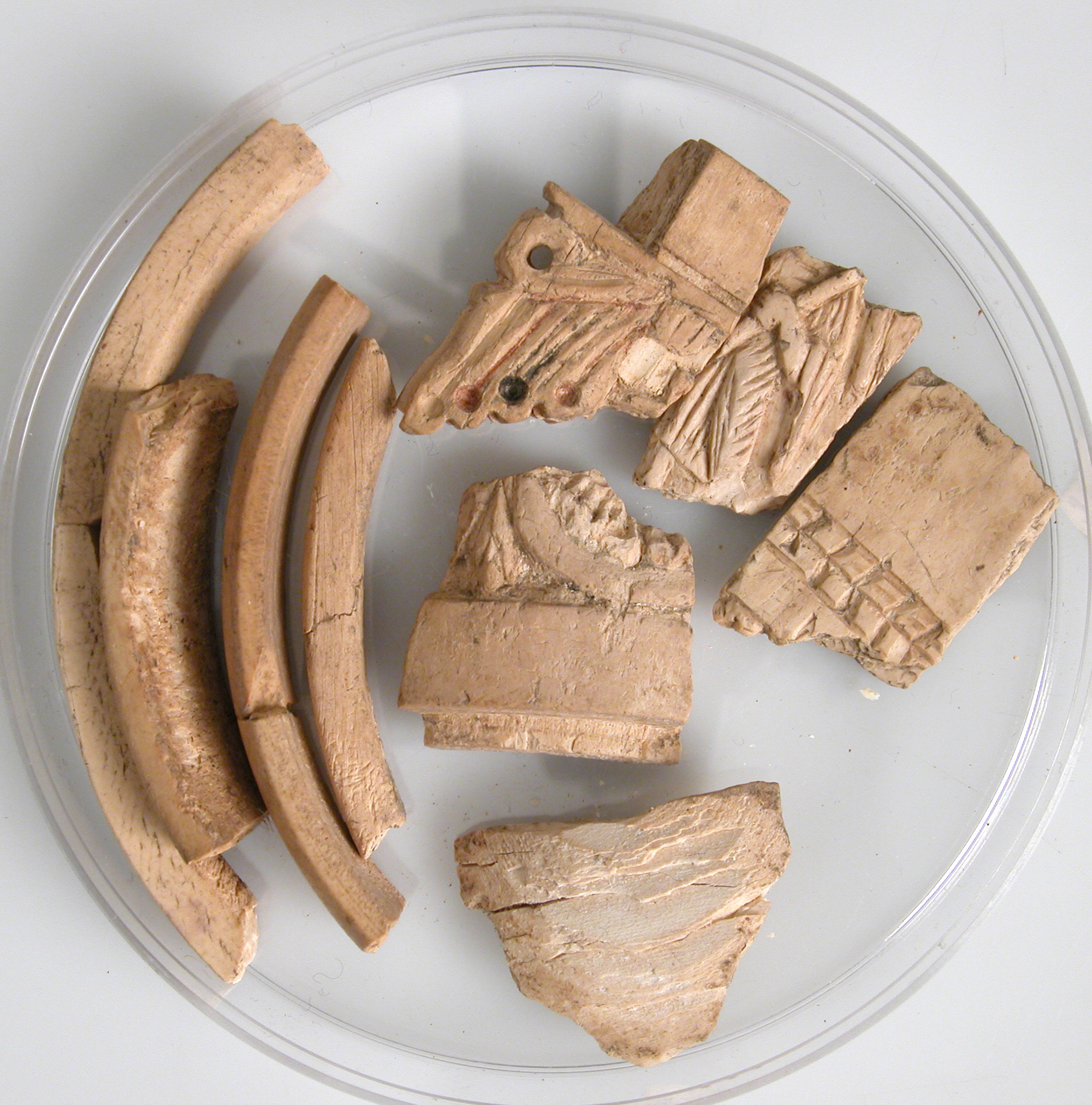
Heritage Analysis: Coptic Ivory Fragments
Introduction: The Enduring Legacy of Coptic Ivory
The Coptic ivory fragments under consideration represent a profound intersection of material culture, spiritual symbolism, and artisanal mastery. Originating from the early Christian communities of Egypt, these fragments—carved from elephant ivory—serve as tangible records of a civilization that bridged the classical world and the medieval era. For Katherine Fashion Lab, these artifacts offer a unique strategic asset: a reservoir of symbolic power, historical adornment practices, and spiritual meaning that can be translated into a high-end luxury strategy for 2026. This analysis examines the cultural and commercial implications of these fragments, positioning them as a foundation for a heritage-driven brand narrative that resonates with contemporary luxury consumers.
Symbolic Power: The Ivory as a Mediator of Status and Spirituality
In the Coptic tradition, ivory was not merely a decorative medium but a potent symbol of authority, purity, and divine connection. The material itself—derived from elephant tusks—carried connotations of strength, rarity, and natural grandeur. Within Coptic iconography, ivory carvings frequently depicted biblical scenes, saints, and liturgical motifs, transforming the material into a vessel for sacred storytelling. The fragments, often remnants of pyxes, diptychs, or small reliquaries, were imbued with the power to mediate between the earthly and the celestial. For the wearer or owner, possessing such an object signified not only wealth but also a privileged access to spiritual protection and moral virtue.
This symbolic power is directly translatable to modern luxury strategy. In an era where consumers seek authenticity and meaning, the ivory fragment’s historical role as a status marker and spiritual talisman offers a compelling archetype. Katherine Fashion Lab can leverage this by positioning its 2026 collection as a revival of "sacred status"—pieces that confer not just aesthetic distinction but also a sense of inner resonance. The fragment’s journey from liturgical object to personal adornment echoes the contemporary luxury consumer’s desire for items that transcend mere fashion, offering instead a connection to history, ethics, and transcendence.
Historical Adornment: From Liturgical Object to Personal Ornament
The Coptic period, spanning roughly from the 3rd to the 7th century CE, witnessed a transformation in how ivory was used for adornment. Initially, large-scale ivory carvings were commissioned for churches and monasteries, serving as altarpieces, book covers, and episcopal thrones. Over time, smaller fragments were repurposed for personal use—amulets, pendants, and belt fittings—often inscribed with crosses or monograms of Christ. This shift from public liturgy to private devotion mirrors the evolution of luxury adornment itself: from the ceremonial to the intimate.
For Katherine Fashion Lab, this historical trajectory informs a strategic opportunity. The fragments suggest a design language where ornamentation is not merely decorative but narrative. The 2026 collection can draw on the Coptic aesthetic of geometric precision, stylized foliage, and figural abstraction—elements that feel both ancient and avant-garde. By reimagining these motifs in sustainable, ethically sourced materials (such as responsibly sourced bone or resin replicas), the brand can honor the original craftsmanship while addressing contemporary ethical concerns. The fragments thus become a blueprint for a "relic-inspired" luxury line that balances historical fidelity with modern wearability.
Spiritual Meaning: The Sacred in the Secular
At the core of the Coptic ivory fragments lies a deeply spiritual dimension. Coptic Christianity, rooted in Egyptian monasticism, emphasized the material world as a reflection of divine order. Ivory, with its luminous, warm hue and capacity for fine detail, was seen as an ideal medium for expressing the incorruptibility of the soul. The fragments often feature imagery of the Theotokos (Virgin Mary), angels, or the cross—symbols that served as visual prayers. To touch or wear such an object was to invite divine grace into daily life.
This spiritual meaning offers a powerful differentiator in the luxury market of 2026, where consumers increasingly seek products that align with their values of mindfulness, heritage, and purpose. Katherine Fashion Lab can position its ivory-inspired pieces as "modern talismans"—objects that carry a charge of historical devotion and personal intention. The brand could collaborate with contemporary artists or theologians to create limited-edition pieces that reinterpret Coptic symbols for a secular audience, emphasizing themes of protection, renewal, and inner strength. This approach transforms the fragment from a mere artifact into a living symbol, bridging the sacred past with the aspirational present.
2026 High-End Luxury Strategy: Heritage as a Competitive Advantage
To capitalize on the Coptic ivory fragments’ heritage, Katherine Fashion Lab must adopt a multi-pronged strategy that integrates historical authenticity with cutting-edge luxury marketing. The following framework outlines key pillars for 2026:
1. Ethical Sourcing and Material Innovation: Given the global ban on elephant ivory trade, the brand must pivot to alternative materials that evoke ivory’s aesthetic and tactile qualities. Options include Tagua nut, fossilized mammoth ivory (where legally permissible), or advanced bio-resins. Each alternative should be accompanied by a transparent provenance narrative, reinforcing the brand’s commitment to sustainability while honoring the original material’s symbolic weight.
2. Narrative-Driven Product Design: Each piece in the collection should be accompanied by a "heritage dossier"—a digital or physical document detailing the fragment’s origin, symbolism, and the Coptic artisan’s techniques. This transforms the product into a collectible artifact, appealing to the luxury consumer’s desire for education and exclusivity. Limited runs of 100 pieces per design, each with a unique serial number, can create scarcity and desirability.
3. Experiential Brand Activation: Launch the collection through an immersive exhibition that recreates a Coptic monastery or scriptorium, complete with multimedia displays on ivory carving, early Christian symbolism, and the fragment’s journey from Egypt to the modern atelier. Invite curators, art historians, and spiritual leaders to host talks, positioning Katherine Fashion Lab as a cultural patron rather than a mere retailer.
4. Collaborations with Heritage Institutions: Partner with museums such as the Coptic Museum in Cairo or the British Museum to license designs from their ivory collections. This not only ensures historical accuracy but also lends institutional credibility. A portion of proceeds could fund the conservation of Coptic artifacts, aligning the brand with philanthropic heritage preservation.
5. Digital and Metaverse Integration: Develop a virtual "Ivory Archive" where collectors can explore 3D scans of the original fragments, learn about their spiritual meanings, and even commission custom pieces inspired by specific motifs. This digital layer extends the brand’s reach to tech-savvy luxury consumers while maintaining the tactile allure of the physical product.
Conclusion: The Fragment as a Foundation
The Coptic ivory fragments are more than archaeological curiosities; they are strategic assets that offer Katherine Fashion Lab a unique position in the 2026 luxury landscape. By decoding their symbolic power, historical adornment context, and spiritual meaning, the brand can craft a narrative that resonates with consumers seeking depth, authenticity, and transcendence. The fragments remind us that luxury, at its highest expression, is not about opulence alone but about connection—to the past, to the sacred, and to the self. In embracing this heritage, Katherine Fashion Lab does not merely revive an ancient art form; it redefines what it means to wear meaning in the modern world.