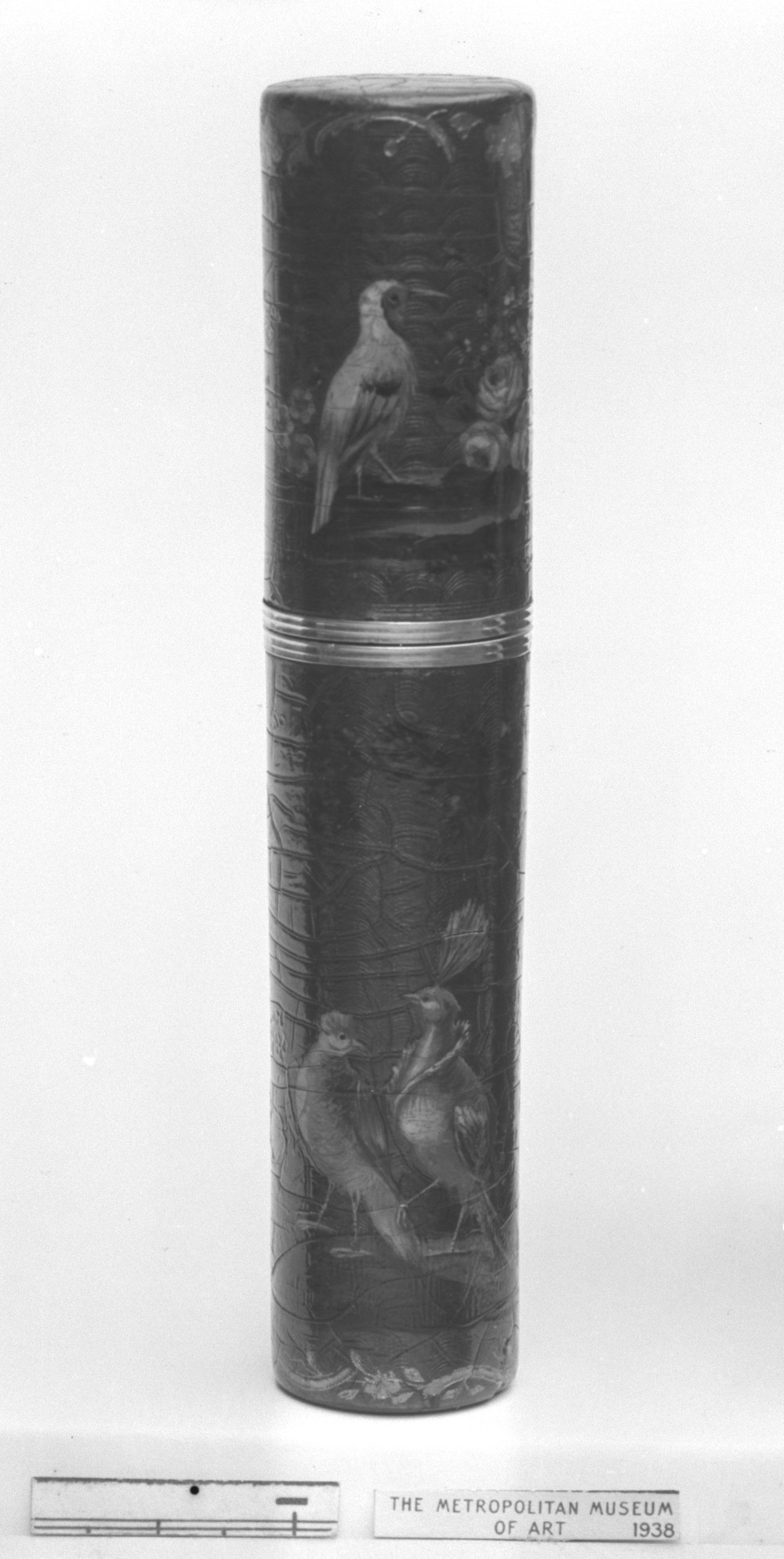
Étui: A Study in Global Heritage and Artisanal Mastery
In the rarefied world of haute couture, where fabric often reigns supreme, the introduction of a standalone study such as Étui by Katherine Fashion Lab represents a profound departure. This piece is not merely an accessory; it is a thesis on the convergence of material science, global cultural heritage, and sculptural form. By selecting wood, vernis Martin, and gold, the Lab has orchestrated a dialogue between the organic and the opulent, the East and the West, the utilitarian and the purely aesthetic. For the discerning professional, Étui offers a masterclass in how to transcend traditional fashion boundaries, elevating a functional object into a tangible artifact of global craftsmanship.
The Material Lexicon: Wood, Vernis Martin, and Gold
The foundation of Étui lies in its unprecedented material palette. The choice of wood as the primary structural element is a deliberate act of rebellion against the ephemerality often associated with fashion. Here, wood is not a mere base; it is a living surface that carries the memory of its origin. The Lab has sourced select hardwoods—likely ebony or rosewood—from regions renowned for their timber heritage, such as Southeast Asia or the Amazon basin. This material introduces a weight, a grain, and a tactile warmth that synthetic materials cannot replicate. Each piece of wood is hand-carved to form the etui’s slender, elongated silhouette, a shape that echoes the classical writing cases and sewing kits of the 18th century, but reimagined for the modern connoisseur. The grain is left visible, celebrated as a narrative of growth, climate, and time.
Upon this wooden foundation, the Lab applies vernis Martin, a technique that revives a lost European art form. Originating in 18th-century France, vernis Martin was a lustrous, lacquered finish developed to imitate East Asian japanning. The Martin brothers perfected this process, which involved multiple layers of varnish, often tinted with pigments and adorned with chinoiserie motifs. In Étui, Katherine Fashion Lab reinterprets this heritage. The vernis Martin is not applied as a mere coating but as a translucent skin that interacts with the wood’s natural grain. Layers of resin are hand-brushed and polished to a mirror-like depth, creating a surface that shifts from deep amber to obsidian black under varying light. This technique demands patience—each layer must cure for weeks—transforming the etui into a repository of time and skill. The result is a visual paradox: a surface that feels both ancient and hyper-modern, protective yet luminous.
The final material element is gold, used not as a dominant statement but as a precise accent. Gold leaf and gold thread are employed sparingly, often inlaid into the wood or painted onto the vernis Martin in delicate geometric patterns. This is not the gold of ostentation; it is the gold of illumination. It traces the edges of the etui, forming a subtle frame that guides the eye. In some iterations, a single gold clasp or hinge is crafted, its weight and patina contrasting with the wood’s organic softness. The gold serves as a conceptual anchor, linking the piece to the long tradition of luxury objects—from Fabergé eggs to Mughal jewelry boxes—that use precious metals to signify permanence and value. In Étui, gold is the final note in a chord of materials, harmonizing the natural, the crafted, and the precious.
Global Heritage as Design Philosophy
Étui is a standalone study because it refuses to be confined by geography. The piece is a cartography of global influences, each material and technique a node in a network of cultural exchange. The wood, for instance, is a direct reference to the Japanese tradition of ki-urushi (wood lacquerware), where artisans have for centuries used natural resins to preserve and beautify timber. The vernis Martin, meanwhile, is a European homage to Asian lacquer, a testament to the 18th-century fascination with the Orient. By combining these, Katherine Fashion Lab creates a third space—one where East and West are not in opposition but in synthesis. The gold, with its universal symbolism of the divine and the eternal, ties these threads together, suggesting that luxury is a common language across civilizations.
The form of the Étui itself—a slender, elongated case—draws from multiple heritage sources. It recalls the étuis used by French nobility to hold sewing implements, mirrors, or writing tools, objects that were both practical and symbolic of refinement. Yet it also echoes the inrō of Japan, small tiered boxes worn on the sash of a kimono, used to carry personal seals or medicines. The Lab’s design abstracts these historical forms, stripping them of overt cultural signifiers while retaining their essence: a container for the precious and the personal. In a standalone study, this form becomes a pure vessel for material exploration, unburdened by the need to fit a seasonal collection or a retail strategy. It is a meditation on what a luxury object can be when it is freed from commercial constraints.
Couture Construction and the Art of the Standalone
To call Étui a “fashion piece” is to expand the definition of fashion itself. Unlike a garment, which must accommodate the body’s movement and drape, this etui is a sculptural object that exists in space, demanding to be held, examined, and displayed. Its construction is a feat of engineering as much as artistry. The wood is carved using both traditional hand tools and precision CNC machinery, a blend of old and new that ensures the perfect fit of the gold clasp and the seamless application of the vernis Martin. The interior is lined with a whisper of silk velvet, a nod to the couture tradition of hidden luxury. Every joint is invisible, every surface is smooth, reflecting the Japanese concept of shibui—understated elegance that reveals its complexity only upon close inspection.
The standalone study format is critical to understanding Étui. In a gallery or atelier setting, this piece is presented without context—no runway, no model, no seasonal narrative. This forces the viewer to confront the object on its own terms. It becomes a primary source, a document of the Lab’s research into materiality and heritage. The absence of a body allows the etui to be both a fashion accessory and an art object, a liminal piece that challenges the hierarchy between craft and couture. For the professional observer, this is a provocative statement: that fashion can be a discipline of pure form, akin to architecture or industrial design, when stripped of its wearable imperative.
Implications for the Future of Luxury
Étui by Katherine Fashion Lab is more than a product; it is a manifesto. It argues that the future of couture lies not in faster cycles or louder branding, but in a return to material intelligence and cultural literacy. By investing months in the vernis Martin process and sourcing woods from endangered heritage forests, the Lab positions itself as a steward of global craft traditions. The gold, while precious, is used with restraint, suggesting that true luxury is not about quantity but about the quality of attention. For the MBA-trained mind, this piece models a business strategy based on rarity, narrative, and vertical integration of artisanal knowledge. It is a case study in how to create value that transcends fashion seasons, appealing to a clientele that seeks objects with soul and history.
In conclusion, Étui stands as a singular achievement in the Katherine Fashion Lab portfolio. It is a testament to the power of material, the richness of global heritage, and the discipline of the standalone form. For those who engage with it, the etui offers not just an object, but an education—a tactile reminder that the finest couture is, at its heart, a conversation between the hands of the artisan and the wisdom of the world.