The Art of Exposure: Deconstructing Katherine Fashion Lab’s “Strip” Collection
In the rarefied echelons of haute couture, where fabric often serves as both shield and spectacle, Katherine Fashion Lab’s latest standalone study—titled “Strip”—presents a provocative paradox. The collection is an exercise in deliberate undressing, not of the body, but of convention itself. By taking the humble embroidered net as its primary material and weaving it with threads of global heritage, the Lab redefines what it means to reveal. This is not nudity; this is narrative. Each piece functions as a cartographic overlay, mapping cultural memory onto a substrate that is, by its very nature, both present and absent.
Materiality as Metaphor: The Embroidered Net
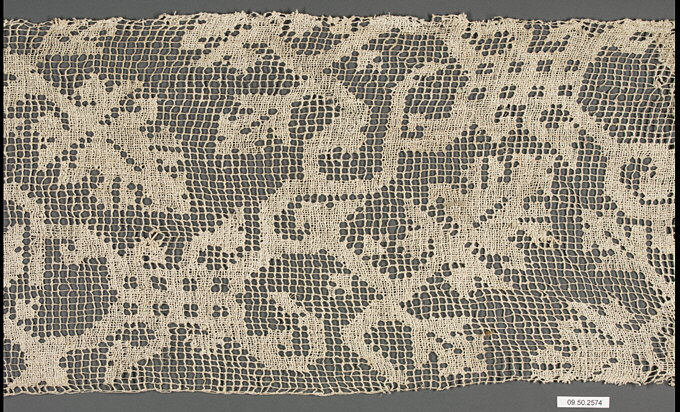
The choice of embroidered net is neither accidental nor merely aesthetic. In the context of “Strip,” the net becomes a structural allegory for global interconnectedness. Traditionally, netting—whether in the form of fishnets, tulle, or lace—has been associated with both vulnerability and allure. Katherine Fashion Lab subverts this binary by treating the net as a canvas of resistance. The embroidery, executed by artisans trained in techniques from India, Mexico, and Eastern Europe, transforms the open spaces of the net into deliberate voids. These are not gaps; they are invitations.
The material’s transparency is not a weakness but a strength. In the Lab’s hands, the embroidered net holds tension—both literally, in the way it drapes and contours to the body, and metaphorically, in the way it holds the viewer’s gaze. The embroidery itself is dense, often mimicking traditional motifs such as the Turkish Oya stitch, the Hungarian Kalotaszeg floral patterns, and the geometric precision of West African Kente-inspired weaves. This layering of global iconography within a single, translucent medium creates a palimpsest of identity, where each stitch tells a story of migration, adaptation, and survival.
Global Heritage: A Cartography of Strip
The “Strip” collection draws its lineage not from a single culture but from the intersection of diasporic traditions. The act of stripping—of removing layers—is a universal gesture, yet its execution varies dramatically across geographies. Katherine Fashion Lab honors this diversity by referencing the ritualistic stripping seen in Japanese Kimono unwrapping, the ceremonial unveiling of bridal Lehenga in South Asia, and the subversive déshabillé of 18th-century French court fashion.
Each garment in the standalone study is a geographic annotation. A long, columnar gown features a net bodice embroidered with Mughal-inspired floral sprays, while the skirt is left nearly bare—a deliberate act of erasure that speaks to the colonial stripping of cultural identity. Another piece, a cropped jacket, uses Scandinavian Hardanger embroidery on the net, creating a stark, almost architectural grid that contrasts with the fluidity of the fabric. The collection does not seek to homogenize these traditions; rather, it places them in dialogue, allowing the viewer to trace the lines of influence and rupture.
Construction and Deconstruction: The Engineering of Reveal
From a technical standpoint, the “Strip” collection is a masterclass in structural minimalism. The embroidered net is not merely applied; it is engineered. Each garment is built from the inside out, with the net acting as both the primary shell and the lining. The Lab’s pattern makers have developed a proprietary method of negative-space tailoring, where the net’s open areas are mapped to the body’s natural curves, creating a second-skin effect that is both supportive and ethereal.
Seams are minimal, often replaced by embroidered joins that mimic the net’s own grid. This eliminates the need for traditional darts or zippers, allowing the garment to be slipped on and off—a literal act of stripping. The embroidery threads, sourced from a global network of cooperatives, include silk, cotton, and metallic fibers, each chosen for its ability to catch light differently. The result is a kinetic surface that shifts from opaque to translucent as the wearer moves, creating a constant play of concealment and revelation.
Standalone Study: The Power of Singularity
Katherine Fashion Lab’s decision to present “Strip” as a standalone study is a strategic move in an industry saturated with seasonal collections. By isolating this singular concept, the Lab forces a deeper engagement. There is no narrative of a “collection journey” or a “mood board.” Instead, the study is a concentrated thesis on the act of stripping—of removing the superfluous to reveal the essential.
This approach aligns with a broader trend in contemporary couture toward conceptual purity. The standalone study allows for a focused material investigation without the commercial pressure to produce a full range. The garments in “Strip” are not intended for everyday wear; they are wearable sculptures that exist in the liminal space between art and fashion. The net, in this context, becomes a medium of translation—translating the intangible heritage of global cultures into a tangible, albeit fragile, form.
Cultural Critique and Commercial Implications
Yet, “Strip” is not without its complexities. The use of global heritage motifs on a transparent net raises questions about cultural appropriation versus appreciation. Katherine Fashion Lab addresses this head-on by crediting the specific artisan communities involved and by ensuring that the embroidery techniques are reproduced with permission and collaboration. The collection is accompanied by a digital archive that traces the provenance of each stitch, making the heritage visible and accountable.
Commercially, the standalone study model is a calculated risk. By limiting production to a small number of bespoke pieces, the Lab positions “Strip” as an investment in rarity. The embroidered net, while delicate, is designed to be repaired and repurposed, challenging the fast-fashion ethos of disposability. This aligns with a growing consumer demand for transparency and longevity in luxury goods.
Conclusion: The Future of Reveal
In “Strip,” Katherine Fashion Lab has achieved something rare: a collection that is both intellectually rigorous and emotionally resonant. The embroidered net, once a mere support for other fabrics, becomes the protagonist. Global heritage, often reduced to cliché, is treated with scholarly depth. And the act of stripping, so often associated with vulnerability, is reframed as a powerful assertion of agency.
This standalone study is not a final statement but a provocation. It challenges the fashion industry to reconsider the materials we take for granted, the histories we borrow, and the bodies we clothe. In the spaces of the net, we find not absence, but possibility. Strip is a reminder that what we remove can be just as meaningful as what we keep.