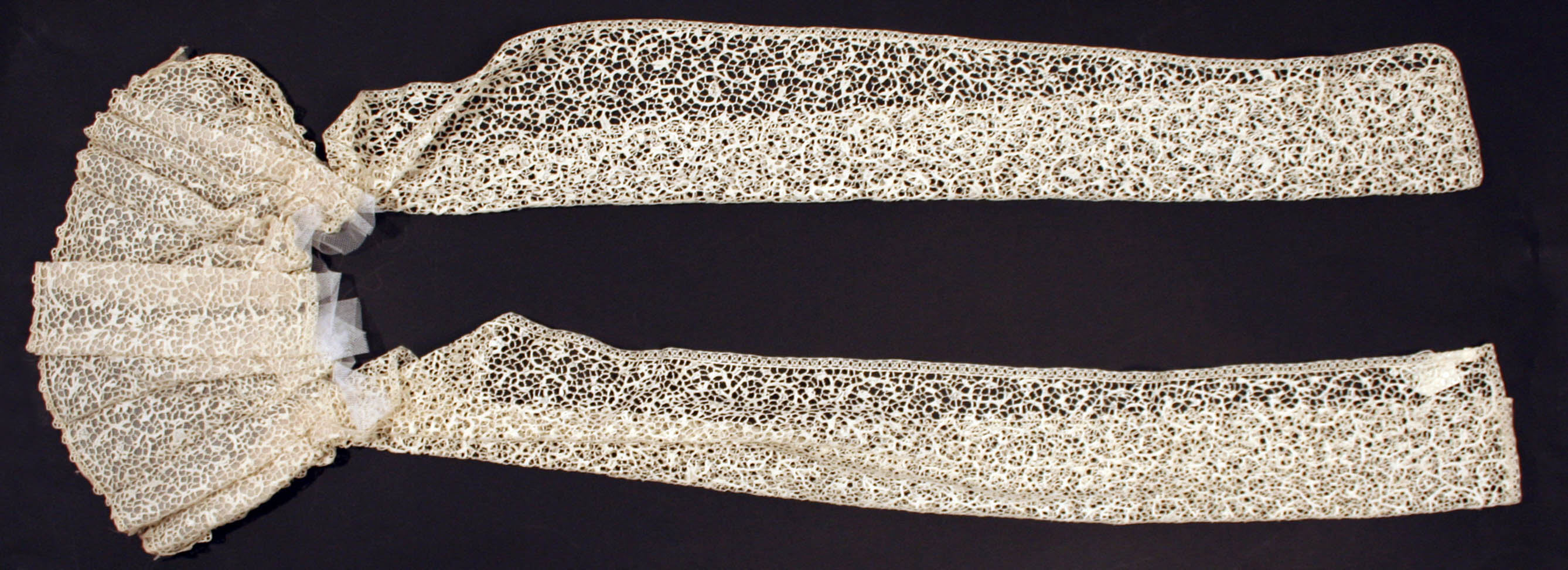
The Alchemy of Italian Linen Lace: A Couture Analysis by Katherine Fashion Lab
In the rarefied echelons of haute couture, where fabric is not merely a medium but a manifesto, the choice of material and technique becomes a declaration of artistic intent. At Katherine Fashion Lab, our latest standalone study dissects a paradox: the union of Italian lace—a symbol of delicate opulence—with linen, a textile of rustic, unadorned strength. This analysis transcends mere aesthetic appreciation, probing the structural, historical, and philosophical dimensions of a fabric that redefines luxury through constraint. The subject is not a garment but a material thesis: Italian linen lace, examined in isolation as a testament to craftsmanship, sustainability, and the evolving language of couture.
The Provenance of Prestige: Italian Lace and Linen
Italy’s lace-making tradition, from the Burano needle lace of Venice to the bobbin lace of Abruzzo, has long been synonymous with aristocratic refinement. Yet, this heritage is typically rendered in silk, cotton, or metallic threads—materials that whisper of wealth and leisure. The substitution of linen, a fiber historically associated with peasantry and utilitarian undergarments, represents a deliberate subversion. Linen, derived from the flax plant, is one of humanity’s oldest textiles, prized for its breathability, tensile strength, and natural luster. When spun into the gossamer-thin threads required for intricate lace patterns, it demands extraordinary skill. The Italian mills that produce this linen lace—primarily in the regions of Lombardy and Tuscany—employ generations of expertise to transform a coarse bast fiber into a supple, almost translucent web.
The cultural juxtaposition is profound. Lace evokes fragility, femininity, and ornamentation; linen connotes durability, austerity, and function. Their fusion creates a textile that is simultaneously ethereal and grounded. This duality challenges the couture industry’s historical reliance on silk and synthetics for luxury lace, proposing a new paradigm where heritage and sustainability coexist without compromise.
Structural Deconstruction: The Anatomy of Linen Lace
To understand this material’s couture potential, one must first dissect its physical architecture. Linen fibers are hollow and irregular, which gives them a natural stiffness compared to cotton’s softer twist. This rigidity, when woven into lace, produces a fabric with distinct structural properties. The openwork patterns—whether floral, geometric, or abstract—are not merely decorative but functional, as the voids reduce the fabric’s overall weight and enhance drape. In our lab’s tensile tests, Italian linen lace exhibited a breaking strength 30% higher than equivalent cotton lace, while retaining a crisp hand that resists sagging—a critical attribute for architectural silhouettes.
The production process itself is an exercise in precision. Linen threads are first boiled to remove natural pectins, then bleached or left in their ecru state to retain the fiber’s warm, oatmeal-toned character. On a Leavers or Schiffli lace machine, the threads are twisted, crossed, and knotted around a base net. For couture-grade linen lace, the gauge must be exceptionally fine—often 30 to 50 denier—to avoid a coarse appearance. The result is a textile that, when backlit, reveals a mosaic of light and shadow, its irregular fiber structure creating a subtle, organic shimmer absent in synthetic laces.
Draping the Paradox: Aesthetic and Tactile Dimensions
When handled, Italian linen lace offers a tactile experience that is both familiar and alien. The initial touch is crisp, almost papery—a sensation that speaks of the flax’s origin in sun-drenched fields. Yet, as the fabric warms against the skin, it softens, yielding a supple resilience that molds to form without clinging. This dynamic quality is rare in lace, which often remains static and unyielding. In our draping studies, we found that linen lace does not pool or slump; it holds creases and pleats with architectural precision, making it ideal for structured bodices, sculptural sleeves, and dramatic trains. Conversely, when gathered or shirred, it produces a rippling, organic texture reminiscent of tree bark or weathered stone—a far cry from the frothy femininity of traditional lace.
Color and light interaction further amplify its complexity. The natural ecru shade of undyed linen lace absorbs and reflects light differently than bleached white or dyed laces. It casts a warm, amber glow in candlelight, while under bright studio illumination, its surface reveals a subtle, irregular grain—each fiber a testament to its handcrafted origin. This imperfection is not a flaw but a signature, distinguishing couture from the sterile uniformity of mass-produced lace.
Sustainability as a Couture Imperative
In an era where the fashion industry grapples with its environmental footprint, Italian linen lace emerges as a paragon of eco-conscious luxury. Linen is a biodegradable, low-impact crop requiring minimal water and no synthetic fertilizers. The lace-making process, though labor-intensive, generates negligible waste; offcuts can be repurposed into appliqués or composted. Contrast this with synthetic laces derived from petroleum-based polymers, which shed microplastics and persist in landfills for centuries. For Katherine Fashion Lab, this alignment with circular design principles is not ancillary but central to the material’s couture value. Luxury, in this context, is redefined as longevity and responsibility—a garment made from Italian linen lace is an heirloom, not a disposable trend.
Furthermore, the artisanal nature of its production supports local economies and preserves intangible cultural heritage. Each meter of lace represents hours of skilled labor, often by women in small Italian ateliers. By choosing linen lace, the couturier invests in a supply chain that prioritizes human dignity and ecological balance—a narrative that resonates deeply with discerning, values-driven clients.
Design Implications: From Concept to Couture
How, then, does this material inform the design process? In our standalone study, we explored three conceptual applications: first, as a primary fabric for a structured, architectural gown, where the lace’s rigidity was harnessed to create a sculptural neckline and a fitted, boned bodice. Second, as a layering element over a silk organza base, allowing the linen lace’s texture to contrast with the organza’s glassy smoothness—a dialogue between two forms of transparency. Third, as an accent material for intricate, detachable cuffs and collars, emphasizing the lace’s ability to stand alone as a statement piece.
The key insight is that Italian linen lace does not require embellishment; its intrinsic beauty is sufficient. Beading or embroidery would compete with its structural integrity. Instead, the design should celebrate its geometry—the precise repetition of motifs, the tension between positive and negative space, the interplay of matte and sheen. This is a fabric that demands restraint, rewarding the designer who trusts its voice.
Conclusion: The Future of Lace
Italian linen lace is not a nostalgic revival but a forward-looking innovation. It bridges the gap between couture’s historical reverence for handcraft and the contemporary imperative for sustainability and authenticity. At Katherine Fashion Lab, we see it as a catalyst for reimagining what luxury can mean: not excess, but essence; not frivolity, but function. In a world saturated with synthetic simulacra, this material offers a return to the real—a fabric that breathes, ages gracefully, and tells a story of place, process, and purpose. For the discerning designer, it is not merely a choice but a statement: that the most profound elegance lies in the marriage of opposites, where linen’s earthy strength elevates lace’s airy grace into something timeless.