The Sampler Reconstructed: From Didactic Tool to Haute Couture Canvas
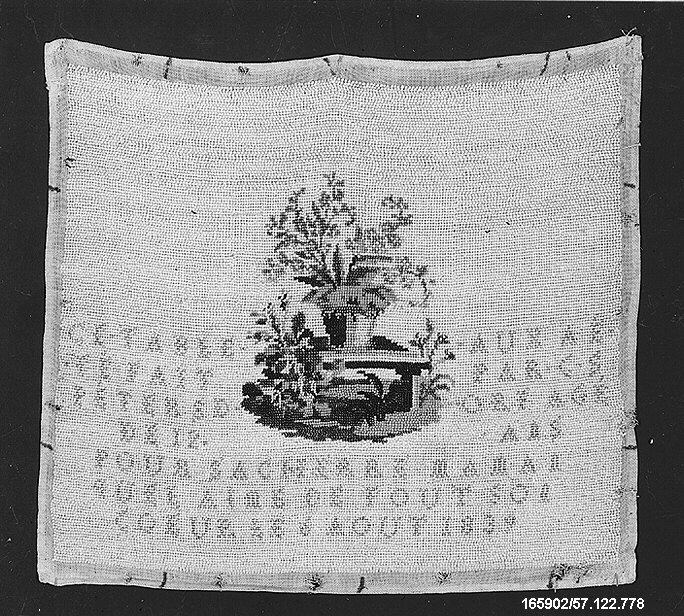
Within the hallowed archives of global heritage, few objects possess the quiet, concentrated power of the sampler. Traditionally a young woman's exercise in discipline, literacy, and decorative skill, the sampler—a piece of linen embroidered with alphabets, motifs, and moral verses—represents a foundational text of material culture. For Katherine Fashion Lab, the sampler is not a relic but a profound conceptual framework. Our standalone study, "Sampler," deconstructs this universal artifact to reconstruct a couture philosophy centered on the coded language of craftsmanship, the sovereignty of the stitch, and the narrative weight of the miniature. By transposing its essence onto the demanding medium of beads on linen, we engage in a dialogue with history to articulate a fiercely contemporary vision of luxury.
Deconstructing the Didactic: The Sampler as Conceptual Blueprint
The historical sampler was, first and foremost, a repository of knowledge. Each meticulously executed cross-stitch or satin stitch served as a personal reference library for future domestic projects. Katherine Fashion Lab appropriates this fundamental principle, reinterpreting the sampler not as a practice piece but as a complete and final lexicon of technique. Every bead applied in our study is a deliberate entry in this lexicon. We examine samplers from English, German, Chinese, and Ottoman traditions, not for their iconographic motifs, but for their underlying grammar: the rhythm of their grids, the logic of their pattern repeats, the spaces between elements. This global heritage provides a non-linear, polyphonic blueprint, allowing us to develop a new "alphabet" of beadwork where a single, perfect bead can function as a full stop, a sequin cascade as a verb, and a void of raw linen as a moment of resonant silence.
Material Dialectic: The Sovereignty of Beads on Linen
The choice of materials is a critical thesis statement. Linen, one of humanity's oldest textiles, is valued for its strength, its integrity, and its sublime, tactile connection to the earth. It provides a ground of austere purity, a direct link to the sampler's humble origins. Upon this ground, we impose the element of extreme luxury and refractive light: the bead. This creates a potent dialectic—the organic versus the synthetic, the matte versus the luminous, the foundational versus the ornamental.
Our technique elevates beadwork from decoration to structural architecture. Drawing from the sampler's "spot sampler" tradition—where isolated motifs are scattered for practice—we deploy beads in clusters that defy mere pattern. They become topographical interventions on the linen landscape. Some sections employ the microscopic precision of *lunéville* hook beading, creating surfaces as dense and textured as coral. Others allow for isolated, monumental beads to stand alone, echoing the singular motifs of a 17th-century sampler. The tension between the humble, absorbent linen and the assertive, light-capturing bead creates a garment that is both rooted and celestial, heavy with history yet visually weightless.
The Narrative of the Fragment: Couture as Autobiographical Archive
Beyond technique, the sampler was an autobiographical object, often incorporating the maker's name, age, and date. It was a document of a moment in a life. Katherine Fashion Lab's "Sampler" study embraces this narrative function but abstracts it for the modern wearer. We conceive each piece as a wearable archive of decisions. A seemingly random scattering of crimson beads may map the emotional coordinates of a specific memory; a densely beaded panel might encode a personal mantra in a non-verbal language of texture and light.
This transforms the garment from a product into a portable legacy object. It does not shout its meaning but holds it in reserve, inviting intimate deciphering. The wearer becomes the curator of their own narrative, layered upon the foundational narrative of the sampler itself. In an age of digital ephemerality, this insistence on physical, tactile, and labor-intensive storytelling reasserts the human hand as the ultimate author of luxury.
Context: The Standalone Study and the Future of Couture
Presented as a standalone study, this exploration exists outside the cycle of seasonal collections. It is a pure research and development endeavor, akin to a scientific experiment or an academic dissertation in material form. This positioning is deliberate. It allows the idea to be examined on its own intellectual and aesthetic merits, free from commercial contingencies. The "Sampler" study is not about creating a garment for immediate consumption; it is about advancing the language of couture itself.
The conclusions drawn here—regarding the narrative potential of base materials, the dignity of historical craft recontextualized, and the power of constrained, conceptual frameworks—will inform the Lab's future directions. This study proves that true innovation often lies not in inventing anew, but in re-reading the past with a radical eye. The sampler, a tool for teaching young women their place, is re-empowered as a tool for articulating a complex, autonomous, and globally-informed identity.
In the final analysis, Katherine Fashion Lab's "Sampler" is a manifesto. It declares that the future of haute couture is inextricably linked to a deep, analytical engagement with heritage. By beading our thoughts onto linen, we inscribe a new chapter in an old, ongoing story—one stitch, one bead, one potent idea at a time.