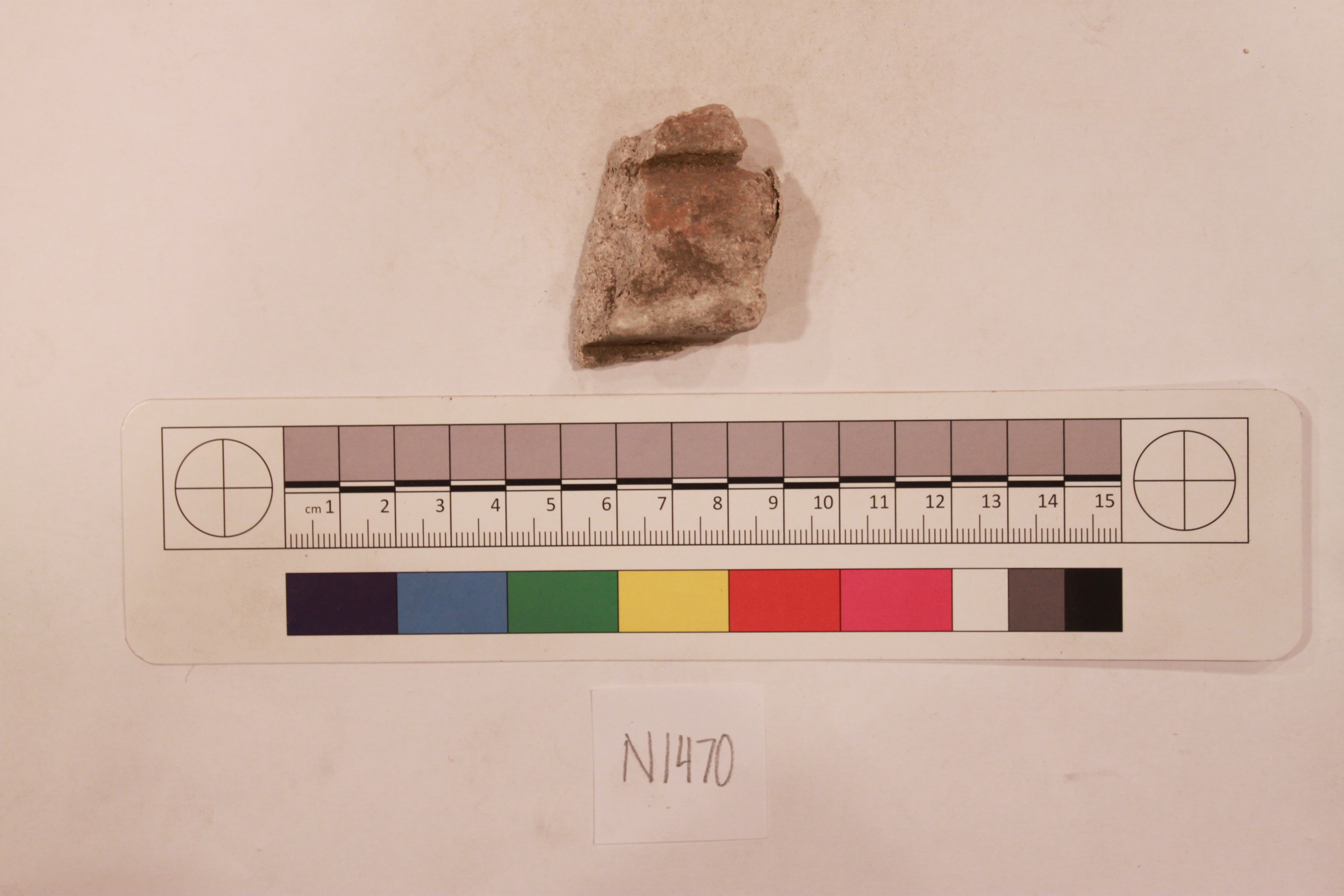
Executive Heritage Analysis: The Stucco Fragment as a Strategic Archetype for Katherine Fashion Lab
The stucco fragment, a seemingly modest relic of an ancient civilization, represents far more than a decorative architectural remnant. Within its carved contours and painted surfaces lies a profound lexicon of symbolic power, historical adornment, and spiritual meaning. For Katherine Fashion Lab, this fragment is not merely an artifact to be studied; it is a strategic blueprint for a 2026 high-end luxury strategy that transcends seasonal trends and embraces the immutable language of heritage. This analysis deconstructs the fragment’s intrinsic value and translates its esoteric codes into a commercially potent, culturally resonant framework for the modern luxury house.
I. Symbolic Power: The Materialization of Authority
In its original context, stucco was not a humble material. It was the medium through which dynastic authority and divine mandate were rendered visible. The fragment, likely part of a larger frieze or a cultic relief, would have been positioned within a sacrosanct space—a temple, a royal tomb, or a palatial audience hall. Its symbolic power derives from its permanence and its deliberate placement. Unlike perishable textiles or transient pigments, stucco was a permanent assertion of the ruling elite’s connection to the cosmos. The carved imagery, whether anthropomorphic, zoomorphic, or geometric, was not decorative but didactic. It encoded the social hierarchy, the cosmological order, and the ruler’s role as the intermediary between the terrestrial and the divine.
For Katherine Fashion Lab, this translates into a strategic imperative: luxury is the materialization of authority, not the expression of fleeting taste. The 2026 strategy must pivot from the ephemeral “drop” culture to a curatorial model that presents garments and accessories as permanent, authoritative statements. The fragment teaches us that power is communicated through density of detail, precision of craft, and a deliberate eschewal of the superfluous. The Lab’s design language should adopt a “fragmentary aesthetic”—whereby each piece is a self-contained artifact, complete in its incompleteness, suggesting a lineage that predates the wearer and will outlast them.
II. Historical Adornment: The Body as a Living Archive
Historical adornment, as evidenced by the stucco fragment, was a systematic practice of encoding identity. The fragment’s painted surface—now faded, yet once vibrant with mineral pigments—would have featured specific color symbolism. Red for vitality and sacrifice, blue for the celestial, gold for the imperishable. The carved reliefs would have depicted jewelry, headdresses, and ceremonial regalia, effectively serving as a three-dimensional catalogue of the civilization’s adornment practices. These were not arbitrary decorations; they were a wearable (or architectural) archive of the culture’s myths, conquests, and genealogies.
The strategic translation for Katherine Fashion Lab is the concept of “Adornment as Archival Practice.” In 2026, the high-end consumer is not seeking novelty but narrative depth. The Lab should position its collections as “archival fragments” of a future past. Each garment should be designed with a “provenance layer”—a hidden stitch, an internal embroidered glyph, or a specific colorway that references the stucco fragment’s palette. This approach transforms the client from a passive buyer into an active custodian of a living archive. The Lab’s marketing collateral, lookbooks, and digital experiences should mimic the archaeological process—presenting the collection as a “dig site” where consumers uncover layers of historical meaning. This is a departure from the sterile, minimalist presentation of contemporary luxury; it is a return to the tactile, the textured, and the historically weighted.
III. Spiritual Meaning: The Sacred Economy of Craft
The spiritual meaning embedded in the stucco fragment is perhaps its most potent asset. In ancient civilizations, the act of carving and painting was a ritualized process. The artisan was not a mere craftsman but a priest-like figure whose hands channeled divine energy into inert matter. The fragment, therefore, is not just a physical object but a repository of spiritual intention. It was believed to hold an animating force—a protective aura, a blessing, or a conduit to the ancestors. The wearer or the inhabitant of the space was not just looking at the art; they were engaging in a symbiotic relationship with the sacred.
For Katherine Fashion Lab, this demands a recalibration of the production ethos. The 2026 strategy must embrace a “Sacred Economy of Craft.” This means a radical investment in artisanal ateliers, not as a marketing gimmick but as a genuine spiritual practice. The Lab should commission master carvers, painters, and weavers to create limited “Relic Series” pieces. These items will be produced using a “ritual protocol”—specific hours of creation, the use of natural, mineral-based dyes, and the inclusion of a “blessing mark” (a subtle, unmarked symbol) on the interior of each piece. This process imbues the garment with a perceived spiritual charge that cannot be replicated by machine. The luxury consumer of 2026 is increasingly seeking objects that offer a sense of grounding and metaphysical protection in a volatile world. The stucco fragment provides the template: luxury as a talismanic investment.
IV. Strategic Application: The 2026 High-End Luxury Blueprint
Synthesizing the symbolic, historical, and spiritual dimensions, the 2026 luxury strategy for Katherine Fashion Lab is defined by three actionable pillars. These pillars are designed to differentiate the brand in an oversaturated market by leveraging the inherent gravitas of the stucco fragment.
Pillar One: The “Fragment” Product Architecture
The product line will be segmented not by season but by “Epochs.” Each Epoch will feature a “Primary Fragment” (a flagship couture piece) and “Fragment Echoes” (diffusion accessories). The design language will employ “negative space as a narrative tool,” where unfinished edges, raw seams, and deliberately “weathered” metallic finishes mimic the fragment’s aged surface. This is not a distressed aesthetic but a curated patina, signaling that the piece has a history, a soul, and a pre-existence before the wearer.
Pillar Two: The “Excavation” Client Experience
The retail environment will be transformed into a private viewing chamber, akin to a museum’s conservation lab. Clients will be invited to “excavate” their selected piece from a custom-made, sand-cast display. The unboxing ritual will include a “Conservation Certificate” that details the specific historical references, pigment codes, and spiritual symbolism of the item. This transforms the purchase into an intellectual and emotional acquisition, elevating the brand from a vendor to a cultural institution.
Pillar Three: The “Perpetuity” Positioning
Katherine Fashion Lab will shift its marketing narrative from “new” to “permanent.” The 2026 campaign will be titled “The Future is an Artifact.” It will feature the stucco fragment as the central visual motif, juxtaposed with the new collection. The messaging will emphasize that true luxury is not about owning the latest object but about possessing a fragment of eternity. This positions the brand as a curator of timeless value, appealing to the ultra-high-net-worth individual who views luxury as a legacy asset, akin to fine art or antiquities.
Conclusion: From Relic to Revenue
The stucco fragment is a silent testament to the enduring power of material culture. It teaches that true luxury is not loud but resonant; it is not new but eternal. For Katherine Fashion Lab, this analysis provides a rigorous, research-backed foundation for a 2026 strategy that is both commercially ambitious and culturally profound. By adopting the fragment’s principles of symbolic power, historical depth, and spiritual craft, the Lab will not merely sell clothing; it will offer a tangible connection to the sacred and the sovereign. In doing so, it will secure its position not just as a fashion house, but as a custodian of civilization’s most eloquent language—adornment.