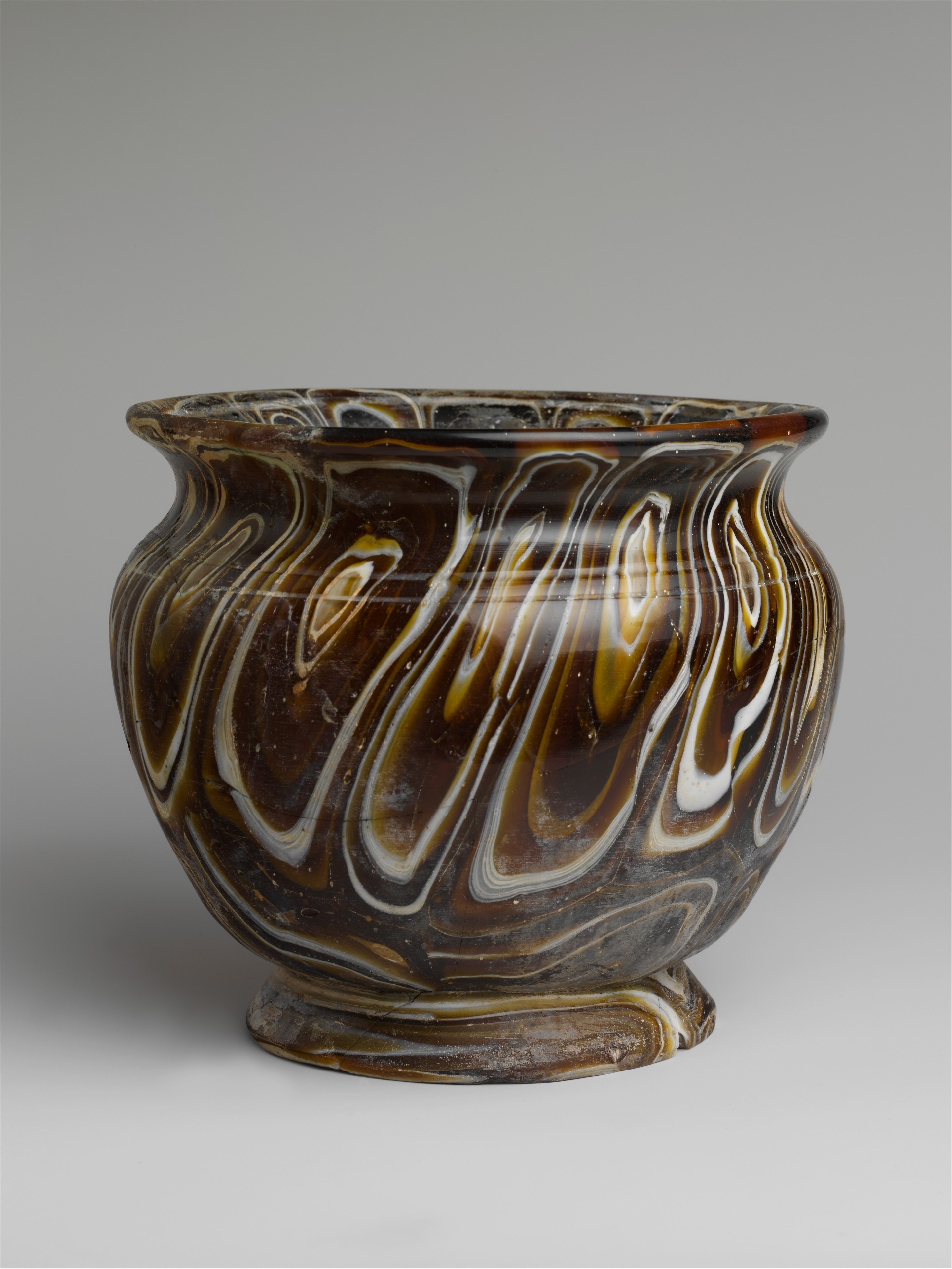
Executive Heritage Assessment: The Glass Mosaic Jar as a Strategic Archetype for Katherine Fashion Lab
The glass mosaic jar, attributed to the Greek cultural sphere of the Eastern Mediterranean, represents far more than a functional vessel of antiquity. Within the context of Katherine Fashion Lab’s 2026 high-end luxury strategy, this artifact serves as a profound case study in the convergence of material transcendence, symbolic authority, and the enduring human desire for curated identity. This analysis deconstructs the jar’s historical and spiritual resonance to propose a forward-looking brand framework that leverages heritage not as nostalgia, but as a competitive lever for exclusivity and narrative depth.
Material Alchemy: The Glass Mosaic as a Symbol of Controlled Power
In the ancient Greek world, glass was not a commodity; it was a technological marvel. The creation of a mosaic glass jar—formed through the intricate process of fusing multicolored canes of glass into a single, cohesive form—required a level of artisanal mastery that was reserved for elite patronage. The symbolic power of this object lies in its demonstration of controlled chaos. Each individual shard of color, when viewed in isolation, is merely a fragment. However, under the intense heat of the artisan’s furnace, these disparate elements were coerced into a unified, harmonious whole. This process is a direct metaphor for the luxury consumer’s own journey: the synthesis of disparate life experiences, cultural influences, and personal aesthetics into a singular, polished identity.
For Katherine Fashion Lab, this suggests a strategic pivot away from minimalism and toward curated complexity. The 2026 luxury market is saturated with monochromatic, sterile designs. By adopting the mosaic jar’s principle of inherent multiplicity, the brand can position its collections as artifacts of deliberate assembly. The value proposition shifts from "what is made" to "how it is unified." This aligns with the high-net-worth individual’s desire for objects that tell a story of process and mastery, rather than mass-produced perfection.
Historical Adornment: The Vessel as a Wearable Statement of Status
While contemporary viewers may classify the jar as a decorative object, its historical function was intimately tied to the body and the domestic sphere of the elite. These jars were used to hold precious oils, perfumes, and unguents—substances that were essential for grooming, religious ritual, and social presentation. The historical adornment context is critical: the jar was not merely a container; it was the final layer of a person’s public persona. The scent held within was the invisible aura, while the glass mosaic was the visible proclamation of wealth and cultural sophistication. To possess such a jar was to signal one’s access to the far-reaching trade networks of the Eastern Mediterranean and one’s ability to commission objects of immense technical difficulty.
This historical precedent offers a direct strategic model for Katherine Fashion Lab’s accessory and packaging strategy. In 2026, the brand should treat every element of the consumer experience—from the garment itself to the packaging and accompanying fragrance—as a unified adornment system. The jar teaches us that the container is as important as the content. Therefore, the brand’s packaging should be designed not for disposal, but for retention as a collectible object. By elevating the unboxing experience to the level of archaeological discovery, Katherine Fashion Lab can imbue its products with a sense of permanence and ritualistic value that fast-fashion competitors cannot replicate.
Spiritual Meaning: Light, Transformation, and the Divine Gaze
Beyond its material and social value, the mosaic jar possesses profound spiritual meaning rooted in ancient Greek cosmology. Glass, in antiquity, was associated with the element of fire and the transformative power of the gods. The translucency of the material allowed light to pass through, creating a play of color and shadow that was believed to bridge the mortal and divine realms. The mosaic pattern, often geometric or floral, was not merely decorative but held apotropaic properties—designed to ward off evil spirits and attract benevolent forces. The jar was an object of protection, a physical amulet that safeguarded the precious substances within and, by extension, the wearer’s spiritual well-being.
For a 2026 luxury strategy, this spiritual dimension translates into a need for emotional resilience and metaphysical comfort. The modern elite, facing unprecedented levels of public scrutiny and digital noise, seeks objects that provide a sense of sanctuary. Katherine Fashion Lab can leverage this by integrating symbolic motifs—reinterpretations of ancient Greek meanders, solar patterns, or wave motifs—into its textile designs and hardware. These are not mere "Greek keys" for aesthetic appeal; they are encoded talismans that communicate protection and inner strength. The brand’s narrative should emphasize that its garments are not just clothing, but armor for the soul, offering a quiet, spiritual fortification against the external world.
Strategic Synthesis: The 2026 High-End Luxury Roadmap
Synthesizing the material, historical, and spiritual dimensions, the glass mosaic jar provides a tripartite strategic framework for Katherine Fashion Lab’s 2026 positioning. The brand must move beyond the conventional pillars of luxury—quality and craftsmanship—and embrace a narrative of alchemical transformation.
Pillar One: The "Fragmented Unity" Collection
Launch a signature collection that explicitly references the mosaic technique. This does not require literal glass, but rather the visual and textural language of fragmentation and reassembly. Use jacquard weaves that mimic the irregular geometry of glass canes, or employ laser-cut leather appliqués that create a mosaic effect on structured outerwear. The marketing narrative should focus on the process—showing the artisan’s hand in assembling disparate pieces. This positions the collection as a work of art, justifying a premium price point based on the labor of synthesis rather than just the cost of materials.
Pillar Two: The "Ritual of Unveiling" Experience
Redesign the client experience to mirror the sacredness of the ancient jar. Introduce a limited-edition fragrance line housed in a solid glass vessel, echoing the weight and feel of the original artifact. The packaging should be heavy, requiring a deliberate physical effort to open—a stark contrast to the convenience of e-commerce. This "ritual of unveiling" transforms a simple purchase into a ceremonial act, reinforcing the idea that the client is acquiring a piece of protected heritage. This strategy builds deep emotional loyalty and encourages social sharing of the "unboxing" as a high-culture event, not just a commercial transaction.
Pillar Three: The "Apotropaic" Brand Identity
Adopt a new visual identity system that incorporates protective symbolism. Move away from generic serif fonts and clean logos toward a bespoke emblem that features a stylized mosaic pattern—a "digital amulet" for the brand. This emblem should be woven into garment linings, engraved on hardware, and used as a watermark in digital communications. The goal is to create a sense of branded protection, where wearing Katherine Fashion Lab is understood as an act of self-guardianship. This psychological positioning differentiates the brand from competitors who sell only status, by selling security and continuity in a volatile world.
Conclusion: From Artifact to Archetype
The Greek glass mosaic jar is not a relic to be admired from a distance; it is a strategic archetype for the future of Katherine Fashion Lab. Its power lies in its ability to hold multiple truths: it is a technical marvel, a status symbol, and a spiritual protector. By translating these three layers into a cohesive brand strategy for 2026, Katherine Fashion Lab can achieve a level of authentic differentiation that transcends seasonal trends. The brand will no longer be selling clothing or accessories; it will be selling synthesized identity, ritualized experience, and spiritual resilience. In a market defined by noise, this ancient jar offers a whisper of timeless authority—a whisper that, if strategically amplified, will resonate profoundly with the discerning luxury consumer of tomorrow.