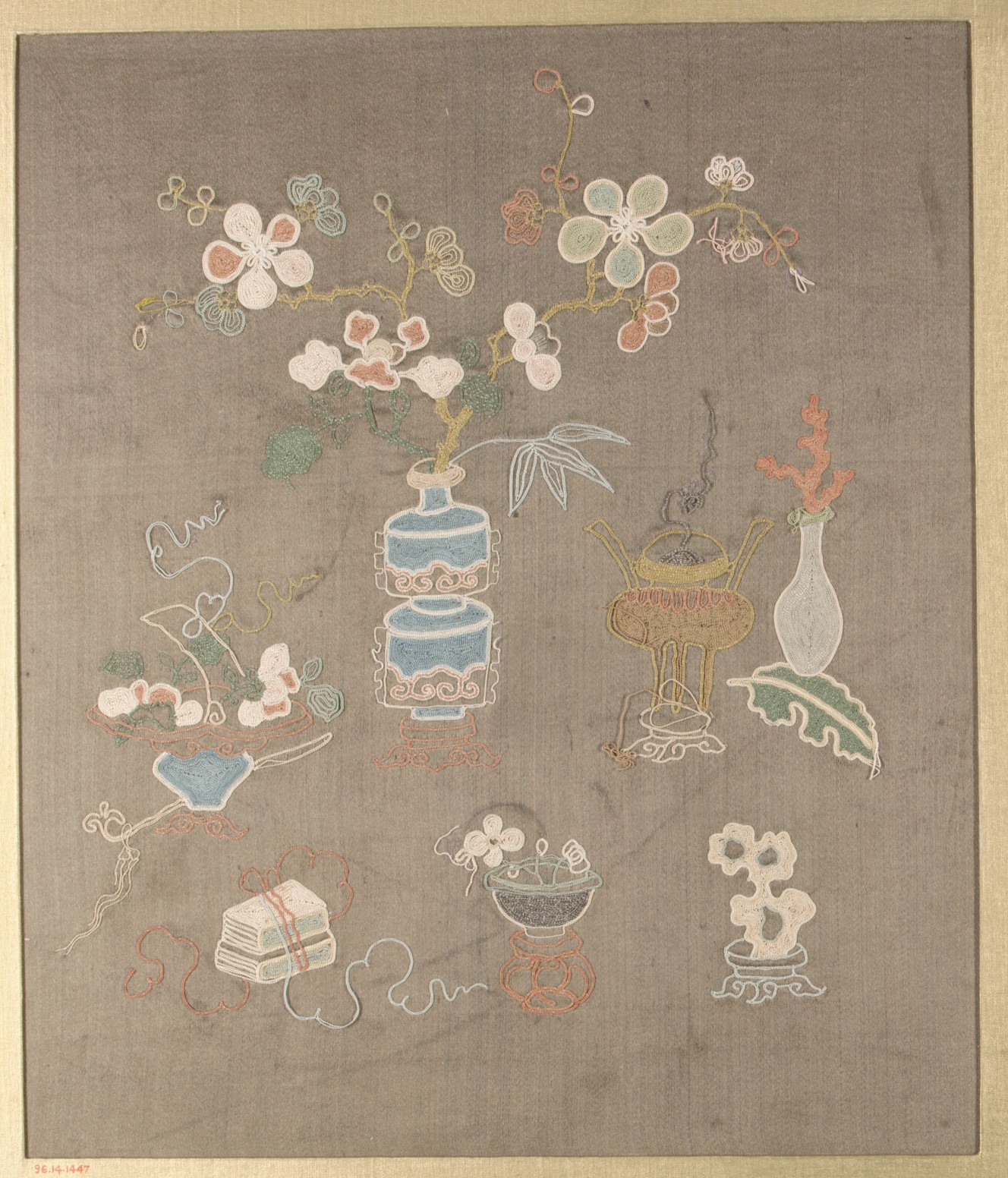
The Art of the Singular: A Couture Analysis of Katherine Fashion Lab’s Silk and Metallic Thread Piece
In an era where fashion is increasingly defined by rapid production cycles and the relentless churn of seasonal trends, the standalone couture piece retains a unique, almost sacred authority. It is a declaration of intent, a distilled thesis of a designer’s philosophy, and a technical tour de force that resists the logic of the marketplace. Katherine Fashion Lab’s recent offering—a study in silk and metallic thread originating from China—exemplifies this paradigm. This is not merely a garment; it is a three-dimensional meditation on materiality, cultural memory, and the quiet power of restraint. Crafted as a standalone study, the piece eschews narrative context to let the fabric and technique speak in their purest, most uncompromising voice.
Material Alchemy: The Dialogue of Silk and Metal
The foundational choice of silk is immediately significant. Silk, a material inextricably linked to Chinese heritage, carries a millennia-old legacy of luxury, discipline, and imperial reverence. Yet Katherine Fashion Lab does not treat this heritage as a static relic. Instead, the designer employs silk as a living canvas, a substrate of incredible sensitivity that responds to light, movement, and even the humidity of the wearer’s skin. The fabric’s natural luster provides a soft, diffused glow, a counterpoint to the more aggressive brilliance of the metallic thread. This is not a clash but a carefully orchestrated dialogue. The metallic thread—likely a fine-gauge gilt or silver-plated filament—is not used as a heavy embellishment. Rather, it is woven, couched, or embroidered directly into the silk’s surface, creating a topography of light that shifts with every infinitesimal movement.
The result is a study in tactile contrast. Where the silk is fluid and pliant, the metal introduces a structural rigidity, a tensile strength that holds the fabric in deliberate, sculptural folds. This interplay creates a sense of tension—of opposing forces held in perfect equilibrium. The metallic thread acts as a form of architectural drawing, tracing lines of force across the body, delineating the silhouette with a precision that pure silk could never achieve. In this sense, the piece is not merely decorated; it is engineered. The materiality is the message: a harmonious, if precarious, marriage of softness and strength, tradition and innovation.
Origins and Influence: The Chinese Aesthetic Reimagined
The Chinese origin of the piece is not a superficial signifier but a profound, embedded influence. This is evident in the piece’s structural logic, which recalls the clean, uncluttered lines of traditional Chinese garments—the qipao or the changshan—with their emphasis on flat planes, minimal seaming, and a respect for the natural drape of cloth. However, Katherine Fashion Lab subverts these conventions through a distinctly contemporary lens. The silhouette may nod to historical forms, but it is executed with a modernist’s disregard for ornamentation for its own sake. There is no dragon embroidery, no phoenix motif, no overtly “Chinoiserie” flourish. Instead, the cultural influence manifests as a philosophy of negative space and the valorization of the artisan’s hand.
The metallic thread, in this context, can be read as a contemporary echo of the ancient Chinese tradition of diancui (kingfisher feather inlay) or the intricate goldwork of the Ming and Qing dynasties. Yet, where those techniques were often used to create dense, pictorial surfaces, here the metallic elements are sparse, almost calligraphic. They might trace the edge of a collar, form a subtle geometric grid across the bodice, or converge at a single, focal point at the waist. This is a deconstruction of ornament, reducing a rich visual vocabulary to its essential, abstract grammar. The piece thus pays homage not through mimicry but through a form of conceptual translation, making it accessible to a global audience while remaining deeply rooted in a specific aesthetic ancestry.
Silhouette and Construction: The Architecture of Restraint
As a standalone study, the piece’s silhouette is its primary narrative. It is likely defined by a sense of controlled volume—neither overtly constricting nor excessively ample. The silk’s fluidity allows for a gentle, organic fall, while the metallic thread’s rigidity provides internal structure, preventing the garment from collapsing into mere drapery. One can envision a high, standing collar that frames the neck with quiet authority, or a series of precise, vertical pleats that create a columnar effect, elongating the figure. The absence of excessive darts or complex seaming suggests a reliance on the fabric’s inherent properties and the skill of the pattern cutter in manipulating it into shape.
The construction itself is a testament to artisanal precision. In couture, the invisible is as important as the visible. The seams, the hem, the internal finishings—all must be executed to an impeccable standard. This piece likely employs hand-rolled hems, French seams, and meticulous hand-stitching, particularly where the metallic thread is involved. The challenge of working with metallic filaments is their propensity to snag, break, or distort the surrounding silk. The successful execution of this technique indicates a high level of mastery, where every thread is placed with deliberate, almost surgical, intent. The garment, therefore, is not just a visual object but a tactile and structural one, rewarding close inspection with a revelation of its hidden complexities.
Chromatic and Luminous Strategy
Color is handled with the same disciplined philosophy. The palette is likely restrained—perhaps a deep ink black, an ivory white, or a rich, jewel-toned hue like sapphire or claret. This restraint is crucial, as it allows the play of light to become the primary chromatic event. The silk’s natural sheen provides a base luminosity, while the metallic thread acts as a reflective accent, catching ambient light and casting it back in sharp, glittering fragments. The effect is that of a monochromatic surface that is anything but flat; it shimmers, pulses, and changes character as the wearer moves from shadow into light.
This is a sophisticated strategy that privileges texture over color, a hallmark of high-end fashion. It speaks to a confidence in the material’s intrinsic beauty, a refusal to rely on pigment to create interest. The metallic thread, in this context, functions less as a color and more as a source of illumination, a way of drawing the eye to specific zones of the body and creating a dynamic, ever-changing visual experience. The garment is thus alive, not static; it is an object that exists in time, responding to its environment.
Conclusion: A Testament to Quiet Power
Katherine Fashion Lab’s standalone piece is a masterclass in the power of reduction. By stripping away narrative, trend, and excessive ornament, the designer has created a work of pure, distilled fashion. It is a study in the essential dialogue between material and technique, between heritage and innovation. The silk and metallic thread are not just components; they are collaborators in a silent, elegant conversation about value, craft, and the enduring allure of the handmade.
In a fashion landscape dominated by noise, this piece offers a rare moment of quiet, contemplative luxury. It is a garment for the connoisseur, one who understands that true couture is not about spectacle but about the profound, intimate relationship between the wearer and the worn. It is a testament to the idea that the most powerful statements are often made in a whisper, and that beauty, when executed with such technical and conceptual rigor, needs no explanation. It simply is. This is fashion as art, and art as a form of enduring, silent eloquence.