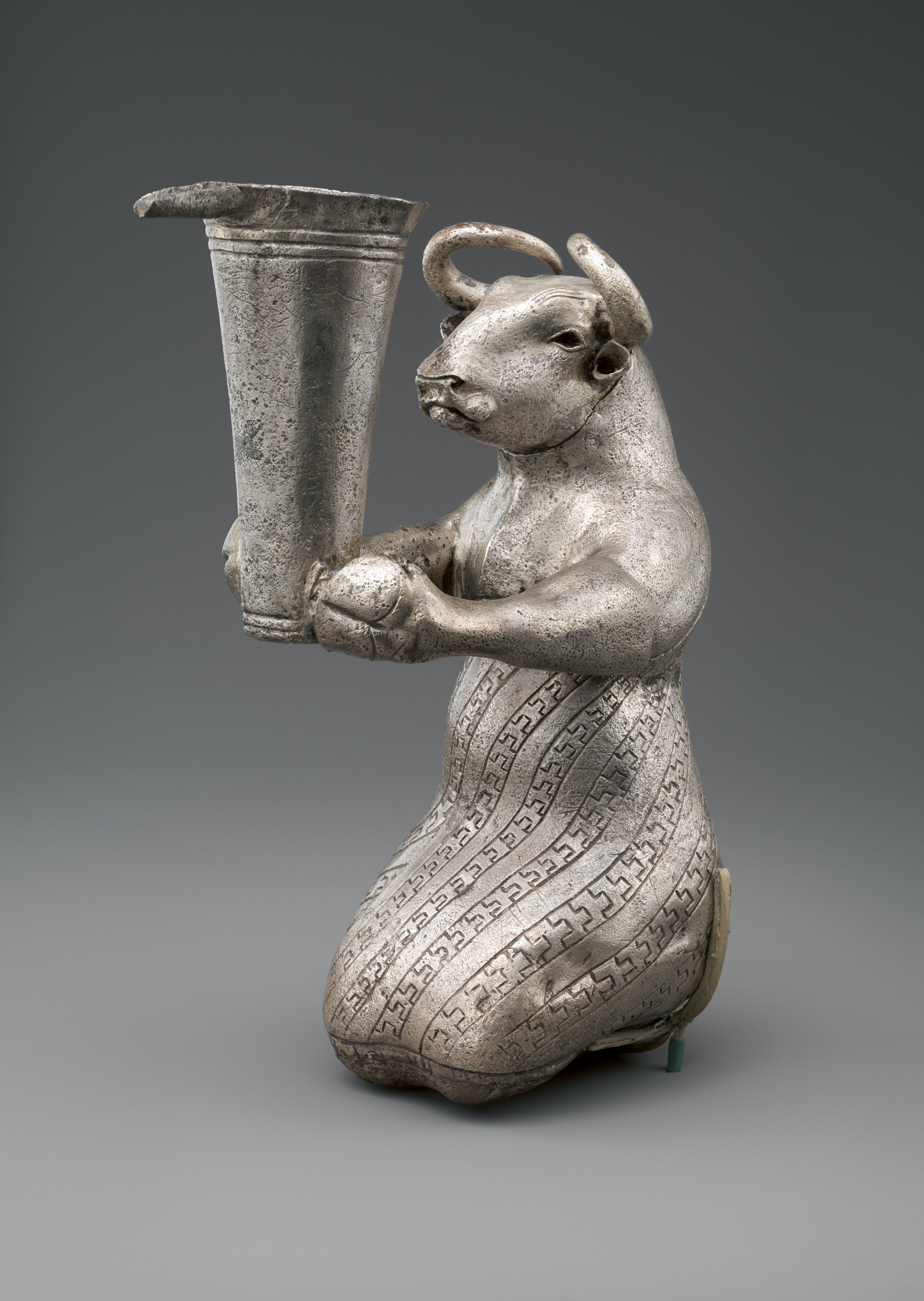
Executive Heritage Assessment: The Kneeling Bull Vessel and Its Strategic Resonance for Katherine Fashion Lab
The acquisition of cultural intelligence is no longer a peripheral activity for luxury houses; it is a core competency for narrative differentiation. In this strategic standalone research, Katherine Fashion Lab examines the Proto-Elamite kneeling bull holding a spouted vessel, a silver artifact dating to approximately 3100–2900 BCE. This object is not merely an archaeological curiosity. It is a masterclass in symbolic compression, material authority, and ritualized utility. For a 2026 high-end luxury strategy, this artifact offers a potent blueprint for designing objects that transcend function and enter the realm of talismanic status. This analysis decodes the bull’s symbolic power, its role in historical adornment, its spiritual meaning, and translates these findings into actionable, high-value design and brand architecture recommendations.
Symbolic Power: The Bull as Sovereign Force
In the Proto-Elamite worldview, the bull was not a passive symbol of pastoral wealth. It was the embodiment of chthonic and celestial force, a creature whose physical prowess mirrored the unpredictable power of the gods. The kneeling posture is critical. It does not denote submission; rather, it signals controlled potency. The bull is resting, yet its muscles are coiled, and its head is raised with deliberate alertness. This is a visual paradox—power held in reserve, energy awaiting release. For Katherine Fashion Lab, this translates directly into the concept of “disciplined opulence.” The 2026 luxury consumer is not seeking loud extravagance; they seek objects that whisper of strength. The kneeling bull teaches us that true luxury is the art of restraint, where every curve and contour suggests a deeper, untapped force.
Furthermore, the spouted vessel integrated into the bull’s back is not an afterthought. It is the functional apotheosis of the animal’s power. The bull does not merely exist; it dispenses. It becomes a conduit between the earthly realm and the divine, channeling libations—likely water, oil, or blood—for ritual offerings. This fusion of animal form and utilitarian vessel elevates the object from a statue to a “ritual instrument of abundance.” For a modern luxury strategy, this implies that product design must not separate beauty from utility. A handbag, a fragrance flacon, or a jewelry piece must be conceived as a vessel for a narrative, a dispenser of identity. The power lies in the object’s ability to perform a function while simultaneously projecting an aura of mythic control.
Historical Adornment: Silver as the Skin of the Divine
The choice of silver is a profound strategic decision. In Proto-Elamite society, silver was rarer and more highly prized than gold in certain contexts, primarily because it was not native to the region and had to be imported from distant Anatolian or Iranian highlands. This scarcity imbued silver with a dual meaning: it was both a marker of elite trade networks and a material associated with lunar deities and the cool, reflective realm of the underworld. Unlike gold’s solar, extroverted brilliance, silver possesses a “moonlit introspection.” It catches light not to dazzle, but to absorb and refract it subtly, creating a sense of depth and mystery.
For historical adornment, this artifact suggests that the Proto-Elamite elite did not wear jewelry merely for decoration. They wore metallic symbols that anchored their social and spiritual identity. The kneeling bull vessel, likely used in temple ceremonies or elite funerary rites, would have been handled, displayed, and possibly worn as a pectoral or attached to ceremonial garb during processions. The silver surface, now oxidized, would have originally gleamed with a brilliant, almost liquid quality. This ephemeral luminosity was a direct manifestation of divine presence. In a 2026 luxury context, Katherine Fashion Lab should pivot away from the ubiquitous “yellow gold” saturation of the market. Instead, embrace “oxidized silver patinas” and “moonstone inlays” that mimic the artifact’s aged, mysterious surface. This material storytelling creates an immediate sense of provenance and rarity, appealing to collectors who value depth over brightness.
Spiritual Meaning: The Vessel as Sacred Intermediary
Spiritually, the kneeling bull holding a spouted vessel operates on three distinct planes: terrestrial, liminal, and celestial. Terrestrially, it represents the agricultural cycle and the bull’s role in plowing and fertility. Liminally, it stands at the threshold between the human settlement and the wild, untamed mountains where the Elamite gods were believed to reside. Celestially, the spout’s upward tilt suggests an offering directed toward the sky, a physical channel for human supplication. The bull, therefore, is not a passive idol but an “active intercessor.” It does not merely represent a god; it facilitates communication with the divine.
This tripartite spiritual function offers a profound framework for luxury brand storytelling. A 2026 collection inspired by this artifact should not be marketed as “inspired by ancient art.” Instead, it should be positioned as “functional talismans for the modern seeker.” Consider a limited-edition jewelry line where each piece is designed to be a personal vessel—a locket that holds a written intention, a ring with a hidden compartment for a precious oil, or a cuff whose interior is engraved with a protective cuneiform-like pattern. The spiritual meaning is not decorative; it is operational. The wearer is not merely accessorizing; they are participating in a private ritual of self-empowerment. This aligns perfectly with the 2026 luxury trend toward “quiet spirituality” and “intentional consumption.”
Strategic Application: The 2026 High-End Luxury Blueprint
Translating this heritage analysis into a competitive market strategy requires a multi-pronged approach. First, Katherine Fashion Lab should launch a “Proto-Elamite Capsule Collection” titled “The Kneeling Power.” This collection would feature three core product categories: sculptural silver minaudières shaped as recumbent bulls, high-jewelry necklaces with a central bull motif holding a detachable spouted pendant, and a unisex fragrance housed in a heavy, silver-finished glass flacon with a bull-shaped stopper. The design language must emphasize the “kneeling posture”—low, grounded, yet poised. Avoid vertical, towering silhouettes. Use soft, geometric curves that suggest repose and latent energy.
Second, the material strategy must be uncompromising. Use recycled sterling silver with a deliberate matte or darkened finish, paired with black onyx, deep lapis lazuli, or raw, unpolished diamonds. This palette evokes the ancient Near Eastern aesthetic while remaining contemporary. The packaging should mimic the artifact’s function: each piece must be presented in a weighted, felt-lined box that resembles a miniature altar, with a small spouted vessel included as a ceremonial accessory. This transforms unboxing into a ritual act, reinforcing the object’s spiritual and historical weight.
Third, the marketing narrative must pivot from “heritage” to “strategic transcendence.” Do not sell a story; sell a system of meaning. Position the collection as a response to the chaotic, hyper-digital world of 2025. The kneeling bull is the antidote—it is stillness, control, and ancient wisdom. Launch a documentary-style content series titled “The Language of Vessels,” featuring archaeologists, material scientists, and contemporary artists discussing the artifact’s relevance. This establishes Katherine Fashion Lab as a cultural authority, not just a fashion house.
Conclusion: From Artifact to Archetype
The Proto-Elamite kneeling bull is more than a historical relic; it is a strategic archetype for luxury’s future. Its symbolic power lies in controlled strength, its adornment in rare materials, and its spiritual meaning in active intermediation. For Katherine Fashion Lab’s 2026 strategy, this artifact demands a shift from passive ornamentation to “functional symbolism.” By designing objects that are vessels for personal power, using materials that speak of lunar depth, and crafting narratives that position the wearer as a sovereign intercessor, the brand can achieve a rare distinction: creating luxury that is not merely owned, but activated. The kneeling bull does not bow to the past; it kneels in readiness for the future. Katherine Fashion Lab should do the same.