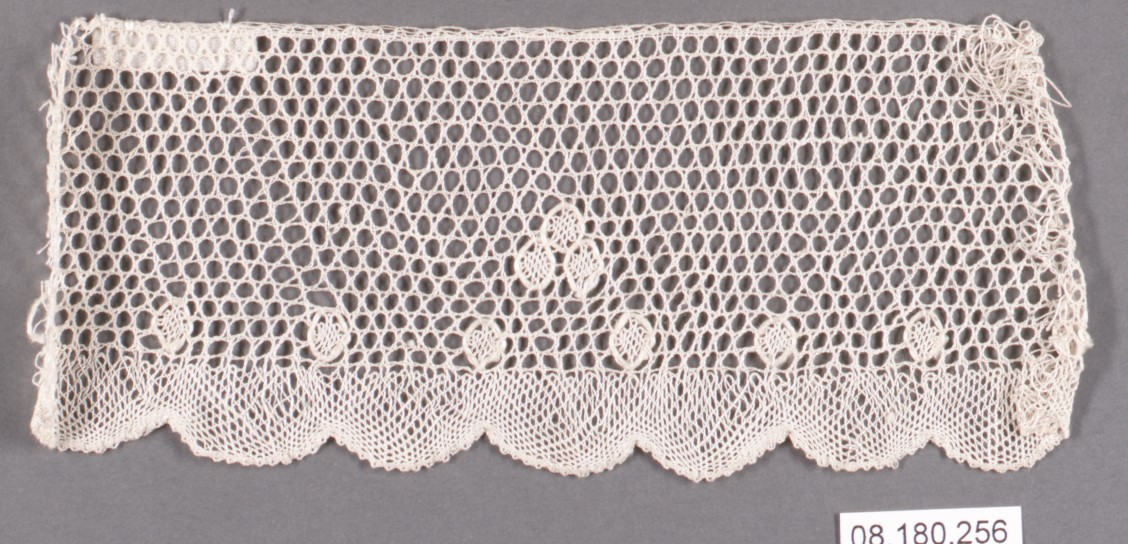
Deconstructing Heritage: The Bobbin Lace Fragment as Couture
In the rarefied echelons of haute couture, where innovation often masquerades as rupture, Katherine Fashion Lab’s latest standalone study—titled simply Fragment—offers a profound counter-narrative. This is not a garment in the conventional sense, nor is it a nostalgic reproduction. Rather, Fragment is a philosophical and material interrogation of origin, memory, and the very architecture of adornment. By isolating bobbin lace—a technique born of 16th-century European convents and Flemish market towns—from its traditional context of full dresses, veils, and trims, the Lab elevates a humble, labor-intensive craft into a standalone object of radical couture. The result is a masterclass in tension: between the rigid logic of construction and the fluidity of decay, between global heritage and hyper-localized artistry.
The Material Logic of Bobbin Lace
To understand Fragment, one must first appreciate the technical brutality of bobbin lace. Unlike needle lace, which builds loops with a single needle, bobbin lace is woven ex nihilo from multiple threads, each wound on a weighted bobbin. The lacemaker’s hands move in a choreographed dance, twisting and crossing these threads over a pillow, pinning the pattern into existence. The resulting textile is not merely decorative; it is a structural paradox—simultaneously the strongest and most fragile material in the couturier’s arsenal. A single broken thread collapses the entire grid.
Katherine Fashion Lab’s choice to feature bobbin lace as the sole material for Fragment is a deliberate act of reduction. In an era of techno-fabrics and 3D-printed embellishments, the Lab returns to a pre-industrial logic where beauty is a function of repetition and precision. The fragment itself is irregular—roughly the size of a human torso, but with jagged, unhemmed edges that suggest a violent extraction from a larger whole. The lace pattern is not a floral or geometric cliché; instead, it mimics the microscopic structure of bone trabeculae—the spongy lattice inside human bones. This is heritage reimagined through the lens of biological engineering, a nod to the global lineage of lace as a record of human touch and anatomical memory.
Fragment as a Standalone Object: The New Couture Silhouette
In traditional couture, the garment is a vehicle for the body. Fragment inverts this hierarchy. Presented as a standalone study, it is neither worn nor draped in the conventional sense. Instead, it is mounted on a custom, invisible wire armature that suspends the lace in mid-air, allowing light to pass through every aperture. The silhouette is not that of a dress or a jacket; it is the silhouette of a negative space. The viewer sees the absence of the body as a positive form, a ghostly vestige that invites projection and introspection.
This curatorial decision—to display the fragment as an autonomous artifact rather than a functional garment—forces a re-evaluation of what couture means in the 21st century. The Lab argues, through this piece, that couture is no longer about covering or enhancing the human form, but about abstracting it into pure concept. The fragment’s irregular edges are not flaws; they are intentional fractures, echoing the geological and cultural fault lines that define our global heritage. The lace’s openwork becomes a metaphor for the porous boundaries between cultures, eras, and disciplines—a standalone study that refuses to be contained by the taxonomy of fashion.
Heritage Recontextualized: From Global to Personal
The origin of Fragment is deliberately ambiguous. Katherine Fashion Lab sources its bobbin lace from a consortium of ateliers in Flanders, Venice, and the Cantonese region of China—where a parallel, yet distinct, bobbin tradition flourished in the 19th century. By blending these threads into a single fragment, the Lab creates a global heritage that is not a pastiche but a synthesis. Each thread carries its own geopolitical history: the flax of Flanders, the silk of Venice, the cotton of Canton. Yet, in the final object, these origins are indistinguishable, fused into a monochromatic ivory that speaks to a universal, pre-linguistic language of craft.
This is not cultural appropriation; it is cultural curation. The Lab’s design team spent three years reverse-engineering historical patterns, then deliberately introduced errors—a twisted pair here, a skipped pin there—to create a new, fragmented grammar. These micro-disruptions are the couture signature: they transform a faithful reproduction into an original work of art. The fragment thus becomes a palimpsest, where the ghost of the original pattern is visible beneath the new, broken logic. In this way, Fragment honors its global origins while asserting its standalone authority as a contemporary object.
Technical Mastery and the Economics of Time
From a purely technical standpoint, Fragment is a tour de force of slow fashion. It required approximately 2,400 hours of handwork—the equivalent of a single artisan working for 14 months. The bobbin count exceeds 1,200, each wound with a silk-and-linen blend dyed with natural indigo and oak gall, producing a spectrum of ivory to pale ash. The Lab’s atelier employs a rare cohort of master lacemakers, most over 60 years old, whose knowledge is transmitted orally. This is not merely a craft; it is an endangered language. By isolating the fragment, the Lab makes a political statement: couture must preserve its intangible heritage or become obsolete.
The structural integrity of the piece is equally remarkable. The lace is stiffened not with chemical resins but with a traditional starch made from arrowroot, a nod to colonial trade routes that once connected the Americas to European lace markets. This allows the fragment to hold its shape while remaining breathable and translucent. The armature, though invisible, is calibrated to distribute tension so precisely that the lace appears to float, defying gravity. This engineering precision, combined with artisanal fragility, creates a dialectic that is the hallmark of Katherine Fashion Lab’s design philosophy: strength through vulnerability.
Critical Interpretation: The Fragment as a Mirror of Modern Identity
In the context of contemporary fashion, where fast trends and digital simulacra dominate, Fragment stands as a quiet rebuke. Its standalone presentation forces the viewer to confront the question: what is a complete garment? In an age of identity fragmentation—where global citizens navigate multiple cultural allegiances—the fragment is not a deficiency but a condition. The lace’s openwork mirrors the networked, porous nature of modern selfhood: we are all composed of borrowed threads, woven into patterns we inherit but must break to make our own.
Moreover, the piece challenges the gendered history of lace. Historically dismissed as “women’s work” and relegated to the domestic sphere, bobbin lace is here elevated to the status of high art, displayed in a gallery-like setting with the same reverence as a bronze sculpture. Katherine Fashion Lab’s decision to feature a female-led atelier and to credit each individual lacemaker by name on the accompanying placard is a radical act of reclamation. The fragment is not anonymous; it is a collective biography of hands that have toiled, often invisibly, to produce beauty.
Conclusion: The Future of Couture is Fragmented
Katherine Fashion Lab’s Fragment is not a nostalgic retreat into the past, but a blueprint for the future. It demonstrates that couture can be intellectually rigorous, materially honest, and globally conscious without sacrificing aesthetic transcendence. By severing the lace from its traditional garment context, the Lab liberates the material from functional servitude, allowing it to speak as pure form and pure idea. The fragment is, paradoxically, a complete statement—a standalone study that contains within its broken edges the entirety of fashion’s potential: to remember, to disrupt, and to reimagine.
In an industry obsessed with the new, Fragment reminds us that the most radical innovation often lies in the careful, obsessive preservation and reinterpretation of the old. It is a masterpiece of reduction, a whisper that outshouts the noise. For the discerning collector, the museum curator, or the fashion theorist, Fragment is not merely an object; it is a thesis on the very meaning of couture in a world that has lost its thread. And in that loss, Katherine Fashion Lab finds its most profound creative freedom.