Executive Heritage Analysis: The Scarab of Sebeknakht
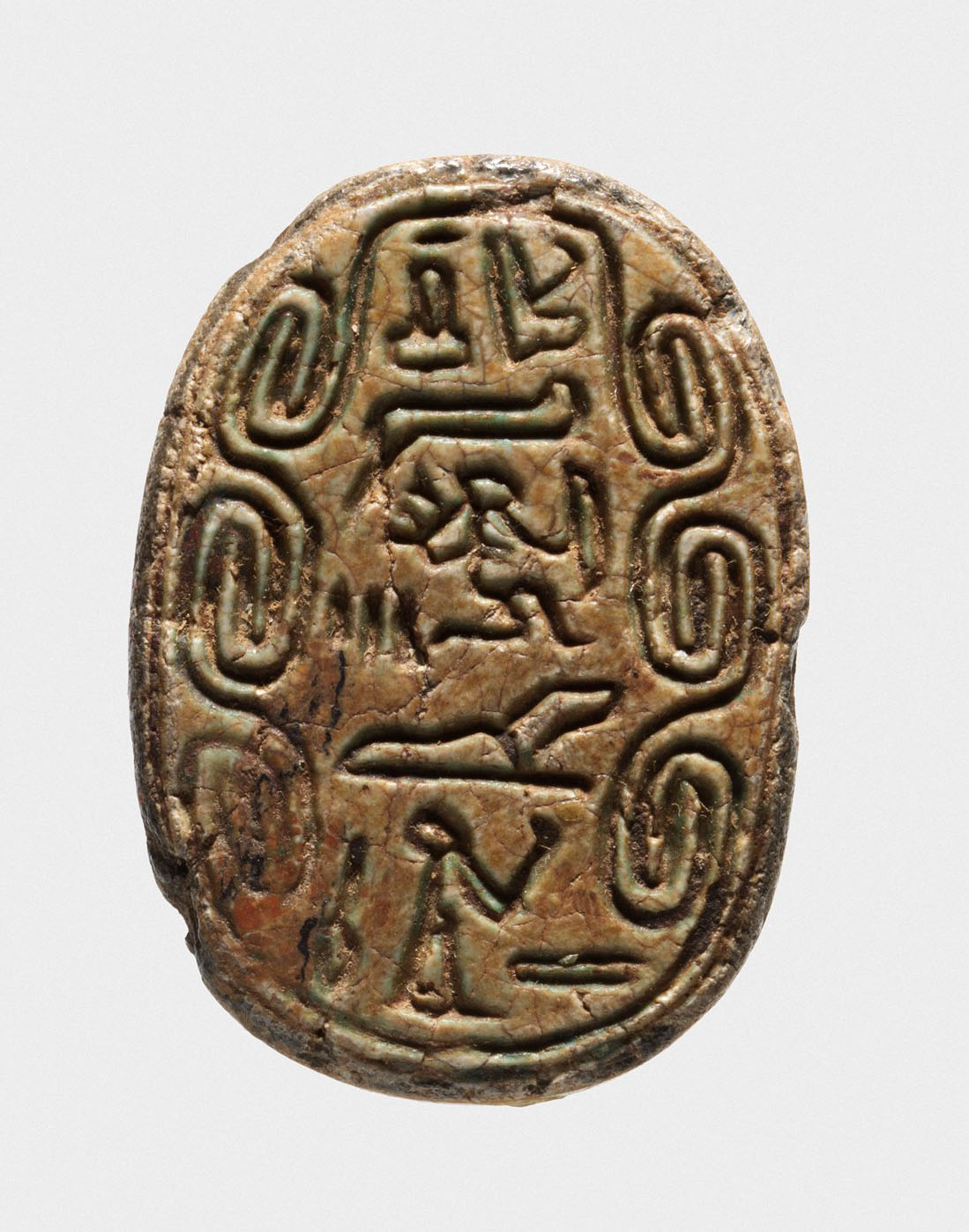
This strategic research paper presents a comprehensive heritage analysis of the Scarab of the Overseer of the Troops Sebeknakht, a glazed steatite artifact from an ancient civilization. Commissioned as a standalone study for Katherine Fashion Lab, this analysis decodes the object’s symbolic power, historical adornment function, and spiritual meaning, culminating in a forward-looking luxury strategy for the 2026 collection cycle. The scarab is not merely an archaeological relic; it is a compressed lexicon of authority, protection, and cyclical rebirth—attributes that resonate profoundly with contemporary high-end consumer desires for authenticity, resilience, and transcendence.
Symbolic Power: The Iconography of Command and Cosmic Order
The scarab beetle (Scarabaeus sacer) occupied a privileged position in ancient Egyptian cosmology, serving as the terrestrial avatar of the sun god Khepri, who rolled the solar disc across the sky each dawn. In the context of Sebeknakht, whose title explicitly denotes military oversight, the scarab’s symbolism is doubly charged. It fuses solar regeneration with disciplined command, creating a talisman of controlled power. The glazed steatite medium—a soft stone transformed into a lustrous, ceramic-like surface—mirrors this ideological transformation: base material elevated to divine permanence through human craft. For Katherine Fashion Lab, this suggests a design language where raw, utilitarian elements are refined into objects of quiet authority, appealing to clients who seek power without ostentation.
The hieroglyphic inscription naming Sebeknakht is not decorative but performative. In ancient practice, the written name anchored the individual’s existence within the cosmic order, ensuring his memory and efficacy in the afterlife. This act of nominal inscription transforms the scarab from a generic amulet into a personalized instrument of legacy. Strategically, this underscores the luxury market’s growing appetite for bespoke, monogrammed pieces that carry narrative weight—items that are not merely owned but are extensions of the wearer’s identity and aspirations.
Historical Adornment: From Amulet to Status Signal
Functionally, the scarab served as a seal, a protective amulet, and a marker of social rank. When worn on a cord or mounted in a ring, it was simultaneously a practical tool for authenticating documents and a visible declaration of the wearer’s proximity to pharaonic power. The overseer of troops would have worn this scarab as part of his daily regalia, signaling his role as an intermediary between the king’s will and the military apparatus. The glazed surface, often in shades of blue or green, imitated turquoise and lapis lazuli—semiprecious stones associated with fertility, resurrection, and divine favor. This deliberate material mimicry speaks to a sophisticated understanding of perceived value in antiquity.
For contemporary heritage curation, the scarab exemplifies how adornment functions as a dual-signal system: one directed inward (personal belief, spiritual protection) and one directed outward (social standing, institutional role). Katherine Fashion Lab can draw a direct parallel to modern luxury accessories, which must balance intimate meaning with public performance. The scarab’s compact size and portability also highlight the importance of micro-luxury—small, high-impact objects that carry disproportionate symbolic weight. In an era of digital saturation, a physical talisman offers a tactile, grounding counterpoint.
Spiritual Meaning: Rebirth, Judgment, and the Heart
Beyond its martial and administrative connotations, the scarab held profound funerary significance. The so-called “heart scarab” was placed over the deceased’s heart to prevent it from testifying against the soul during the Weighing of the Heart ceremony. In this context, the scarab was a guarantor of moral integrity and a facilitator of resurrection. Sebeknakht’s scarab, while likely used in life, would have retained this eschatological resonance—a reminder that earthly authority was transient, but spiritual continuity was eternal. This duality of purpose—practical in life, salvific in death—renders the object a powerful metaphor for the luxury consumer’s quest for legacy.
The spiritual dimension extends to the material itself. Steatite, also known as soapstone, is soft and easily carved, yet its glazing renders it impermeable and enduring. This alchemical transformation—from malleable to immutable—mirrors the human journey of refinement through discipline and ritual. For Katherine Fashion Lab, this suggests a narrative of transformative craftsmanship: the idea that luxury is not about the raw material’s cost but about the skill and intention that elevate it to an heirloom-grade artifact. The scarab’s spiritual function also invites a contemporary reinterpretation as a “digital detox” amulet or a mindfulness anchor, aligning with wellness-driven luxury trends.
2026 High-End Luxury Strategy: The Scarab Protocol
Based on this analysis, Katherine Fashion Lab should position the Scarab of Sebeknakht as the conceptual keystone for a 2026 capsule collection titled “Khepri’s Command.” The strategy rests on three pillars: Heritage Authentication, Ritualized Personalization, and Cyclical Sustainability.
Heritage Authentication
Leverage the scarab’s provenance and inscription as a storytelling device. Each piece in the collection will reference the historical artifact’s iconography—not through direct reproduction, but through abstracted motifs: the scarab’s dorsal lines reinterpreted as architectural seams; the glazed steatite’s sheen translated into ceramic-coated metals or high-polish, bio-resin composites. Provide a digital “provenance passport” for each item, documenting its design lineage from Sebeknakht’s scarab to the modern atelier. This satisfies the luxury consumer’s demand for verifiable authenticity, countering the ephemerality of fast fashion.
Ritualized Personalization
Introduce a bespoke service where clients commission a “personal scarab”—a small, wearable talisman inscribed with a personal sigil or motto, echoing the ancient practice of nominal inscription. This service will be framed as a modern rite of passage, with a private consultation ritual that includes a historical briefing on the scarab’s spiritual function. The deliverable is not just an accessory but a ceremonial object, reinforcing emotional attachment and long-term retention. This aligns with the 2026 forecast for experiential luxury, where the purchase journey is as valuable as the product.
Cyclical Sustainability
The scarab’s association with rebirth and the sun’s daily cycle offers a powerful narrative for sustainable luxury. Position the collection as part of a closed-loop production model: materials are sourced from recycled or upcycled components, and each piece is designed for disassembly and rebirth into new forms. Marketing copy will explicitly link this circularity to the scarab’s symbolism, framing the consumer’s purchase as an act of cosmic participation. This differentiates Katherine Fashion Lab from competitors who treat sustainability as a compliance issue rather than a spiritual and aesthetic proposition.
Finally, the 2026 strategy should include a limited-edition “Overseer’s Seal” ring, directly inspired by the scarab’s seal function. This piece will feature a rotating bezel that reveals a hidden, laser-engraved inscription—either the client’s initials or a motivational phrase—serving as a tactile reminder of personal authority and resilience. The ring’s launch will be accompanied by a short documentary film featuring Egyptologists and modern talisman-makers, bridging ancient wisdom with contemporary craft. This multi-sensory approach ensures that the Scarab of Sebeknakht is not merely referenced but embodied, creating a lasting emotional and intellectual resonance with the Katherine Fashion Lab clientele.