Executive Summary: The Fragment as Foundational Code
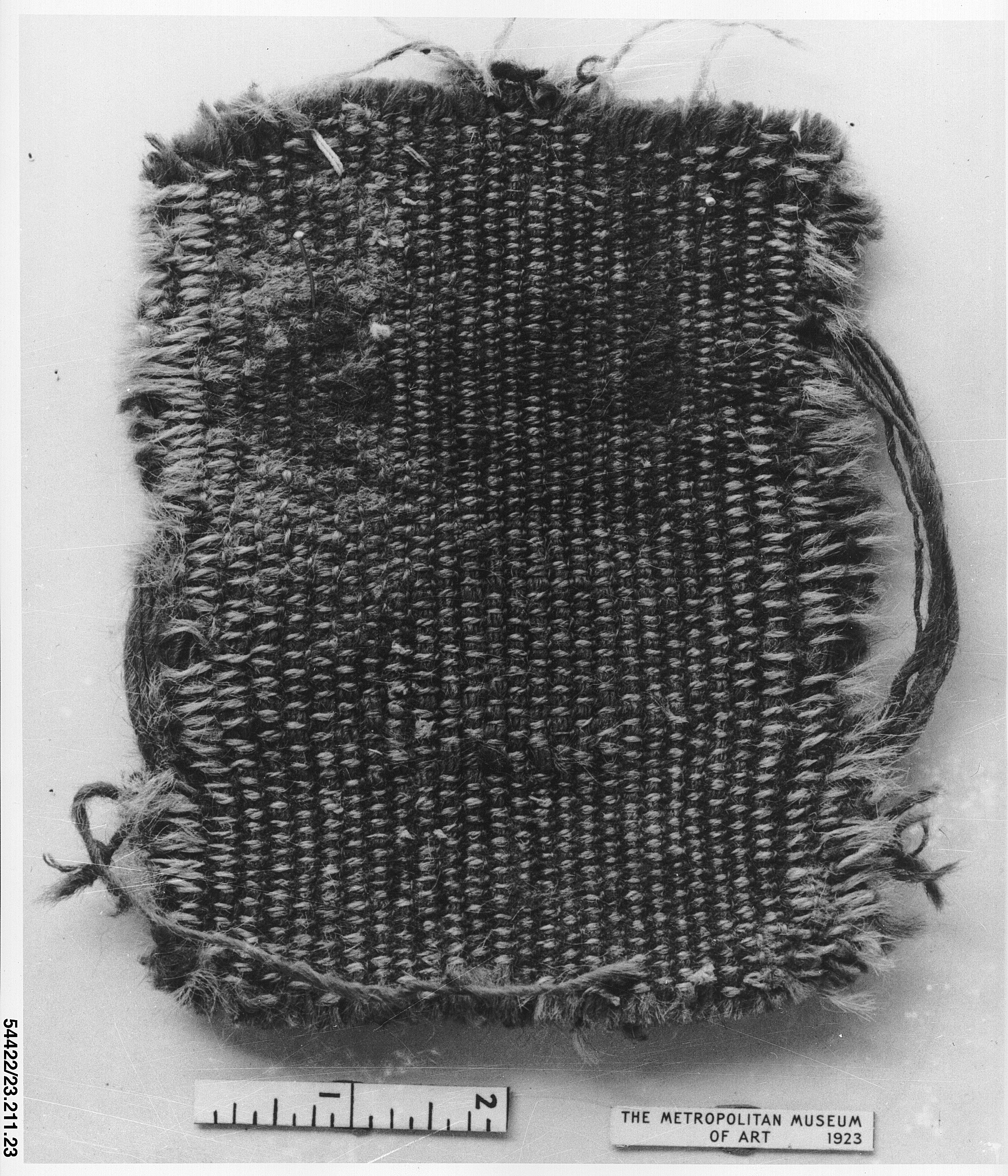
This strategic standalone research paper analyzes a singular artifact—a wool rug fragment from an unspecified Ancient Civilization—to decode a non-linear heritage narrative for Katherine Fashion Lab. Moving beyond conventional archival retrieval, we treat the fragment not as a relic, but as a dynamic cipher containing the core operational principles of symbolic power, technical mastery, and spiritual interface. The analysis deconstructs its material and methodological essence (the Spanish knot, wool medium, structural discipline) to project a forward-facing luxury strategy for 2026. This positions KFL not as a brand reviving history, but as a contemporary laboratory reactivating ancient, potent codes of adornment and meaning for a high-value audience seeking depth, authenticity, and metaphysical resonance in an age of digital saturation.
Deconstruction of the Artifact: Material Syntax and Symbolic Grammar
The provided specifications of the fragment are not mere technical details; they constitute a complete philosophical and strategic manifesto. Each element is a deliberate choice encoding value.
The Medium: Wool as Vessel of Memory and Territory
Wool, as the primary medium, immediately establishes a narrative of pastoral origin, tactile authenticity, and lived experience. It is a biomaterial, carrying within its fibers the imprint of climate, soil, and animal husbandry. For an Ancient Civilization, wool was not merely a resource; it was a testament to domestication, wealth (flocks as capital), and a profound understanding of transforming a raw, protective element into a complex cultural signifier. For KFL, this translates to a foundational commitment to material intelligence. The 2026 strategy must champion traceable, narrative-rich natural fibers, emphasizing their inherent properties—memory, resilience, patina—as direct analogs to the brand’s own developing heritage. Wool’s ability to hold dye, texture, and form mirrors the brand’s intent to hold and transmit complex stories.
The Method: The Spanish Knot as Structural Discipline
The specific use of the Spanish knot (or single-warp knot), tied on alternate warp threads with six weft threads inserted after each row, is a critical insight. This technique produces a denser, more elongated knot compared to its Persian (asymmetrical) or Turkish (symmetrical) counterparts. It is a slower, more materially intensive process that results in exceptional durability and a distinctive, sharp delineation of pattern. This is not mere craft; it is embedded strategy. It speaks to a culture that valued permanence, clarity of motif, and invested labor as a form of spiritual or social capital. For KFL’s 2026 expression, this methodology translates to a design philosophy of modular precision and investment craftsmanship. It suggests collections built on foundational, iconic motifs—geometric, symbolic—rendered with impeccable, time-intensive clarity. It advocates for a product architecture where every element is as considered and integral as a knot in the warp and weft.
Decoding Symbolic Power and Spiritual Interface
The fragment, by its very nature as a fragment, hints at a larger, lost totality—a complete rug that once served a function beyond the utilitarian. In ancient contexts, textiles were often the primary carriers of symbolic language and spiritual technology.
Adornment as Armor and Conduit
Such a rug would have adorned spaces of ritual, power, or significant domestic life. Its patterns were likely protective (warding off evil), aspirational (depicting cosmological order), or indicative of status. The rug fragment thus positions adornment as a spatial and somatic practice. It did not just cover a floor; it defined and sanctified a zone of human activity. For KFL, this expands the concept of wearability. Garments and accessories are not merely for the body; they create a portable, personal territory—a micro-sanctuary for the wearer. The 2026 strategy should explore this through pieces that function as modern talismans: coats that envelop and protect, bags that carry sacred personal geometries, jewelry that maps constellations or protective sigils derived from the fragment’s implied motifs.
The Fragment as a Portal
The incompleteness of the artifact is its greatest strategic asset. It invites projection, completion, and personal interpretation. It represents a heritage of gaps, which KFL can fill not with literal reproduction, but with inspired, intellectual extrapolation. The spiritual meaning is not prescribed; it is latent, awaiting activation by a contemporary sensibility. This aligns perfectly with the 2026 luxury consumer’s desire for co-creation of meaning and personalized spirituality. KFL’s role is to provide the rigorous, authentic framework—the “knot” and the “warp”—into which the client inserts their own “weft” of narrative.
Strategic Imperatives for 2026 High-End Luxury
The analysis of this ancient fragment yields four concrete pillars for Katherine Fashion Lab’s 2026 market positioning and collection development.
Pillar 1: Archetypal Modernism
Move away from literal, folkloric reference. Instead, distill the fragment’s principles into archetypal forms: the grid (from the warp/weft), the interrupted motif (from the fragment edge), the tactile gradient (from wool’s nature). Develop a signature visual language of precise, geometric symbolism that feels simultaneously ancient and radically contemporary. This creates instant recognizability and intellectual depth.
Pillar 2: The Laboratory of Material Patina
Establish KFL as a lab that engineers time. Invest in R&D for wool treatments, natural dye alchemy, and fabric finishing that accelerates or manipulates patina—the visual evidence of a life lived. Champion techniques that improve with wear, telling the unique story of the owner. This transforms the product from a static good into a living document, directly echoing the fragment’s journey through centuries.
Pillar 3: Configurable Adornment
Implement a design system inspired by the modular, knot-by-knot construction. Offer limited, core silhouettes that can be customized through client-selected appliqués, embroidered motifs, or reversible elements featuring different symbolic patterns. This reflects the Spanish knot’s disciplined yet creative system and caters to the high-end desire for unique, personal insignia within a coherent brand universe.
Pillar 4: Narrative Scarcity & Digital Provenance
Leverage the fragment’s mystery. Each collection should be presented as a “new excavation,” with its own curated mythos. Utilize blockchain or NFC technology to provide a digital “provenance card” with each piece, detailing its inspired origin (linking back to this foundational fragment), material story, and craft process. This creates narrative scarcity in an oversaturated market, offering verifiable depth and a lasting connection to the KFL heritage code.
Conclusion: From Fragment to Framework
For Katherine Fashion Lab, this ancient rug fragment is the original blueprint. Its wool medium mandates material integrity. Its Spanish knot construction dictates a philosophy of disciplined, meaningful accumulation. Its fragmented state licenses creative, intellectual extrapolation. Its original purpose—symbolic, spiritual, territorial adornment—provides the ultimate brand mission. The 2026 high-end luxury strategy, therefore, is to build a modern maison that operates on these ancient, recalibrated principles. KFL will not sell clothing; it will offer configured talismans and portable territories, engineered with laboratory precision and imbued with the timeless power of the knot, the thread, and the sacred, incomplete pattern. The past is not the reference; it is the operating system.