Executive Heritage Assessment: The Drop-Front Desk as a Blueprint for Modern Luxury
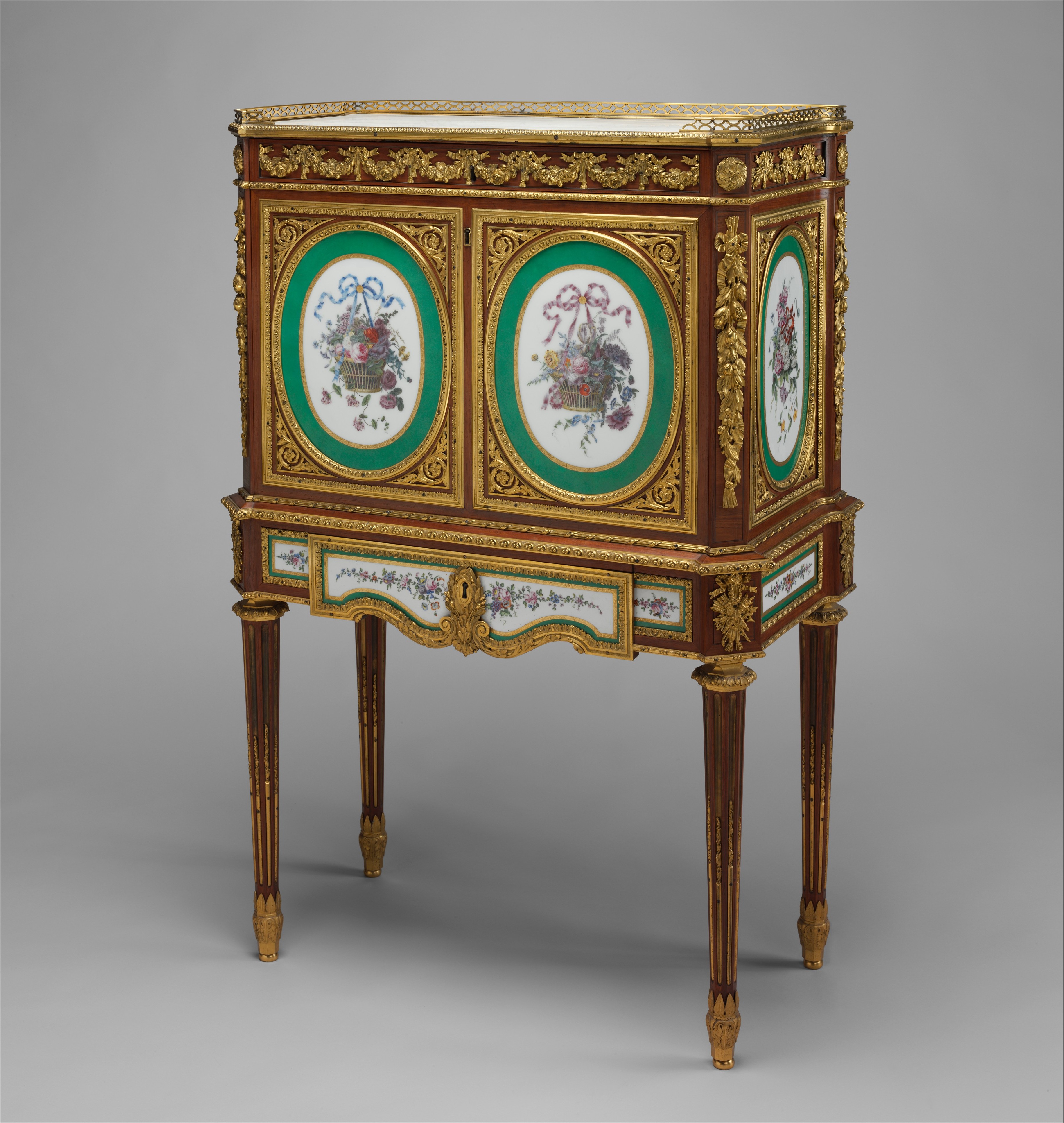
In the rarefied echelons of high-end luxury, the contemporary consumer seeks more than material excellence; they pursue objects that embody narrative depth, cultural gravitas, and an almost talismanic resonance. The drop-front desk, or secrétaire à abattant, presents a compelling case study in this regard. While its physical form—a marriage of oak, tulipwood, amaranth, holly, and gilt-bronze—originates from the refined ateliers of 18th-century France, its conceptual DNA is far older, drawing from the spiritual and administrative symbolism of ancient civilizations. For Katherine Fashion Lab, this object is not merely a piece of furniture but a strategic blueprint for a 2026 luxury collection that fuses symbolic power with contemporary wearable art.
Symbolic Power: The Architecture of Secrecy and Authority
The drop-front desk’s defining feature—its hinged writing surface that locks to conceal a labyrinth of drawers and compartments—is a direct descendant of ancient Egyptian and Mesopotamian chests and scribal boxes. In those civilizations, the act of writing was not secular but sacerdotal. The scribe was a conduit between the mortal realm and the divine, and the container that held their implements was a repository of sacred knowledge. The locking mechanism was not a mere security feature; it was a symbolic threshold separating the profane world from the sanctum of creation.
For the 2026 luxury strategy, this translates into a design philosophy of curated revelation. Katherine Fashion Lab can leverage this archetype by creating garments and accessories that feature concealed elements—hidden pockets, reversible panels, or clasps that require a deliberate gesture to open. This is not about utility; it is about granting the wearer an aura of controlled authority. The modern luxury client does not want transparency; they want the power to reveal selectively. By embedding this “locked knowledge” motif into a collection, the brand positions itself as a guardian of secrets, elevating the wearer from a consumer to a custodian of hidden narratives.
Hierarchy in Materials: The Ancient Precedent
The material palette of this desk—oak veneered with exotic tulipwood and amaranth—mirrors ancient trade routes where rare woods and pigments were markers of imperial reach. In ancient Rome and Byzantium, purple (amaranth’s hue) was reserved exclusively for the emperor, while citrus wood tables fetched prices equal to estates. The use of amaranth here is not accidental; it is a deliberate invocation of imperial purple, a chromatic signal of supreme status. The ebonized holly, contrasting sharply with the lighter tulipwood, creates a visual tension that echoes the Egyptian use of black and gold—black for the fertile Nile silt and the underworld, gold for the eternal sun.
In a 2026 context, Katherine Fashion Lab must adopt a material hierarchy that communicates power without overt logos. The strategy should involve sourcing rare, historically significant materials—perhaps deep aubergine silks, blackened woods, or gilded hardware—that speak to an educated clientele. The goal is to create a piece where the material itself is the status signal, bypassing the need for visible branding. This approach aligns with the “quiet luxury” trend but deepens it by layering in ancient chromatic symbolism, making the garment a piece of wearable history that only the initiated can fully decode.
Historical Adornment: The Porcelain Plaques as Narrative Frescoes
The ten soft-paste porcelain plaques inset into this desk are arguably its most distinctive adornment. In the 18th century, these plaques were often painted with pastoral scenes, allegories of the seasons, or mythological figures—miniature frescoes intended for private contemplation. This practice descends directly from ancient Greek and Roman domestic decoration, where wealthy households commissioned wall paintings (megalographia) to convey philosophical ideals and personal virtues. The plaques are not decorative afterthoughts; they are didactic icons that transform the desk into a personal altarpiece celebrating the owner’s intellect and taste.
For the luxury strategy, this suggests a move toward micro-narratives in adornment. Rather than a single, overwhelming motif, the 2026 collection should feature a series of small, intricate “plaques” in the form of embroidered patches, enameled brooches, or laser-cut leather appliqués. Each piece would tell a distinct story—a constellation, a botanical specimen, a geometric cipher—drawn from ancient iconography. The wearer becomes a living gallery, displaying curated fragments of history. This approach fosters a deeper emotional connection to the garment, as the client engages in a personal dialogue with each symbol, much like a collector studying their porcelain plaques.
The Gilt-Bronze Mounts: The Gilded Skeleton of Power
Gilt-bronze mounts on this desk serve a dual purpose: they protect the vulnerable corners and edges, and they announce the object’s value through their shimmering presence. In ancient cultures, gilding was reserved for divine statues and temple implements. The application of gold was an act of consecration, transforming a mundane object into a vessel for the divine. The mounts here act as the desk’s “armor,” suggesting that knowledge must be guarded and that beauty is a form of defense.
In 2026, this translates to a focus on structural detailing—the zippers, buckles, and seams of a garment. These are not functional afterthoughts but the “gilt-bronze mounts” of the modern wardrobe. Katherine Fashion Lab should invest in bespoke, sculptural hardware that feels like jewelry, not utility. A cufflink that resembles a miniature Corinthian capital, a zipper pull that evokes a scarab beetle, or a belt buckle that mimics a Roman fibula—these details consecrate the garment, elevating it from clothing to relic. The luxury client will pay a premium for this level of intentionality, recognizing that the hardware is where the object’s spiritual energy is concentrated.
Spiritual Meaning: The Desk as a Meditative Threshold
Beyond its physical utility, the drop-front desk functions as a ritual object. The act of opening the fall-front, revealing the organized compartments within, is a ceremonial gesture—a daily meditation on order and clarity. This mirrors ancient Egyptian practices where the opening of the mouth ceremony was performed on statues and mummies to animate them. The desk, when opened, is “animated” with the owner’s intentions; when closed, it returns to a state of dormant potential. The velvet lining, though not original, reinforces this idea of softness and protection, cushioning the sacred implements within.
The spiritual strategy for 2026 involves creating a ritual of dressing. Katherine Fashion Lab should market its collection not as individual items but as components of a daily ceremony. A jacket with a hidden interior pocket becomes a “reliquary” for a personal talisman. A skirt with a concealed waistband clasp becomes a “lock” that the wearer secures before entering the world. The brand can produce accompanying literature or digital content that guides the client through this ritual, thereby transforming the act of getting dressed into a spiritual practice. This deepens brand loyalty, as the client’s daily routine becomes intertwined with the label’s philosophy, creating a bond that transcends transactional fashion.
2026 High-End Luxury Strategy: Synthesis and Application
To operationalize this heritage analysis, Katherine Fashion Lab must adopt a three-pillar strategy for 2026: Archeological Storytelling, Material Consecration, and Experiential Secrecy.
Pillar One: Archeological Storytelling
Every piece in the collection will be accompanied by a “provenance card” that traces its design DNA back to an ancient civilization—not as a gimmick, but as a scholarly reference. For instance, a tailored coat might be linked to the Mesopotamian scribe’s shoulder mantle, with its structural seams echoing cuneiform tablet divisions. This positions the brand as an intellectual authority, appealing to collectors who value provenance as much as aesthetics. The marketing campaign will eschew traditional advertising in favor of a “digital museum” experience, where clients can zoom into the micro-details of each garment and read the historical rationale behind every stitch.
Pillar Two: Material Consecration
Katherine Fashion Lab will source materials that carry intrinsic historical weight—such as amaranth-dyed wools, naturally blackened oak-bark leather, or bronze-cast buttons. These materials will be presented as “consecrated” through a limited production run, with each piece numbered and authenticated. The use of materials that age gracefully, developing a patina over time, aligns with the ancient belief that objects gain spiritual power through use. This counters the fast-fashion paradigm of disposability, offering instead an heirloom model where the garment’s value appreciates with age and story.
Pillar Three: Experiential Secrecy
The retail experience for 2026 will be redesigned as a “cabinet of curiosities.” Clients will be invited into private viewing rooms where garments are presented in locked armoires. The sales associate, acting as a modern-day scribe, will perform the “unlocking” ritual, revealing the garment layer by layer. This theatrical presentation creates a memorable, exclusive experience that justifies a premium price point. Additionally, a bespoke service will allow clients to commission a hidden compartment within a garment—a secret pocket for a love letter, a passport, or a precious stone—directly referencing the desk’s hidden drawers. This service transforms the client from a passive buyer into an active co-creator of their own symbolic armor.
Conclusion: The Desk as a Living Legacy
The drop-front desk, with its ancient roots and 18th-century refinement, is far more than a historical artifact. It is a repository of universal human desires—the desire for authority, for beauty, for spiritual order, and for the power of hidden knowledge. For Katherine Fashion Lab, this object offers a comprehensive blueprint for a 2026 luxury strategy that is intellectually rigorous, aesthetically sublime, and deeply resonant. By translating the desk’s symbolic power into wearable form, the brand does not merely sell clothing; it offers a legacy of power, a daily ritual of consecration, and a private sanctuary of selfhood. In a market saturated with noise, this approach offers the rarest luxury of all: silence, depth, and the quiet confidence of a well-kept secret.