The Art of Memory: Deconstructing Souvenir at Katherine Fashion Lab
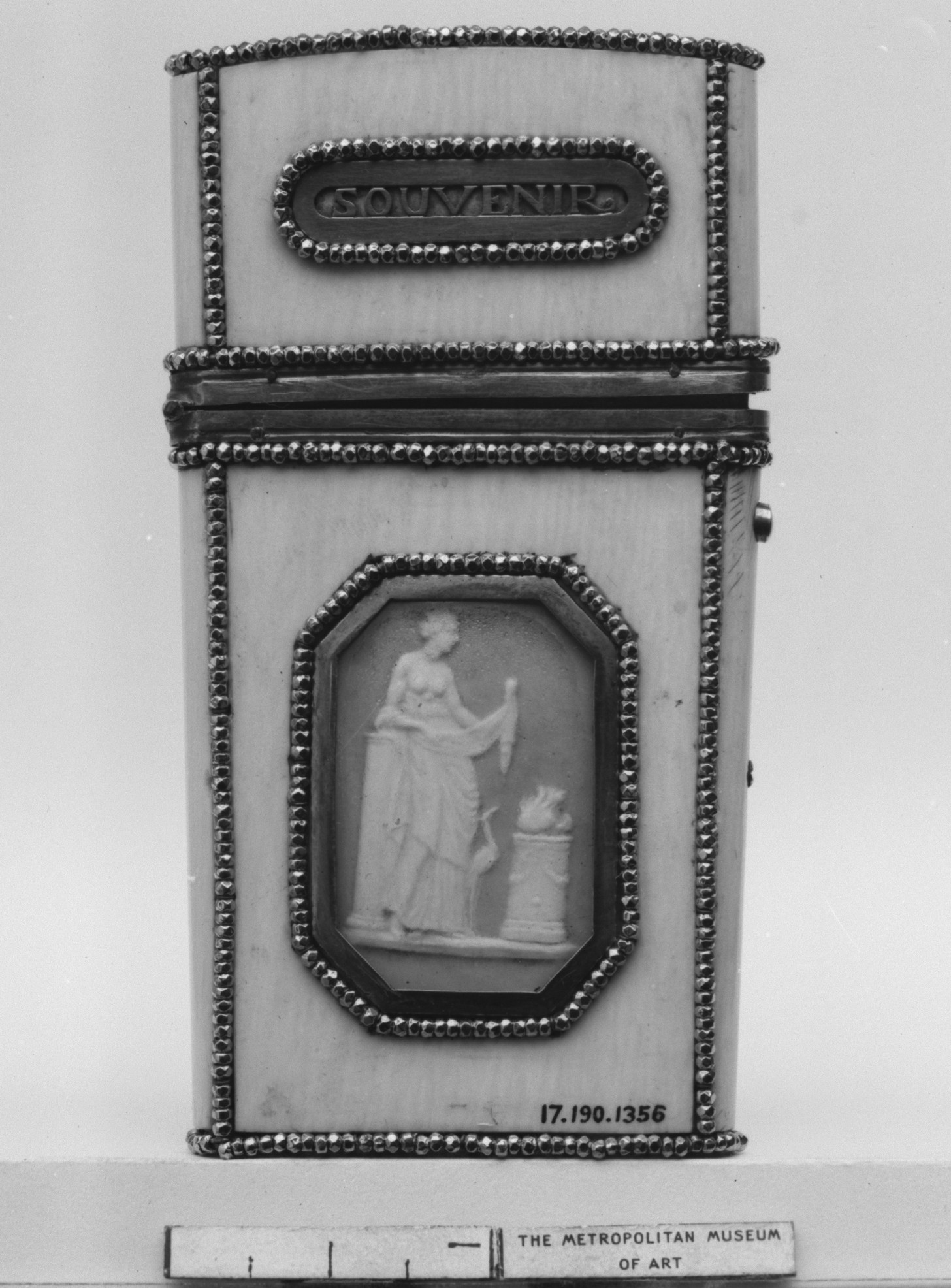
In the rarefied world of haute couture, where novelty often masquerades as innovation, Katherine Fashion Lab’s latest standalone study, Souvenir, presents a formidable intellectual and material challenge. This is not a collection in the traditional sense; it is a philosophical inquiry rendered in gold, ivory, steel, and porcelain. By invoking the concept of the souvenir—an object that stands in for a place, a moment, or a lost self—the Lab has produced a body of work that interrogates the very nature of memory, value, and the globalized inheritance of craft. The result is a meditation that is both opulent and austere, demanding that we reconsider what we carry forward from our collective past.
The Ontology of the Keepsake: From Memento to Monument
The genius of Souvenir lies in its refusal to sentimentalize. A conventional souvenir is a trinket, a miniature Eiffel Tower or a painted seashell, designed to be easily consumed and discarded. Katherine Fashion Lab, however, has inverted this logic. Here, the souvenir is monumentalized, rendered in materials of extreme durability and intrinsic worth. The choice of gold, ivory, steel, and porcelain is not accidental. Each material carries a distinct historical and cultural weight, acting as a repository of global heritage that spans continents and millennia.
Gold, the universal signifier of the eternal and the divine, is used not as gaudy ornament but as a structural filament, weaving through the fabric like a vein of memory. It suggests the incorruptible nature of certain recollections—those that refuse to tarnish. In contrast, steel introduces the modern, the industrial, and the unyielding. It is the material of bridges and railways, of the great movements of people and goods that have defined our global heritage. When steel is interwoven with gold, the Lab stages a dialogue between the ancient and the contemporary, between the sacred and the secular. The steel does not diminish the gold; rather, it grounds it in the reality of human labor and migration.
The inclusion of ivory is perhaps the most provocative and ethically charged decision. Historically, ivory has been the medium of the master carver, used for netsuke, religious icons, and the intricate fans of imperial courts. Its use here is not a nostalgic nod to colonial plunder but a deliberate confrontation with the material's fraught history. In the context of Souvenir, ivory represents the organic, the once-living, and the irreplaceable. It reminds us that the most precious souvenirs are often those that are extinct or endangered—memories of a world we can no longer access. The Lab handles this material with a reverence that borders on the funereal, carving it into micro-geometric patterns that catch the light, suggesting the fragile beauty of a fading epoch.
Porcelain and the Cartography of Longing
If gold and steel represent the dual axes of value and progress, then porcelain serves as the canvas of cultural translation. Originating in China and coveted by European courts, porcelain is the original global souvenir, a material that sparked trade routes, espionage, and imitation. In this study, porcelain appears in shattered, reassembled forms—a technique reminiscent of kintsugi, the Japanese art of repairing broken pottery with gold lacquer. This is a profound metaphor for the souvenir itself: we carry the broken pieces of our experiences and, with great effort, we reassemble them into a coherent narrative, gilding the fractures to make them beautiful.
The garments in Souvenir are not simply clothes; they are wearable cartographies. A jacket crafted from gold-threaded steel mesh is overlaid with porcelain shards that map the Silk Road. A gown of ivory silk is printed with the blue-and-white patterns of Ming dynasty ware, but the patterns are distorted, as if viewed through the lens of memory. Each piece is a standalone study, a discrete object that does not rely on a collection narrative to be understood. This is crucial to the Lab's methodology. By isolating each piece, the viewer is forced to engage with it as a singular artifact, much like a cherished souvenir that sits alone on a shelf, divorced from its original context but pregnant with meaning.
Technical Mastery as a Form of Devotion
From a technical standpoint, Souvenir is a tour de force of haute couture ateliers. The handling of ivory requires a precision that borders on the surgical. The Lab employs a technique of micro-scrimshaw, where each piece of ivory is engraved with thousands of fine lines that, when viewed from a distance, form a subtle gradient of shadow and light. This is not decoration; it is a form of writing, a coded language that speaks to the passage of time. Similarly, the porcelain is not merely attached but is set into the fabric using a bespoke process of heat-pressed riveting that allows the ceramic to flex with the body’s movement, preventing breakage while maintaining the illusion of fragility.
The gold work deserves particular mention. Rather than using gold leaf or simple embroidery, the Lab has developed a method of molecular weaving, where 24-karat gold is drawn into a filament thinner than a human hair and woven directly into the warp and weft of the base cloth. This creates a material that is both metallic and fluid, capturing light in a way that seems to defy physics. It is a technical achievement that elevates the material from mere ornamentation to a structural component, reinforcing the garment's integrity while simultaneously imbuing it with an ethereal glow.
A Critique of Global Heritage
Yet, for all its beauty, Souvenir is not a comfortable exercise in cultural appreciation. It is a critical examination of how we commodify heritage. The juxtaposition of ivory and steel, of colonial-era luxury and industrial modernity, forces a reckoning. The souvenir, in its purest form, is an act of appropriation—we take a piece of a place and make it ours. Katherine Fashion Lab does not shy away from this uncomfortable truth. Instead, they amplify it. The garments are heavy, not just physically but conceptually. They carry the weight of the world's histories, both glorious and violent.
This is where the standalone study format proves its brilliance. Without the distraction of a seasonal narrative or a celebrity endorsement, Souvenir exists as a pure object of contemplation. The viewer is left alone with the material, forced to confront the ethics of desire. Why do we want to possess beauty? Why do we cling to objects that represent moments we cannot relive? The Lab suggests that the souvenir is not about the past at all, but about the future—it is a promise we make to ourselves that we will remember, that we will not let the past dissolve into oblivion.
In the final analysis, Souvenir is a melancholic masterpiece. It is a collection that mourns the loss of a pristine world while celebrating the human capacity to create meaning from its ruins. The gold is not triumphant; it is elegiac. The ivory is not exotic; it is endangered. The steel is not strong; it is a cage. And the porcelain is not delicate; it is a scar that has been healed into art. Katherine Fashion Lab has not created clothes to wear; they have created relics to consider. In doing so, they have redefined the couture garment as a vessel for philosophical inquiry, a true souvenir of a civilization in the act of remembering itself.