Executive Heritage Assessment: The Fragment of a Bowl as a Strategic Archetype
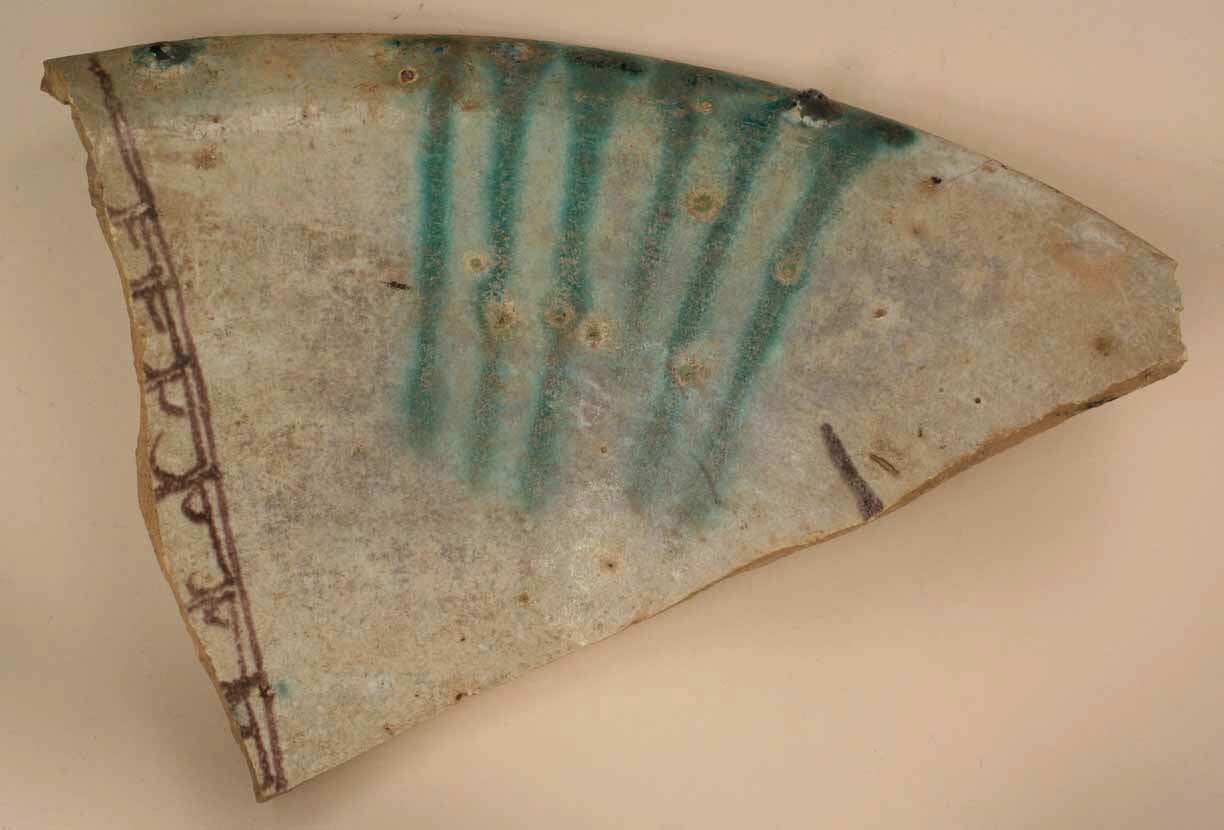
The fragment of a bowl, rendered in earthenware with an opaque white glaze and splashed polychrome decoration, represents far more than a broken utilitarian object. Within the context of Katherine Fashion Lab’s 2026 high-end luxury strategy, this artifact functions as a potent semiotic repository—a tangible archive of ancient symbolic power, ritualized adornment, and spiritual cosmology. This analysis decodes the fragment’s material and visual language, translating its historical resonance into a contemporary brand narrative that privileges authenticity, imperfection, and transcendent value.
Symbolic Power: The Fragment as a Marker of Prestige and Transience
In ancient civilizations—particularly those of the Islamic Golden Age, Tang Dynasty China, or late Roman provinces—the glazed bowl was not merely a vessel for consumption. It was a mobile emblem of courtly refinement, diplomatic gift-giving, and social stratification. The opaque white glaze, often achieved through tin or lead opacification, was a deliberate simulation of Chinese porcelain, a material so coveted that its imitation signaled both technical mastery and aspirational wealth. The fragment, therefore, carries an embedded hierarchy: it is a relic of a culture that understood the political economy of beauty.
For Katherine Fashion Lab, this translates into a strategic principle of curated scarcity. The fragment’s incompleteness is not a deficiency but a deliberate narrative device. In 2026, luxury consumers increasingly reject mass-produced perfection in favor of objects with provenance and narrative depth. The symbolic power of the fragment lies in its ability to evoke a lost totality—a whole bowl, a complete ritual, a vanished civilization. This aligns with the luxury sector’s shift toward heritage-driven exclusivity, where the value proposition is not the object itself but the story of its survival.
Historical Adornment: The Polychrome Splash as a Design Lexicon
The splashed polychrome glaze—often green, amber, and manganese purple—was a hallmark of Sasanian and early Islamic ceramics, later perfected in Tang sancai (three-color) wares. This technique involved the deliberate application of metallic oxides that would run and blend during firing, producing unpredictable, abstract landscapes of color. The aesthetic was one of controlled chaos, where the kiln’s heat acted as a co-creator. This is a critical point for Katherine Fashion Lab’s design philosophy: the fragment embodies a pre-industrial acceptance of organic variation.
In historical adornment, such bowls were often displayed in elite households, not hidden in kitchens. They were mounted on stands, illuminated in niches, and used in ceremonial feasts where the visual spectacle of the glaze was as important as the food it contained. The polychrome splash functioned as a form of wearable architecture—a miniature, three-dimensional canvas that played with light, shadow, and reflection. For a luxury fashion house, this translates into a textile and accessory strategy that prioritizes iridescence, gradient dyeing, and hand-finished irregularities. The 2026 collection can adopt a “splashed” motif—not as a literal print, but as a philosophical approach to material treatment, where each garment or accessory is unique, bearing the trace of the artisan’s hand and the unpredictability of the process.
Spiritual Meaning: The Bowl as a Microcosm of Cosmic Order
Across ancient cultures, the bowl held profound spiritual significance. In Zoroastrian and later Islamic mysticism, the bowl symbolized the cup of Jamshid, a vessel of divine insight that revealed the past, present, and future. In Buddhist contexts, the alms bowl represented humility and detachment from material desire. The opaque white glaze, in particular, was associated with purity, light, and the transcendent—a visual metaphor for the soul’s clarity before the divine. The colored splashes, by contrast, represented the multiplicity of the phenomenal world—the chaotic, vibrant, and transient aspects of earthly existence.
The fragment, therefore, is not merely a broken object; it is a theological statement about impermanence. Its survival into the present is a testament to the enduring human desire to hold onto the sacred, even in broken form. For Katherine Fashion Lab, this spiritual dimension offers a profound brand positioning opportunity. In a 2026 market saturated with superficial sustainability claims, the fragment provides a deeper, more resonant narrative: luxury as a form of spiritual stewardship. The brand can position itself as a custodian of cultural memory, using the fragment’s symbolism to communicate values of mindfulness, intentionality, and reverence for craft.
Strategic Application: 2026 High-End Luxury Strategy
Translating this heritage analysis into a concrete 2026 business strategy requires a multi-pronged approach that integrates product development, brand storytelling, and experiential retail. The fragment is not a trend; it is a timeless archetype that can anchor a long-term brand identity.
Product Development: The “Fragment” Collection
Katherine Fashion Lab should introduce a capsule collection titled “Splashed Heritage.” This line would feature outerwear and silk scarves with digitally printed and hand-painted gradients that mimic the glaze’s flow. Crucially, each piece would be numbered and authenticated, with a certificate referencing the specific historical fragment that inspired its colorway. The use of upcycled earthenware pigments—crushed and repurposed into textile dyes—would add a tangible, material connection to the ancient artifact, reinforcing the brand’s commitment to circularity without sacrificing luxury.
Brand Storytelling: The Narrative of Survival
The fragment’s story—its creation, use, breakage, burial, and rediscovery—is a powerful metaphor for the modern luxury consumer’s own journey. In 2026, the high-end consumer is not seeking escapism but meaningful connection. Katherine Fashion Lab’s marketing campaigns should pivot from product-centric imagery to archaeological storytelling. Short-form documentaries featuring ceramic conservators, glaze chemists, and art historians would position the brand as an intellectual leader, not just a fashion house. The tagline, “Wear the Story of Time,” would encapsulate this ethos, appealing to a demographic that values cultural capital over conspicuous consumption.
Experiential Retail: The “Fragment” Atelier
Flagship stores should be redesigned as immersive heritage spaces. Upon entry, clients would encounter a digital reconstruction of the original bowl, projected in holographic form, with the ability to “break” and “reassemble” it virtually. This interactive experience would allow clients to understand the fragment’s provenance and the skill required for its creation. Private viewing rooms would feature actual ancient shards on loan from museums, displayed alongside the new collection. This creates a dialectical tension between the ancient and the contemporary, positioning Katherine Fashion Lab as a bridge between eras—a curator of time itself.
Conclusion: The Fragment as a Strategic North Star
The fragment of a bowl, with its opaque white glaze and splashed polychrome decoration, is a masterclass in compressed meaning. It encapsulates the symbolic power of prestige, the artistry of historical adornment, and the profound spiritual weight of impermanence. For Katherine Fashion Lab, this artifact is not a mere decorative reference but a strategic blueprint for 2026. By embracing the fragment’s aesthetic of controlled chaos, its narrative of survival, and its spiritual depth, the brand can differentiate itself in a crowded luxury market. The fragment teaches that true luxury is not about completeness but about the resonance of what remains. In a world of disposable trends, Katherine Fashion Lab can offer something enduring: the beauty of the broken, elevated to the status of the eternal.