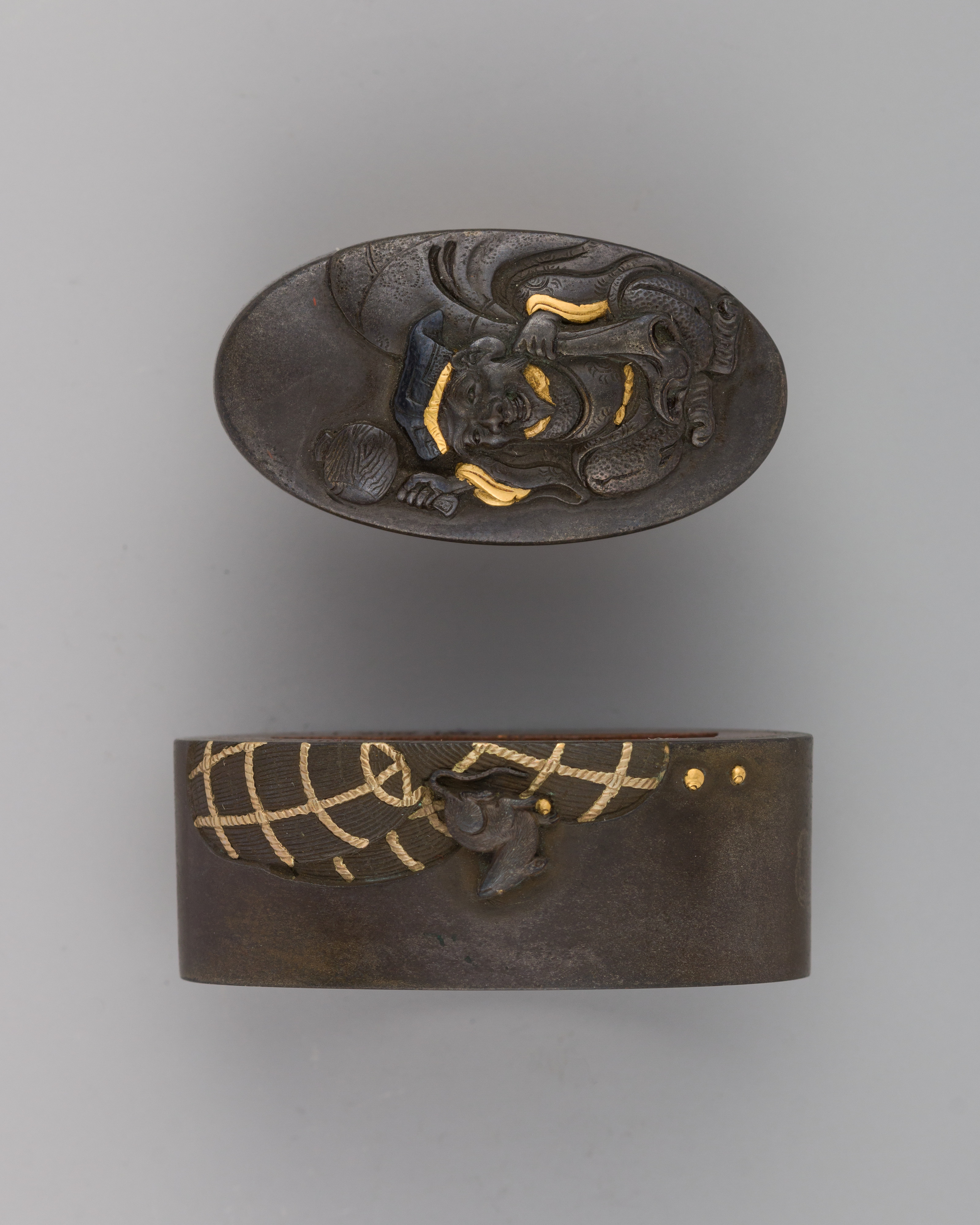
Heritage Analysis: The Sword-Hilt Collar and Pommel (Fuchigashira) as a Strategic Lexicon for Katherine Fashion Lab
The fuchigashira—comprising the fuchi (hilt collar) and kashira (pommel)—represents a masterclass in micro-engineering and symbolic compression within Japanese martial artistry. Crafted from shibuichi, a revered copper-silver alloy, and accented with gold, these components were never merely functional. They were, and remain, a concentrated articulation of status, spiritual discipline, and aesthetic philosophy. For Katherine Fashion Lab, this artifact offers a profound strategic blueprint for the 2026 luxury market, where consumers increasingly seek narratives of resilience, intentionality, and hidden depth over overt displays of wealth.
Symbolic Power: The Language of Restraint and Authority
In feudal Japan, the sword was the soul of the samurai, yet its most potent messages were often encoded in its smallest parts. The fuchigashira, though visually subordinate to the blade, carried the weight of clan identity, personal virtue, and social rank. The choice of shibuichi—an alloy prized for its nuanced, gunmetal-gray patina—was a deliberate rejection of garish brilliance. Instead, it signaled a sophisticated understanding of wabi-sabi, the beauty of imperfection and understated elegance. The gold accents, typically reserved for the menuki or decorative fittings, were not used for broad coverage but as precise, high-contrast highlights, drawing the eye to specific motifs—dragons, chrysanthemums, or mythical shishi lions.
This symbolic economy is a critical lesson for high-end strategy. In a 2026 market saturated with logo-heavy products, the fuchigashira demonstrates that true authority is quiet. It speaks through material integrity, craftsmanship precision, and narrative density. For Katherine Fashion Lab, this translates to a design philosophy where the brand’s signature is not a printed monogram but a hidden stitching pattern, a custom clasp, or a unique alloy finish—elements discernible only to the initiated. The power lies in the exclusivity of understanding, not the visibility of the brand mark.
Historical Adornment: The Ritual of the Grip
Historically, the fuchigashira was the point of tactile contact between the warrior and his weapon. The fuchi secured the hilt’s wrapping, while the kashira anchored the end, ensuring a firm grip during combat. This functional role elevated them to objects of constant, intimate wear. Over centuries of use, the metal would develop a nijihada, a natural patina from hand oils and friction, effectively personalizing the object to its owner. This is adornment as biography—the artifact literally absorbs the history of its user.
In the context of heritage adornment, the fuchigashira reframes jewelry and accessories as instruments of agency, not mere decoration. For Katherine Fashion Lab’s 2026 collections, this suggests a move toward modular design—pieces that can be adjusted, layered, or worn in multiple configurations, allowing the wearer to "grip" their own narrative. The historical precedent of the samurai’s grip becomes a metaphor for the modern luxury consumer’s desire for control and personalization. A collar or cuff that requires a specific gesture to fasten, or a pommel-like pendant that can be turned to reveal a hidden engraving, transforms the act of dressing into a daily ritual of self-empowerment.
Spiritual Meaning: The Axis of Discipline
Beyond the physical, the fuchigashira held profound spiritual resonance. The sword was a kami, a divine entity, and its fittings were consecrated objects. The fuchi, positioned near the tsuba (guard), was believed to channel protective energy, while the kashira, at the end of the hilt, served as a grounding point for the warrior’s ki (life force). The gold accents were not decorative but conductive elements, believed to amplify spiritual focus and repel malevolent forces. This is adornment as talisman—a physical anchor for mental clarity and moral fortitude.
For a 2026 luxury strategy, this spiritual dimension offers a powerful counter-narrative to the anxiety of modern life. Katherine Fashion Lab can position its high-end pieces as modern talismans, designed not just to be seen but to be felt. The use of shibuichi, with its subtle, shifting tones, becomes a metaphor for inner calm amidst external chaos. The gold accents, placed strategically on a clasp or a hidden interior, represent moments of personal clarity. Marketing narratives should pivot from "status acquisition" to "spiritual resilience," framing each piece as a tool for mindfulness and intentional living. This aligns with the growing consumer demand for wellness-integrated luxury, where the purchase is an investment in mental and emotional equilibrium.
Strategic Application: The 2026 Luxury Blueprint
Translating the fuchigashira’s heritage into a 2026 high-end strategy requires a multi-layered approach that honors its origins while innovating for the future. The following framework is proposed:
Material Provenance and Tactile Storytelling
Katherine Fashion Lab should adopt a material-first narrative, sourcing or commissioning shibuichi-like alloys for limited-edition hardware. The production process—including the metal’s oxidation and finishing—should be documented and shared as a form of slow-luxury storytelling. Clients should receive a "patina passport" that tracks the piece’s evolution, inviting them to participate in its aging process. This transforms the product into a living artifact, deepening emotional attachment and reducing the likelihood of resale.
Micro-Design as Signature
Borrowing from the fuchigashira’s scale, the brand should invest in micro-engineering excellence. Clasps, hinges, and connectors are not afterthoughts but the primary canvas for brand identity. A signature "pommel" motif—perhaps a stylized shishi lion or a geometric abstraction of the fuchi’s curve—should appear consistently across collections, serving as a secret handshake for connoisseurs. This approach builds a community of collectors who value discernment over mass recognition.
Ritual-Based Consumer Experience
The purchase journey should be designed as a ceremony of empowerment. Upon acquisition, clients receive a "grip ritual" guide, explaining the historical significance of the fuchigashira and how to incorporate the piece into daily mindfulness practices. In-store, the fitting process should be slow and deliberate, emphasizing the tactile sensation of the alloy against the skin. This elevates the transaction from a commodity exchange to a rite of passage, aligning with the spiritual heritage of the object.
Pricing and Scarcity Architecture
Given the complexity of shibuichi craftsmanship and the historical weight of the artifact, pricing should reflect artistic valuation, not material cost. A tiered system—entry-level pieces in bronze, mid-range in silver, and flagship items in shibuichi with gold accents—creates a ladder of aspiration. Annual releases, capped at a limited number and tied to specific Japanese calendar events (e.g., the autumn equinox), generate anticipation and reinforce the object’s ritualistic nature. This scarcity is not artificial but rooted in the finite capacity of skilled artisans, a truth that resonates with ethically-minded luxury buyers.
Conclusion: The Pommel as a Compass
The fuchigashira is a testament to the power of the small, the quiet, and the intentional. It teaches that luxury is not volume but density of meaning. As Katherine Fashion Lab navigates the 2026 landscape, this artifact serves as a strategic compass: prioritize material integrity, embed spiritual depth, and design for the hand as much as the eye. In doing so, the brand will not merely sell products but will offer its clientele a modern equivalent of the samurai’s grip—a firm, centered hold on their own identity amidst a world of disposable excess. The pommel, once the end of a warrior’s blade, becomes the beginning of a new luxury paradigm.