Deconstructing the Sampler: A Couture Analysis of Memory, Mastery, and Material
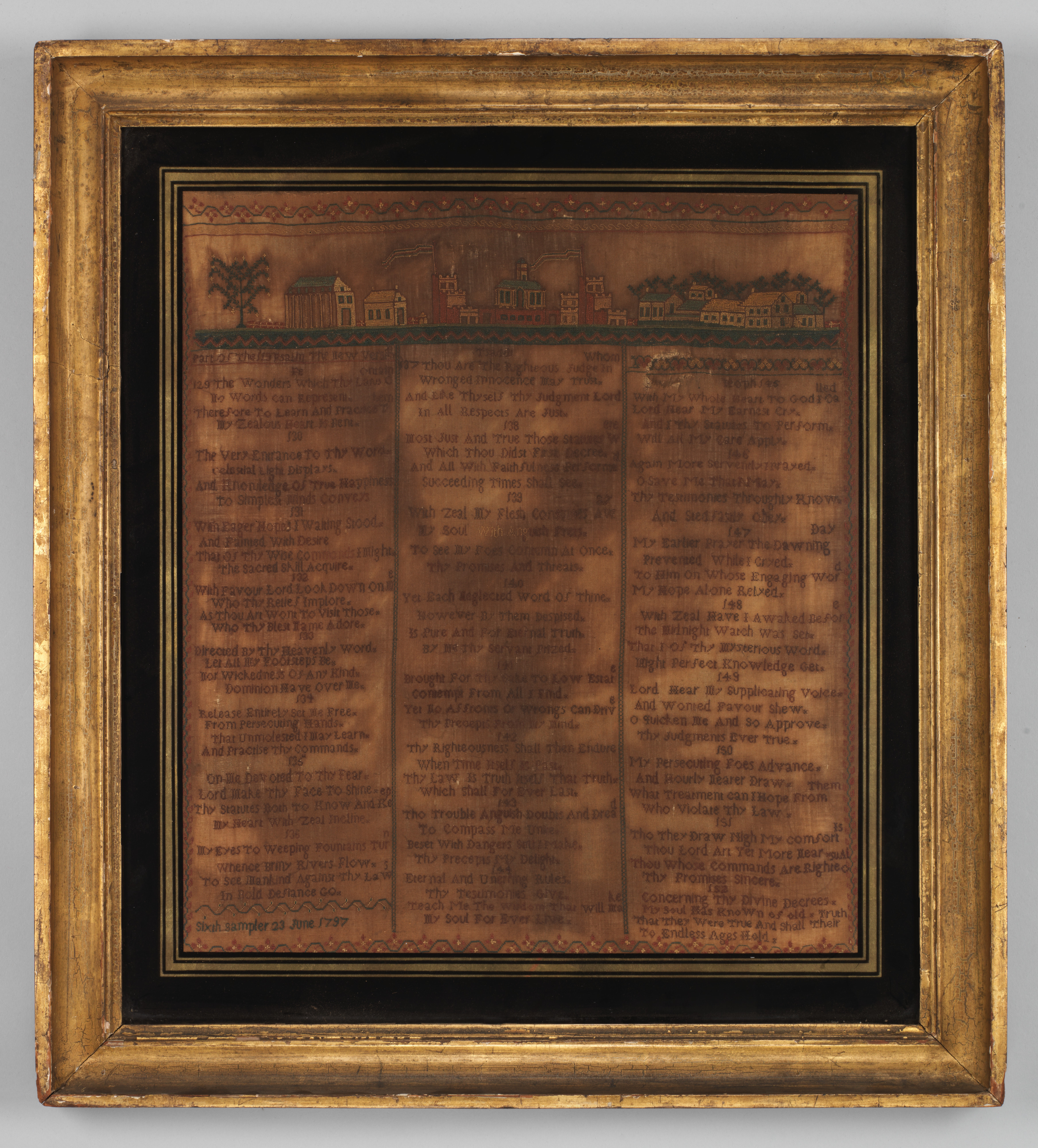
Within the hallowed, experimental space of Katherine Fashion Lab, the subject of the "Sampler" is not merely an object of study but a profound conceptual framework. Originating from a global heritage of needlework, this standalone investigation into a silk-on-cotton sampler transcends its traditional domestic confines to interrogate the very foundations of haute couture: technique as language, heritage as innovation, and constraint as the ultimate creative catalyst. This analysis posits the sampler not as a preliminary exercise, but as a complete sartorial epistemology, where every stitch is a deliberate word in a narrative of cultural memory and technical audacity.
The Sampler as Foundational Codex
Historically, the sampler served as a technical repository—a young woman’s "reference book" of stitches, patterns, and alphabets, often inscribed with moral verses or familial records. In the Lab’s context, this transforms into a living codex of couture’s DNA. The choice of silk thread on a cotton ground is a strategic masterstroke. Cotton, the democratic, sturdy, and humble foundation, represents the universal substrate of human creativity across continents—from Indian muslins to European calicoes. Upon this, silk performs: the luxurious, luminous, and strong filament that has symbolized trade, status, and artistry from China to Byzantium. This material dialectic sets the stage for a conversation between the accessible and the exclusive, the foundational and the ornamental, mirroring couture’s own tension between wearable object and transcendent art.
Each meticulously executed stitch—a French knot, a chain stitch, a satin stitch—is not practiced for mere repetition. It is analyzed as a discrete unit of textural vocabulary. The Lab’s study dissects how a sampler’s cross-stitch, with its pixel-like precision, prefigures digital design and jacquard weaving. The free-flowing elegance of silk embroidery floss, in contrast, becomes a precursor to the fluid drape of a bias-cut gown. The sampler is thus revealed as a microcosm of the atelier, where every technique, isolated and perfected, awaits its strategic deployment in a final garment. Its grid becomes a prototype for the toile; its motifs, the genesis of a bespoke embroidery pattern.
Global Heritage: The Stitch as a Cultural Palimpsest
The "Global Heritage" origin is critical, liberating the sampler from a purely Western, colonial narrative. This study traces the silk thread’s journey along the Silk Road, connecting it to Chinese *xiangyun* stitching, to the gold *zardozi* of Mughal India, and to the narrative *sashiko* of Japan. The cotton ground whispers of Egyptian mastery, of pre-Columbian weaving, of the mills of Manchester. The sampler, in this light, is a palimpsest of interconnected human ingenuity.
Katherine Fashion Lab’s analysis focuses on how these convergent traditions manifest in a single, framed piece. A floral motif may hybridize a Jacobean pattern with a Turkish *çintemani*; a geometric border might echo both Ghanaian Adinkra symbols and Greek meanders. This is not pastiche, but a deliberate, scholarly deconstruction of how craft migrates and mutates. The standalone sampler, therefore, becomes a map of cultural exchange, its silk threads acting as literal lines of connection across time and geography. It challenges the insularity of fashion history, proposing instead a networked, global lineage of textile art where the humble sampler is a central, connective node.
From Domestic Exercise to Avant-Garde Proposition
The most radical aspect of this standalone study lies in its re-contextualization. By removing the sampler from its expected trajectory (as a learning tool destined to be applied elsewhere) and presenting it as a complete work, the Lab performs a quintessentially couture act: it elevates craft to the realm of autonomous art. The sampler’s finished edges, its signed corner, its composed layout—all are recast as deliberate design choices concerning composition, balance, and narrative.
This shift forces a reevaluation of core couture principles. The sampler’s inherent "unwearability" questions the necessity of the garment form itself, pushing the Lab’s inquiry into the space of wearable art and textile sculpture. Furthermore, its made-by-hand essence, with all the slight imperfections that betray the human touch, champions the irreplicable value of manual mastery in an age of digital perfection. The time encoded in each stitch—hours, days, weeks—becomes the ultimate luxury, a resource more scarce and significant than the silk itself. In this, the sampler is the purest expression of couture’s economic and philosophical heart: the sovereign investment of time.
Conclusion: The Sampler as a Strategic Framework
Katherine Fashion Lab’s analysis concludes not with a garment sketch, but with a powerful methodological insight. The sampler provides a strategic framework for sustainable, meaningful innovation. It advocates for a return to first principles—to the intimate knowledge of material, stitch, and structure. In a world of rapid overproduction, the sampler model proposes a culture of deep, considered practice, where technique is revered and heritage is actively mined for future relevance.
The silk-on-cotton sampler, therefore, stands as a potent manifesto. It argues that the future of avant-garde fashion may lie not in the relentless pursuit of the new, but in the radical re-reading of the foundational. It demonstrates that within the constraints of a hoop, a limited palette, and a simple grid, exists infinite creative possibility. For the couture house of tomorrow, this study suggests that the most valuable asset may not be a vast archive of garments, but a curated library of samplers—each one a compact, dense, and eloquent blueprint of what is possible when hand, thread, and heritage converge.