Heritage Analysis: The Serapis Engagement and the Metallurgy of Defiance
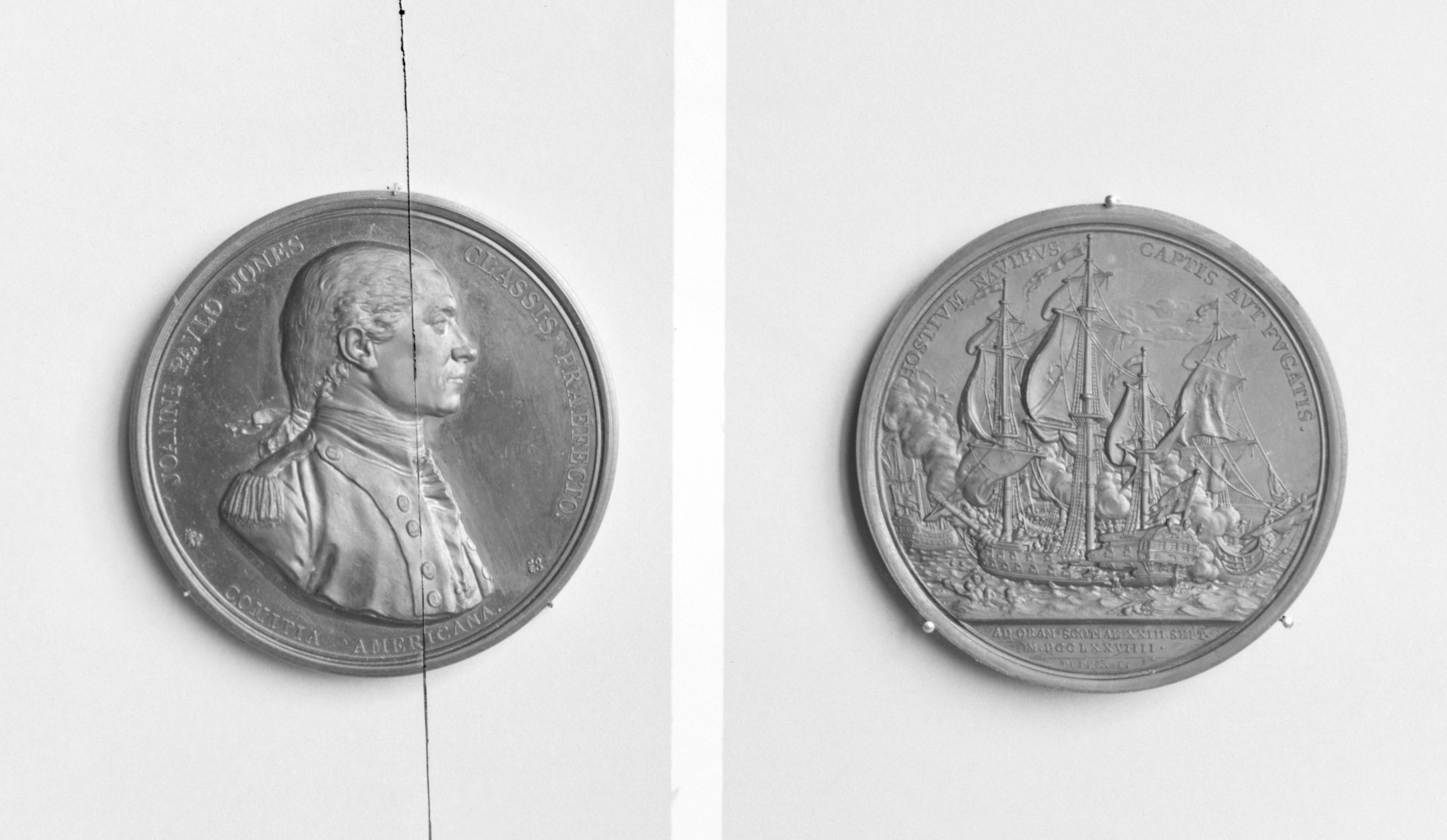
The engagement between John Paul Jones’s Bonhomme Richard and the British frigate Serapis off Flamborough Head on September 23, 1779, is not merely a naval battle; it is a crucible of symbolic power. For Katherine Fashion Lab, this event—rendered in struck bronze—offers a profound lexicon of resilience, audacity, and the alchemical transformation of conflict into legacy. This analysis decodes the material and spiritual dimensions of the engagement, translating its ancient-civilization resonances into a 2026 high-end luxury strategy that prioritizes narrative depth over transient aesthetic trends.
Symbolic Power: The Bronze as a Vessel of Contested Sovereignty
In the context of ancient civilizations, bronze was not a utilitarian alloy; it was the material of gods, warriors, and the threshold between mortal ambition and divine mandate. The struck bronze commemorating the Serapis engagement captures a moment of contested sovereignty—Jones’s refusal to strike his colors when asked to surrender, his legendary retort, “I have not yet begun to fight,” becoming a metallurgical imprimatur of unyielding will. The medium itself, struck rather than cast, implies a forceful, percussive act—each blow of the die an echo of cannon fire. This is not passive commemoration; it is an assertion of power through material resistance.
For Katherine Fashion Lab, this symbolic power translates into a design philosophy where adornment is not decorative but declarative. The bronze’s patina—the greenish oxidation that develops over centuries—serves as a metaphor for the layering of history. In 2026, the luxury consumer does not seek pristine surfaces but storied depths. The Serapis engagement, rendered in bronze, speaks to a clientele that values artifacts of defiance: pieces that carry the memory of a fight, not merely the polish of a triumph. The symbolic power lies in the tension between the object’s permanence and the chaos it represents—a tension that high-end strategy must harness to differentiate from mass-market nostalgia.
Historical Adornment: From Naval Hardware to Personal Armor
The physical artifacts of the Serapis engagement—the shattered masts, the ripped sails, the bronze cannons—were not adornments in the conventional sense, yet they functioned as such. In naval warfare of the 18th century, a ship’s metalwork was its jewelry: the polished brass of the wheel, the gleaming muzzles of the guns, the intricate fittings of the captain’s quarters. These elements signified rank, readiness, and national pride. Jones’s capture of the Serapis was not merely a tactical victory; it was the appropriation of an enemy’s adornment, a forced transfer of symbolic capital from the British Crown to the fledgling American cause.
Katherine Fashion Lab can draw a direct line from this historical adornment to contemporary luxury jewelry and accessories. The bronze struck for this commemoration is a miniature of that naval hardware—a wearable relic of a ship that no longer exists. In 2026, the strategy should pivot toward “armorial adornment”: pieces that evoke protective gear, not fragile ornament. Think of cuffs that mimic cannon bands, brooches shaped like hull braces, and necklaces that echo anchor chains—all rendered in bronze with a deliberate, unpolished finish. This is not costume jewelry; it is historical armor for the modern wearer, offering psychological protection through association with Jones’s audacity. The adornment becomes a personal Serapis: a vessel of self-sovereignty in a turbulent world.
Spiritual Meaning: The Alchemy of Fire and Water
The spiritual dimension of the Serapis engagement is rooted in the elemental conflict of fire and water—the cannon fire against the North Sea, the burning Bonhomme Richard slowly sinking beneath the waves. In ancient civilizations, bronze was often associated with the god of war and the forge, a synthesis of earth (copper) and fire (tin smelting) that produced a material stronger than either component. The battle off Flamborough Head was an alchemical event: two ships, locked in combat, fused by flame and saltwater, ultimately producing a new entity—Jones’s legendary reputation. The bronze struck in commemoration is a talisman of this fusion, a physical reminder that transformation requires destruction.
For the luxury strategy, this spiritual meaning offers a narrative of rebirth through adversity. The 2026 consumer is increasingly drawn to brands that acknowledge struggle as a path to authenticity. Katherine Fashion Lab should position the Serapis collection not as a celebration of victory but as a meditation on the cost of it. The bronze’s dark, mottled surface—intentionally allowed to oxidize—becomes a spiritual symbol of imperfection embraced. In a market saturated with flawless, sterile designs, this collection offers a counter-narrative: that true luxury is not the absence of damage but the integration of it. The spiritual meaning is one of resilience, a quiet mantra for the wearer: “I have not yet begun to fight.”
Strategic Resonance: The 2026 High-End Luxury Framework
Translating this heritage analysis into a 2026 high-end luxury strategy requires a multi-layered approach that moves beyond product into experience and ideology. The following framework positions Katherine Fashion Lab as a curator of defiance, not merely a purveyor of goods.
1. Limited-Edition Bronze Artifacts: The core offering should be a series of struck bronze medallions, each individually numbered and accompanied by a certificate of authenticity that details the historical context of the Serapis engagement. These are not mass-produced accessories; they are collectible relics. The strategy is to create scarcity through narrative—each medallion is a fragment of a story that cannot be replicated. The target client is the collector who values provenance over volume, who understands that the bronze’s imperfections are its value.
2. The “Flamborough Head” Atelier Experience: High-end luxury in 2026 is experiential. Katherine Fashion Lab should offer private commissions where clients can witness the striking of a custom bronze piece—a process that mimics the percussive force of the original battle. This is not a passive purchase; it is a participatory ritual. The client becomes part of the alchemy, choosing the inscription, the finish, and the weight of the bronze. This atelier experience positions the brand as a custodian of ancient craft, not a fast-fashion imitator. The emotional connection forged through this process ensures customer loyalty that transcends transactional relationships.
3. Narrative-Driven Marketing and Editorial Content: The 2026 luxury consumer is media-literate and skeptical of overt advertising. The strategy must pivot to long-form storytelling—documentary-style films, scholarly essays, and curated exhibitions that explore the Serapis engagement from multiple angles: naval history, metallurgy, and spiritual symbolism. This content is not a sales pitch; it is a cultural contribution that positions Katherine Fashion Lab as a thought leader. The brand becomes synonymous with the preservation of defiant heritage, attracting clients who align with its values of resilience and historical consciousness.
4. Strategic Collaborations with Maritime and Cultural Institutions: To amplify credibility, Katherine Fashion Lab should partner with maritime museums, naval archives, and bronze-casting foundries. These collaborations lend institutional weight to the collection, offering access to primary sources—such as original ship logs or fragments of the Serapis—that can be incorporated into bespoke pieces. This is not a licensing deal; it is a scholarly alliance. The brand’s authority is reinforced by its association with custodians of history, making the collection irresistible to the discerning collector who seeks authenticity beyond marketing claims.
5. The “Unbroken” Narrative in Digital and Physical Retail: The retail presentation must echo the battle’s atmosphere—dim lighting, the scent of salt and metal, and displays that mimic the wreckage of a ship. The bronze pieces should be shown not as pristine objects but as recovered artifacts, perhaps mounted on reclaimed oak from decommissioned vessels. The digital experience should mirror this: an immersive website that uses 3D scanning to allow clients to examine the bronze’s patina up close, accompanied by audio of sea shanties or the recorded sound of cannon fire. This sensory integration ensures that the purchase is not an object but an immersion.
Conclusion: The Bronze as a Blueprint for 2026
The engagement of John Paul Jones with the Serapis is not a distant historical footnote; it is a living archetype of defiance and transformation. The struck bronze that commemorates it is a testament to the power of material culture to carry meaning across centuries. For Katherine Fashion Lab, this heritage analysis provides a strategic blueprint for 2026 that is both commercially astute and spiritually resonant. By embracing the symbolic power of bronze, the historical adornment of naval hardware, and the spiritual meaning of alchemical conflict, the brand can offer a luxury experience that is profound, authentic, and unapologetically defiant. In a market that often equates luxury with ease, the Serapis collection stands as a bold counterpoint: true luxury is the courage to engage, to endure, and to emerge transformed.