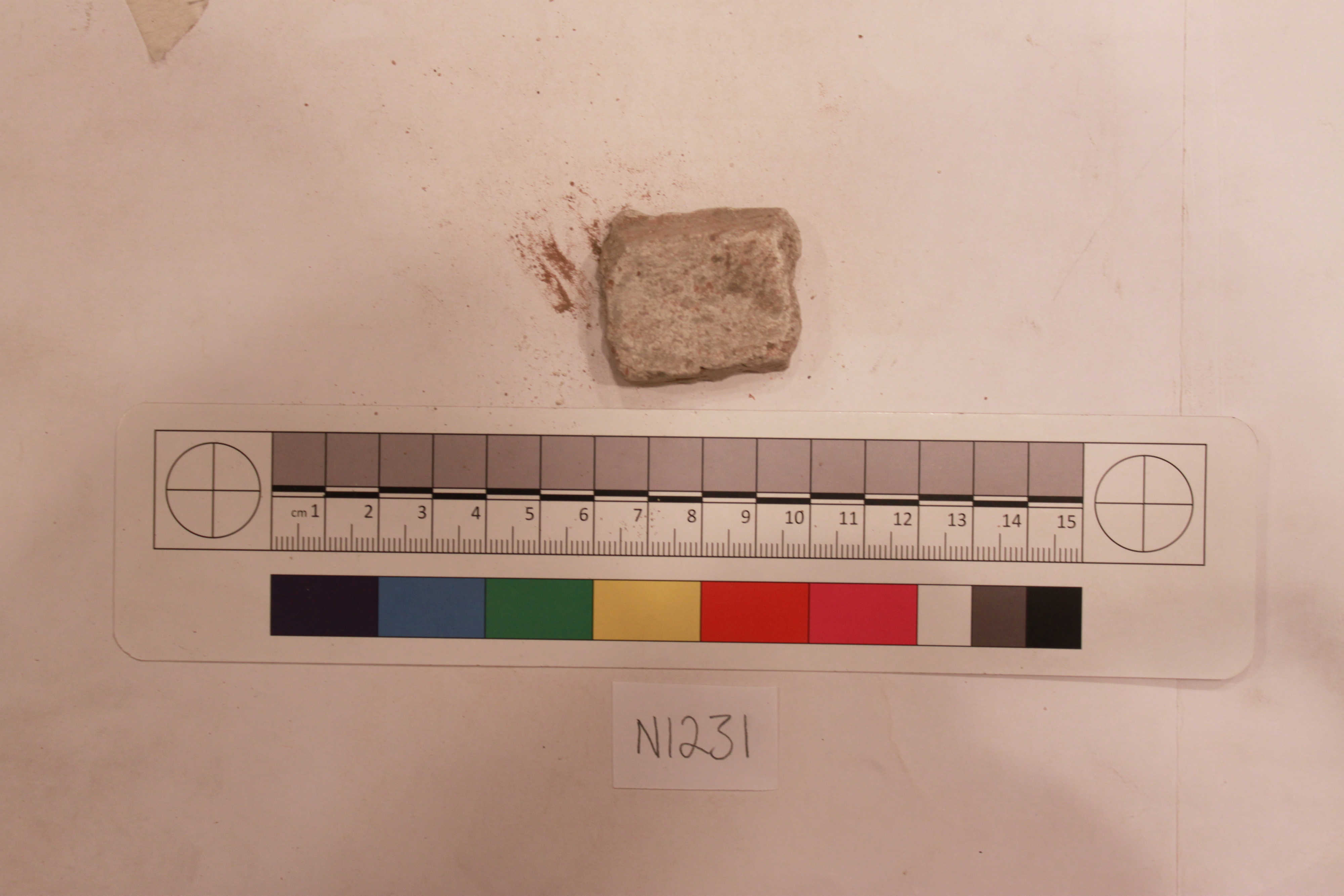
The Poetics of Impermanence: A Couture Analysis of the Stucco Fragment
In the rarefied atmosphere of haute couture, where fabric is often treated as a mere vehicle for silhouette, Katherine Fashion Lab’s latest standalone study—the Stucco Fragment—repositions materiality as the primary narrative. This is not a garment in the traditional sense, but a conceptual object, a relic of architectural decay translated into wearable form. Drawing from the Global Heritage of stucco craftsmanship—from the intricate chunam work of South India to the ornate plaster reliefs of Mughal Lahore and the neo-classical facades of 18th-century Europe—the Lab presents a piece that is less about covering the body and more about inscribing history onto the epidermis of fashion.
The fragment, carved and painted by hand, is a standalone study in the truest sense: it refuses context. There is no accompanying skirt, no structural corset, no conventional drape. Instead, it exists as a sculptural pectoral, a shattered section of a wall that has been re-contextualized as an ornament. This deliberate dislocation forces the viewer to confront the object’s materiality before its functionality. In doing so, Katherine Fashion Lab engages in a radical act of deconstruction—not of a garment, but of the very concept of architectural permanence.
Material as Memory: The Alchemy of Stucco
Stucco, in its raw state, is humble—a mixture of lime, sand, and water. Yet, in the hands of master artisans, it becomes a medium of opulence, capable of mimicking marble or capturing the finest floral tracery. The Lab’s study honors this duality. The fragment’s surface is not smooth; it is deliberately distressed, with fissures and pitting that mimic centuries of weathering. This is not an accident of production but a calculated aesthetic choice. The Lab has employed a technique of controlled erosion, using fine chisels and acid washes to create a topography of decay that reads as authentic archaeological salvage.
The painted element further complicates the material’s narrative. Rather than a uniform patina, the fragment features layered polychromy—fragments of ochre, faded ultramarine, and traces of gold leaf that suggest a once-vibrant mural now faded to ghostly residue. This is not mere decoration; it is a palimpsest, a record of successive generations who have repainted, repaired, and ultimately abandoned the surface. In couture terms, the Lab is not designing a print; it is designing a stratigraphy of time. Each layer of pigment corresponds to a historical epoch, and the wearer becomes a living archive, carrying the weight of collective memory on their shoulders.
The Semiotics of Ruin in Contemporary Dress
Why, in an era of technical fabrics and 3D-printed couture, would a fashion house turn to a material as archaic as stucco? The answer lies in the semiotic power of the ruin. In Western art history, the ruin is a memento mori, a reminder of the transience of human achievement. In the Global South, however, stucco ruins often hold a different valence—they are sites of living heritage, where the past is not dead but dormant. Katherine Fashion Lab’s study bridges these interpretations. The fragment is not a nostalgic object; it is a critical commentary on the fragility of contemporary luxury.
By isolating the fragment as a standalone piece, the Lab strips away the protective context of the gallery or the museum vitrine. It forces the object to interact with the human form, creating a jarring juxtaposition between the hard, brittle surface of the stucco and the soft, yielding flesh of the neck and collarbone. This tension is the core of the design’s intellectual appeal. It asks the wearer to consider: what does it mean to adorn oneself with the debris of a bygone civilization? Is this an act of reverence, or an act of appropriation?
Technical Mastery and the Illusion of Weight
From a purely technical standpoint, the Stucco Fragment is a marvel of engineering disguised as archaeology. The material is genuine stucco, not a lightweight resin imitation. Yet, the Lab has solved the problem of wearability through a hidden substructure of carbon fiber and micro-mesh, which supports the heavy plaster while distributing its weight across the shoulders. The result is an object that appears to weigh several kilograms but feels surprisingly manageable—an optical and tactile illusion that mirrors the fragment’s conceptual paradox: it is both ruin and ornament, heavy and light.
The carving itself demonstrates an extraordinary level of artisanal precision. The edges of the fragment are not cleanly broken; they are chiseled with a deliberate irregularity that mimics natural fracture. The relief work, meanwhile, features a repeating motif of acanthus leaves and a partially eroded inscription in a script that is deliberately illegible—perhaps a fragment of a lost text, or a cipher for the wearer’s own narrative. This illegibility is a masterstroke. It prevents the piece from being reduced to a single cultural or historical reference, allowing it to function as a universal signifier of loss and endurance.
Wearability as Performance
In the context of the runway, the Stucco Fragment is not a garment to be worn casually; it is a performative artifact. The model must move with a deliberate, almost ceremonial gait, as if bearing a sacred relic. The natural sway of the body is constrained by the object’s rigidity, creating a silhouette that is at once statuesque and vulnerable. This is couture as choreography, where the garment dictates the posture and, by extension, the emotional register of the wearer. The Lab’s study thus challenges the prevailing orthodoxy of fluid, body-conforming fashion, proposing instead a mode of dress that is architectural, confrontational, and unapologetically intellectual.
Furthermore, the piece functions as a social object in a way that a typical gown cannot. Its fragility—the genuine risk of chipping or cracking—demands a certain etiquette from both the wearer and the observer. It creates a zone of reverence, a physical and psychological distance that is rare in the age of fast fashion and social media saturation. The Stucco Fragment is not meant to be photographed in a flurry of motion; it is meant to be contemplated, like a monument in a quiet square.
Conclusion: A Monument to Process
Katherine Fashion Lab’s Stucco Fragment is a triumph of slow fashion in its most literal sense. It represents hundreds of hours of manual labor, a deep engagement with historical techniques, and a philosophical commitment to the idea that clothing can be a vessel for memory. It is not a garment for the faint of heart, nor for those who seek mere aesthetic pleasure. Instead, it is a wearable dissertation on the relationship between material, time, and the human body. In an industry obsessed with the new, the Lab has found radical innovation in the old, proving that the most avant-garde statement is sometimes a fragment of the past, lovingly preserved and defiantly worn. The stucco does not crumble; it persists, and in its persistence, it offers a profound lesson on the enduring power of craft.