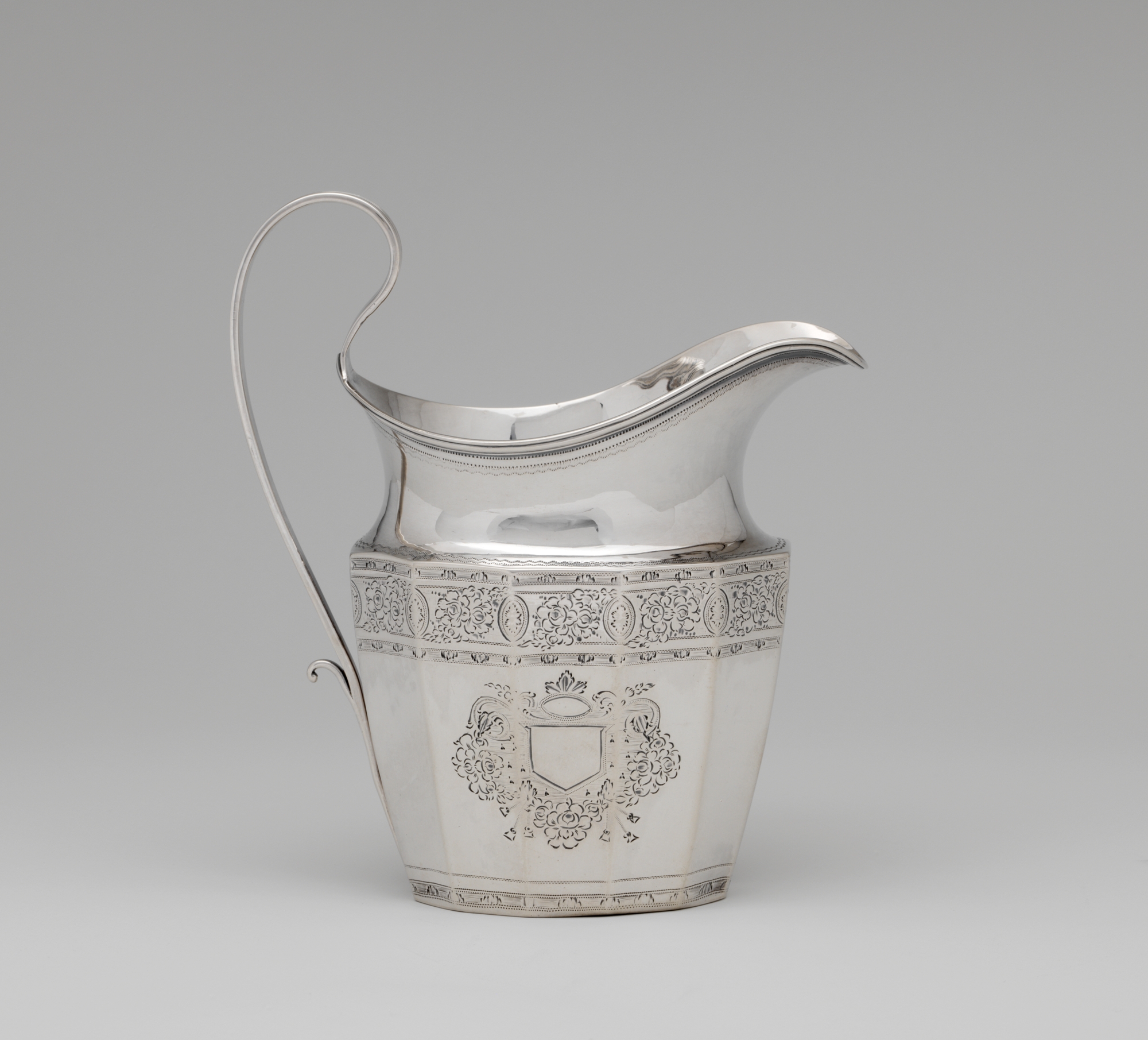
The Creamer as Icon: A Heritage Analysis for Katherine Fashion Lab
The humble creamer, a vessel of poured whiteness, occupies a unique space in the American cultural imagination. At first glance, it is a utilitarian object, a companion to the teapot and coffee urn. Yet, within the context of Katherine Fashion Lab’s strategic mandate, the creamer emerges as a potent symbol of inherited grace, domestic sovereignty, and quiet opulence. This analysis deconstructs the creamer’s historical trajectory—from colonial necessity to Gilded Age status marker—and translates its symbolic DNA into a forward-looking 2026 luxury strategy. The objective is not to resurrect a relic, but to distill its essence: the power of controlled pouring, the alchemy of transformation, and the intimacy of shared ritual.
Symbolic Power: The Alchemy of Pouring and Purity
In the lexicon of material culture, the creamer holds a distinct semiotic position. It is neither the source (the pot) nor the receptacle (the cup), but the mediator. This intermediary role grants it a unique form of symbolic power—the power of intervention and transformation. The act of pouring cream is an act of modification; it tempers bitterness, softens intensity, and introduces a new, creamy dimension to a dark liquid. In a heritage context, this mirrors the American narrative of self-improvement and refinement. The creamer represents the ability to alter one’s environment, to add richness to the quotidian, and to exercise discernment in the face of abundance.
Furthermore, the creamer’s contents—cream—carry profound connotations of purity and excess. Unlike milk, which was a daily staple, cream was a luxury, a surplus that signified agricultural prosperity. To offer cream to a guest was to offer not merely sustenance, but a portion of one’s surplus wealth and generosity. The silver creamer, therefore, becomes a vessel for symbolic capital. Its polished surface reflects the light and the owner’s status, while its interior holds a white, unctuous substance associated with nurture and indulgence. This duality—external brilliance and internal richness—is precisely the tension that high-end fashion can exploit.
Historical Adornment: From Colonial Table to Gilded Age Display
The American silver creamer’s history is a microcosm of the nation’s evolving identity. In the 17th and early 18th centuries, colonial silversmiths like Paul Revere crafted creamers with a functional, restrained aesthetic. These pieces, often pear-shaped or helmet-shaped, were not merely decorative; they were portable assets, a way to store wealth in a tangible, beautiful form. The silver itself was a hedge against currency instability, and the creamer’s form was a testament to the owner’s taste and liquidity.
By the mid-19th century, the Industrial Revolution and the rise of a new merchant class transformed the creamer’s role. The advent of electroplating democratized silver, but the finest creamers—those crafted by hand from sterling—became markers of old money versus new money. The Gilded Age saw an explosion of ornate, repoussé-decorated creamers, often paired with elaborate tea services. These pieces were displayed on sideboards, not hidden in cabinets. They served as silent ambassadors of domestic order, signaling that the household possessed the leisure time, the staff, and the financial resources to engage in the elaborate ritual of afternoon tea. The creamer’s form evolved from the practical spout to the more dramatic, high-lipped designs that required a steady hand—a literal performance of grace under pressure.
Spiritual Meaning: The Liturgy of the Table
Beyond economics and aesthetics, the creamer possesses a quasi-spiritual dimension. In the American Protestant tradition, the dining table was a site of moral instruction and familial bonding. The creamer, as part of the “best” china or silver, was reserved for Sundays and holidays—days of rest and reflection. Its presence elevated a meal from mere sustenance to a communal sacrament. The act of pouring cream into a shared pot of coffee or tea was an act of communion, a small, repeated gesture of care.
This ritualistic aspect is crucial for luxury branding. The creamer is not a passive object; it is an agent of ritual. It demands a pause, a moment of attention. In a world of instant gratification and single-serve pods, the creamer represents a deliberate, slow, and tactile experience. Its spiritual meaning lies in its resistance to haste. It is a vessel for mindfulness, a physical anchor for the act of gathering. For Katherine Fashion Lab, this translates into a design philosophy that values intentionality over speed, and ceremony over convenience.
Strategic Application: The 2026 High-End Luxury Vision
To leverage the creamer’s heritage for 2026, Katherine Fashion Lab must move beyond literal replication and embrace conceptual translation. The target consumer is not seeking a silver pitcher; she is seeking the feeling of authority, refinement, and intimate luxury that the creamer embodies. The strategy should unfold across three pillars: Material Alchemy, Ritual Re-Imagination, and Legacy Architecture.
Material Alchemy: The New Silver Standard
In 2026, sustainability and ethical sourcing are non-negotiable. The “silver” of the future is not mined from the earth but cultivated in the lab. Katherine Fashion Lab should pioneer a proprietary alloy or bio-fabricated material that mimics the warm luster and weight of heirloom silver but with a reduced carbon footprint. This material, tentatively named Lumen Argentum, would be positioned as a “modern heirloom”—a material that carries the soul of the past without its extractive baggage. This is not imitation; it is evolution. The creamer’s form can be reimagined with architectural precision—sharp, geometric lines that nod to Art Deco, or fluid, biomorphic curves that suggest poured liquid. The key is that the material itself tells a story of innovation, just as silver once told a story of colonial wealth.
Ritual Re-Imagination: The “Pour” as Performance
Luxury in 2026 is experiential. Katherine Fashion Lab should not sell a creamer; it should sell a choreographed moment. Imagine a limited-edition “Pouring Ritual Kit” that includes a sculptural creamer, a set of hand-blown glass cups, and a small, weighted “stirrer” designed to mimic the heft of a silver spoon. The kit is presented in a hinged, leather-bound case, reminiscent of a vintage jewelry box. More importantly, the brand should launch an immersive retail experience—a “Tasting Room” where clients can participate in a guided ceremony. Here, a brand ambassador, dressed in a Katherine Fashion Lab tailored uniform, performs the pour with deliberate slowness, explaining the provenance of the coffee beans and the thermal properties of the vessel. This transforms a commodity into a theatrical performance, where the creamer is the lead actor.
Legacy Architecture: The “Adornment of the Home”
Finally, the creamer must be positioned not as a standalone object, but as part of a broader “Adornment of the Home” collection. This line extends the brand’s philosophy from the body to the domestic sphere. The creamer becomes the centerpiece of a tabletop system that includes a low, sculptural serving tray, linen napkins with hand-embroidered monograms, and a small, illuminated display stand. This is not tableware; it is wearable architecture for the table. The marketing narrative should emphasize that the creamer is an heirloom-in-the-making—a piece designed to be passed down, to acquire patina and stories. In a 2026 market saturated with fast fashion and disposable trends, the creamer offers a counter-narrative of permanence and patrimony. It is an investment in memory.
Conclusion: The Creamer as a Strategic Compass
The American silver creamer is far more than a relic of a bygone era. It is a concentrated symbol of agency, purity, and ritual. Its historical journey from colonial asset to Gilded Age status symbol reveals a persistent human desire for objects that mediate our relationships—with others, with our resources, and with time itself. For Katherine Fashion Lab, the creamer provides a strategic blueprint for 2026: embrace material innovation, elevate the mundane into the performative, and design for legacy rather than seasonality. By pouring new meaning into an old form, the brand can position itself not as a follower of trends, but as a curator of enduring significance. The creamer, in its quiet silver dignity, offers a lesson in lasting luxury: true power is not in the volume of what one holds, but in the grace with which one pours.