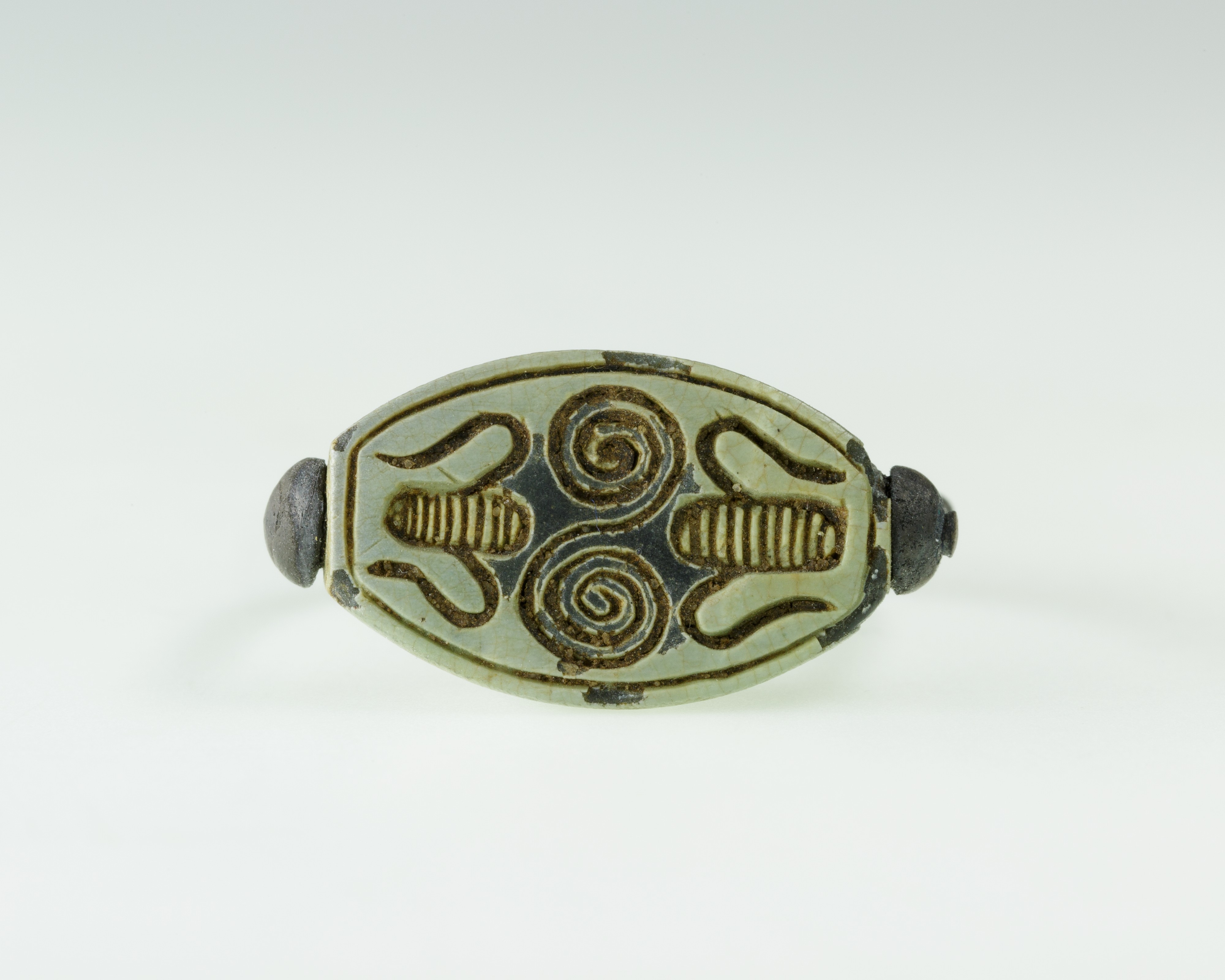
Executive Heritage Assessment: The Ring of Hatnefer
The Ring of Hatnefer, an artifact of singular refinement from the ancient Egyptian New Kingdom (circa 1492–1473 BCE), presents a compelling case study in the intersection of material culture, spiritual authority, and sovereign identity. For Katherine Fashion Lab, this object is not merely an archaeological curiosity but a strategic blueprint for a 2026 luxury narrative that prioritizes symbolic depth over transient aesthetic trends. Crafted from silver—a metal rarer than gold in the Pharaonic economy—and glazed steatite, the ring embodies a sophisticated hierarchy of materials that speaks directly to contemporary high-end consumers seeking authenticity and esoteric resonance.
Material Semiotics: Silver and Glazed Steatite as Power Vectors
In the ancient Egyptian worldview, material selection was a deliberate act of metaphysical engineering. Silver, referred to as hedj, was associated with the lunar deity Khonsu and the bones of the gods. Its scarcity relative to gold—which was more abundantly mined in Nubia—elevated silver to a status of elite purity, often reserved for ritual implements and high-ranking officials. The Ring of Hatnefer leverages this rarity to communicate a form of power that is not overtly martial but sacerdotal and administrative. For the 2026 luxury market, where platinum and white gold dominate fine jewelry, the strategic reintroduction of sterling silver as a primary medium offers a dual advantage: it aligns with sustainable sourcing narratives while invoking a pre-modern aura of exclusivity that mass-produced gold cannot replicate.
The Glazed Steatite Inlay: A Microcosm of Cosmic Order
Steatite, or soapstone, when glazed with a silica-based compound, transforms into a lustrous, turquoise-like surface. This chromatic choice is not incidental. Turquoise, associated with the goddess Hathor and the regenerative cycles of the Nile, symbolized joy, protection, and the renewal of life. The glazing process—firing the steatite to achieve a vitreous sheen—mirrors the alchemical transformation central to Egyptian religious practice, wherein base matter is transmuted into divine substance. In a strategic context, this offers Katherine Fashion Lab a potent metaphor for the luxury consumer’s own journey: the elevation of the mundane into the extraordinary through craftsmanship and intentionality. The ring’s bezel setting, which securely frames the glazed stone, further underscores a philosophy of containment and protection—a resonant theme for a post-pandemic clientele seeking emotional and physical sanctity in their adornments.
Historical Adornment and the Politics of the Body
Hatnefer, identified as the mother of Senenmut, the chief steward and probable architect of Queen Hatshepsut, occupied a unique liminal space in court hierarchy. Her ring, therefore, is not a royal insignia but a testament to the diffusion of power through proximity and trust. This is critical for luxury positioning: the ring signifies influence without throne, a form of soft power that is highly adaptable to modern narratives of personal branding and quiet luxury. The ring’s design—a simple, robust shank with a prominent oval bezel—would have been worn daily, not merely for ceremonial display. This utilitarian durability challenges the contemporary assumption that high jewelry must be fragile. For 2026, Katherine Fashion Lab can pivot toward a “daily talisman” strategy, producing pieces engineered for longevity and continuous wear, thereby fostering a deeper emotional attachment than seasonal, disposable accessories.
Spiritual Meaning: The Ring as a Conduit of Ma’at
The spiritual dimension of the Ring of Hatnefer is anchored in the concept of Ma’at—truth, balance, and cosmic order. Rings, in Egyptian iconography, were circular, and the circle was a symbol of eternity without beginning or end. Wearing the ring was an act of participating in this eternal cycle, a daily reaffirmation of one’s place within the divine order. The glazed steatite, with its cool, aquatic hue, evoked the primordial waters of Nun, from which all creation emerged. Thus, the ring functioned as a portable microcosm, a personal shrine that aligned the wearer’s soul with the rhythms of the cosmos. For the luxury strategist, this spiritual payload is invaluable. The 2026 consumer is increasingly drawn to “meaningful luxury”—objects that offer psychological anchoring amidst geopolitical volatility. By framing the Ring of Hatnefer as a prototype for “adornment as meditation,” Katherine Fashion Lab can differentiate itself from competitors who rely solely on visual opulence.
Strategic Application for 2026: The “Neo-Sacred” Collection
Translating this heritage analysis into a commercially viable yet intellectually rigorous luxury strategy requires a three-pillar approach: Material Provenance, Narrative Architecture, and Experiential Ritual.
Pillar One: Material Provenance and Ethical Scarcity
Katherine Fashion Lab should source recycled sterling silver and lab-grown or responsibly mined glazed steatite, explicitly communicating the ancient hierarchy of materials in its product literature. The narrative should emphasize that silver, not gold, is the “new old luxury”—a metal of hidden power and lunar introspection. By limiting production to 1,492 pieces—a direct reference to Hatnefer’s likely lifetime—the brand creates a numbered edition that mirrors the artifact’s singular existence, appealing to collectors who value historical specificity over mass-market availability.
Pillar Two: Narrative Architecture for the Modern Patron
The marketing campaign, titled “The Weight of Eternity,” should position the ring as a tool for personal sovereignty. Borrowing from Hatnefer’s role as a matriarchal figure behind a powerful man, the campaign will target high-net-worth women in leadership positions—CEOs, creative directors, and political figures—who understand the power of silent influence. Imagery should juxtapose the ancient artifact with modernist architecture, emphasizing the ring’s timeless geometric form. Storytelling will focus on the ring’s daily wear in Hatnefer’s life, not as a museum piece, but as a lived object. This reframing invites the consumer to imagine the ring as a witness to their own daily negotiations of power.
Pillar Three: Experiential Ritual and Client Engagement
To solidify the spiritual dimension, Katherine Fashion Lab will introduce a private client ritual: a “Ma’at Alignment Consultation” conducted by a heritage curator. During this session, clients learn the specific glazing symbolism and are guided through a meditative practice of setting intentions while donning the ring. This service transforms a purchase into a rite of passage, creating a high barrier to entry for competitors and fostering profound brand loyalty. The unboxing experience will include a facsimile of the original tomb inventory that lists Hatnefer’s possessions, providing a tangible link to archaeological authenticity.
Conclusion: From Artifact to Archetype
The Ring of Hatnefer is not a relic of a dead civilization but a living archetype of strategic adornment. Its combination of rare silver, glazed steatite, and profound spiritual coding offers Katherine Fashion Lab a robust foundation for a 2026 luxury strategy that eschews superficiality in favor of depth. By honoring the material and symbolic hierarchies of the ancient world, the brand can position itself as a purveyor of not just jewelry, but of talismanic heritage—objects that carry the weight of history while serving the psychological needs of the contemporary elite. The ring’s enduring power lies in its quiet assertion: true luxury is not loud, but resonant; not decorative, but transformative. In embracing this philosophy, Katherine Fashion Lab will not merely sell a product; it will offer a legacy.