Strategic Heritage Analysis: The Parasol as a Conduit of Symbolic Power
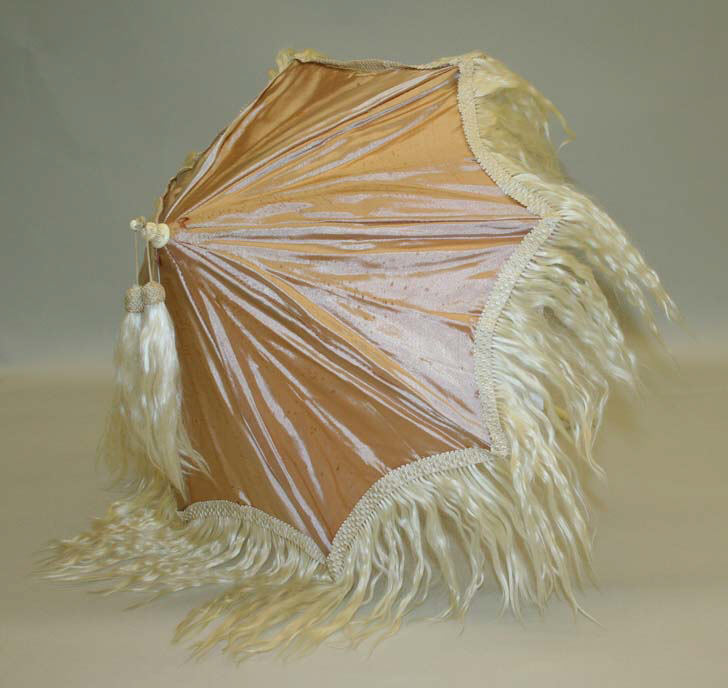
For Katherine Fashion Lab, the pursuit of heritage is not an exercise in archival nostalgia but a strategic excavation of potent symbolic codes. The parasol, originating from the sophisticated courts of 18th-century France, represents a formidable artifact for such an exploration. Crafted from silk, goat's hair, ivory, and metal, it transcends its utilitarian function of providing shade to emerge as a complex instrument of social theater, spiritual demarcation, and encoded communication. This analysis deconstructs the parasol’s historical and symbolic strata to inform a forward-facing luxury strategy for 2026, positioning it not as a relic, but as a reactivated emblem of authority and allure for the contemporary connoisseur.
Deconstructing the Artifact: Materials as Social Syntax
The specified materials—silk, goat's hair, ivory, metal—form a precise lexicon of pre-industrial luxury and craftsmanship. Each component was a deliberate choice in a society where sumptuary laws often dictated display. The silk, likely from Lyon, the epicenter of European silk production, was more than a fabric; it was a canvas for status. Its fineness, dye (obtained through costly processes), and elaborate hand-painted or embroidered motifs broadcast wealth and taste. Goat's hair, used in the delicate tassels and fringes, added a layer of tactile opulence and movement, a whisper of extravagance that animated the silhouette with every gesture. Ivory, carved into the ferrule or handle, signified colonial reach, rarity, and cool, sensual tactility—a direct connection between the holder’s hand and an object of global trade. Finally, the metal (often gilt bronze or silver) in the ribs and mechanism spoke to engineering and durability, the hidden armature that enabled the performance of fragility. Together, these materials created a portable monument to privilege, where every element was a legible sign within the social code.
Historical Adornment and the Performance of Privilege
In the ritualized spaces of Versailles and the Parisian jardin, the parasol was a masterclass in non-verbal communication and historical adornment. It was an extension of the aristocratic body, a tool for what sociologist Erving Goffman termed "impression management." Its operation was a studied performance: the angle of tilt, the speed of its opening, the way it could be used to coyly shield or boldly frame the face. It created an intimate, portable sphere of privacy in public, a halo that literally and figuratively set the bearer apart. This was not mere accessory; it was architectural adornment for the person, defining space and controlling sightlines. It complemented the grand silhouettes of pannier dresses and *robe à la française*, its dome echoing the curves of the architecture and the elaborate coiffures beneath it. The parasol dictated a pace, a posture, and a perimeter, making the wearer both the star and the director of a daily theatrical production.
Spiritual Meaning and the Dialectics of Protection
Beyond social theater, the parasol carried a profound, often overlooked spiritual and symbolic resonance. Its primary function—to shield from the sun—was deeply entangled with pre-modern understandings of the body, purity, and power. In a culture that prized alabaster skin as the ultimate sign of a non-laboring aristocracy, protection from the sun was protection of one’s social and spiritual capital. The sun, while a symbol of monarchy (the Sun King), was also a corrosive, darkening force associated with the peasantry and the outdoors. Thus, the parasol enacted a dialectic of protection and exposure. It safeguarded the sacred, inviolate self (the pale complexion) while strategically exposing the bearer to the gaze of the court. It was a mobile sanctum, a secular reliquary for the self. This spiritual dimension elevates it from a sunshade to a talisman—an object believed to preserve the essence and status of its owner against elemental and social forces.
Strategic Reactivation: A 2026 Luxury Framework for Katherine Fashion Lab
The 2026 luxury landscape demands not products, but embodied narratives and insulated experiences. The reactivation of the parasol for a high-end strategy requires translating its core symbolic power—protection, distinction, and performative authority—into a modern idiom.
Product Strategy: The New Architectural Silhouette
Katherine Fashion Lab should reimagine the parasol as “Wearable Architecture” or a “Personal Pavilion.” This moves it from accessory to essential component of a total look. The 2026 iteration should focus on innovative material juxtapositions: biodegradable polymers replacing ivory, tech-silk with UV-responsive pigments, aerospace-grade metals for structure, and ethically sourced hair or feather details. The mechanism itself should be an object of desire—a silent, flawless kinetic sculpture. The collection could feature three archetypes: Le Bouclier (The Shield)—minimalist, bold, and graphic for urban statement; Le Jardin—romantic, layered with translucent textiles and delicate embroidery for resort and garden wear; and L’Avant-Garde—a fully deconstructed, conceptual piece, perhaps worn as a collar or back-piece, challenging the very form.
Brand and Experience Strategy: Curating the Sphere of Influence
The purchase must be an initiation into a mindset. Marketing should pivot on the concept of “Crafting Your Climate”—controlling one’s environment, both physical and social. Campaigns should feature artists, tech visionaries, and architects, not just models, using the parasol to define space. The point-of-sale should be experiential: custom monogramming of the interior lining (the private self), bespoke scents released by a mechanism in the handle, or a digital component—an NFC chip that, when tapped, reveals the artisan’s story or controls a personal lighting atmosphere. This transforms the object into an interactive platform.
Cultural and Collaborative Strategy
To avoid pastiche, collaboration is key. Partner with a contemporary architect to explore form, a digital artist to create AR filters that visualize the “shade” or aura the parasol projects, and a sustainability lab for material innovation. Position the parasol not as a retro item, but as essential for the future-facing individual who understands the power of boundaries, performance, and sustainable luxury. It becomes a tool for the modern *flâneur*, navigating both city streets and digital landscapes with curated intentionality.
Conclusion: From Sunshade to Sovereign Symbol
The 18th-century French parasol was a masterpiece of coded power. For Katherine Fashion Lab, its strategic value lies in this rich DNA of protection, performance, and privilege. By deconstructing its material syntax and spiritual undertones, the Lab can engineer its revival not as a decorative afterthought, but as a central, provocative pillar of a 2026 luxury wardrobe. It is an opportunity to sell more than an object; it is to offer a sovereign tool for the performance of self, enabling the modern elite to once again carry their architecture, their climate, and their stage with them—a potent symbol for an era that demands both visibility and sanctuary.