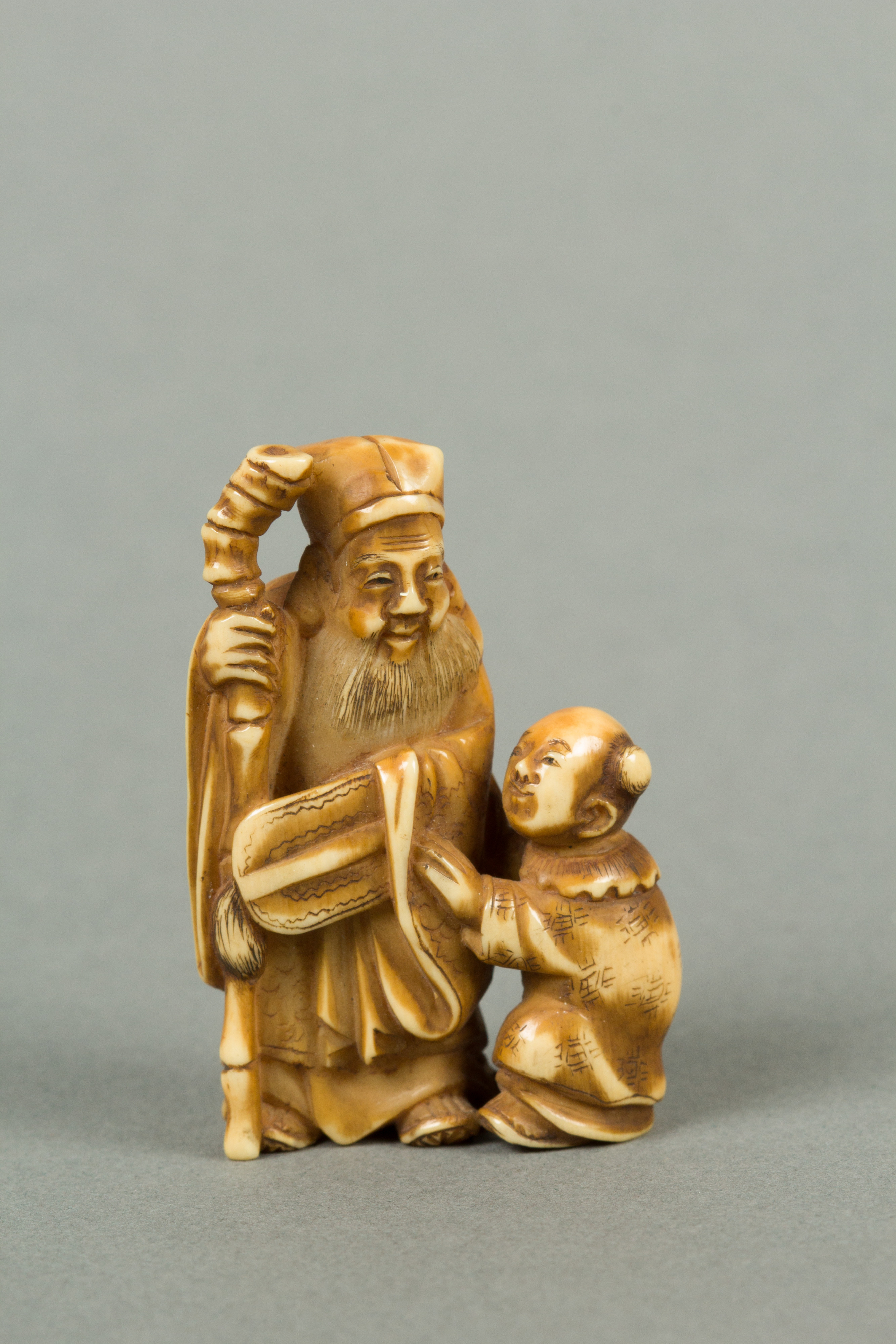
Heritage Analysis: The Netsuke as a Blueprint for Tangible Luxury
At Katherine Fashion Lab, we do not merely observe historical artifacts; we decode their underlying principles of value creation. The Japanese netsuke, a seemingly diminutive toggle used to secure personal belongings, offers a profound case study in symbolic power, historical adornment, and spiritual meaning. Its journey from a functional necessity of the Edo period to a collector’s obsession provides a strategic roadmap for the 2026 high-end luxury market, where the intangible value of a physical object will be the ultimate differentiator.
Historical Adornment: From Utilitarian Necessity to Status Icon
The netsuke emerged in 17th-century Japan as a pragmatic solution to a sartorial problem. Traditional Japanese garments, the kimono, lacked pockets. To carry personal items—medicine cases (inro), tobacco pouches, or writing implements—men suspended them from their obi (sash) by a cord. The netsuke served as the anchor, a carved toggle that prevented the cord from slipping through the sash. This functional origin is critical. The netsuke was not an ornament in the pejorative sense; it was a piece of functional engineering that became a canvas for artistic expression.
As the merchant class gained economic power during the Edo period, sumptuary laws restricted the display of overt wealth through clothing. The netsuke became a discreet yet potent signifier of status. A man of taste would commission a netsuke from a master carver, selecting materials like ivory, stag antler, or exotic hardwoods. The craftsmanship, the intricacy of the carving, and the rarity of the material communicated the wearer’s refined sensibility and financial standing without violating social codes. This is a masterclass in stealth wealth—a concept that will dominate luxury in 2026. The netsuke’s power lay not in its size, but in the concentrated expertise it represented.
Materiality and the Ivory Imperative
The choice of ivory as a medium is not incidental; it is central to the netsuke’s historical gravity. Ivory’s warm, dense tactility and its ability to hold micro-detail made it the preferred material for the most coveted pieces. In the context of historical adornment, ivory was not merely a raw material; it was a repository of craft. The carver’s ability to render a mythical beast or a human figure with lifelike expression within a two-inch form required decades of apprenticeship. The material’s inherent value was amplified by the irreversible nature of the work—a single mistake could ruin the piece. This creates a narrative of risk, mastery, and permanence that modern mass-produced luxury cannot replicate.
For Katherine Fashion Lab, the historical use of ivory—while ethically untenable today—informs our material philosophy. The lesson is not the material itself, but the principle of irreplaceable sourcing. In 2026, our clients will seek materials with a provenance story that is equally compelling and ethically sound. We must identify and secure access to materials that are rare, difficult to work with, and carry a narrative of ecological or artisanal scarcity. The netsuke teaches us that the cost of the material is secondary to the skill required to master it.
Symbolic Power and Spiritual Meaning: The Talisman in the Toggle
Beyond its social function, the netsuke was a vessel for profound spiritual meaning. The subjects chosen for carving were rarely arbitrary. They were drawn from a rich lexicon of Japanese folklore, Buddhist iconography, and Shinto beliefs. A netsuke depicting a shishi (mythical lion-dog) was not just a decorative figure; it was a protective talisman against evil spirits. A carving of the Seven Lucky Gods (Shichifukujin) invoked prosperity and good fortune. A simple frog (kaeru) symbolized safe return and abundance.
This imbues the object with what we at Katherine Fashion Lab term latent agency. The netsuke was believed to carry the essence of its subject. To touch it, to hold it, was to engage in a silent dialogue with the spiritual forces it represented. This is a form of adornment that transcends the visual. It is haptic and kinaesthetic. The owner did not merely display the netsuke; they interacted with it, rubbing its contours in moments of contemplation or stress, creating a physical bond that deepened over time.
Animism and the Object as Companion
This animistic quality is the netsuke’s most valuable strategic asset for the modern luxury client. The contemporary consumer is increasingly alienated by digital experiences that lack physical permanence. They are seeking objects that feel alive—not in a literal sense, but in their capacity to hold memory, emotion, and intention. The netsuke was a companion to its owner, a silent witness to their daily life. It was not worn for others; it was worn for oneself.
For Katherine Fashion Lab, this translates into a 2026 strategy focused on intimate luxury—pieces designed for the owner’s private pleasure, not for public spectacle. We must create objects that invite touch, that carry a weight and texture that feels significant, and that are imbued with a symbolic meaning that resonates on a personal level. The spiritual meaning of the netsuke is not about organized religion; it is about personal mythology. Our 2026 collections must allow clients to construct their own narratives, to choose pieces that act as personal anchors in a chaotic world.
2026 High-End Luxury Strategy: The Netsuke Principle
Drawing from this heritage analysis, Katherine Fashion Lab will adopt the "Netsuke Principle" for our 2026 high-end strategy. This principle rests on four pillars:
1. Micro-Scale, Macro-Impact: We will resist the industry trend toward oversized, logo-heavy pieces. Instead, we will focus on small, exquisitely detailed objects that reward close inspection. The value will be in the density of the detail, not the volume of the material. This appeals to a clientele that values connoisseurship over conspicuous consumption.
2. The Narrative of the Hand: We will champion artisanal techniques that are slow, complex, and at risk of disappearing. Each piece will be accompanied by a documented lineage of its maker, the hours of labor, and the specific challenges overcome. This digital provenance will translate the historical master-apprentice system into a modern, transparent format, justifying premium pricing.
3. Symbolic Customization: We will offer a "Personal Talisman" service, where clients work with our heritage curators to select or commission motifs that hold specific personal meaning—protection, resilience, love, or memory. This moves beyond monogramming into a deeper, more spiritual form of personalization. The client is not buying a product; they are commissioning a personal artifact.
4. Tactile Engagement: Our retail environments and packaging will be redesigned to encourage touch. We will use materials—leather, stone, polished metal—that invite the hand. The unboxing experience will be choreographed to mimic the slow, deliberate appreciation of a netsuke, emphasizing weight, temperature, and texture. This creates a sensory signature that digital competitors cannot replicate.
In conclusion, the netsuke is more than a historical curiosity; it is a strategic archetype. It demonstrates that true luxury is the synthesis of function, art, and spirit. For Katherine Fashion Lab, the netsuke is not a motif to be copied, but a philosophy to be embodied. By 2026, our clients will not just wear our pieces; they will keep them, as talismans for a modern age.