The Architectonic Silhouette: Deconstructing Couture in a Victorian Studio Portrait
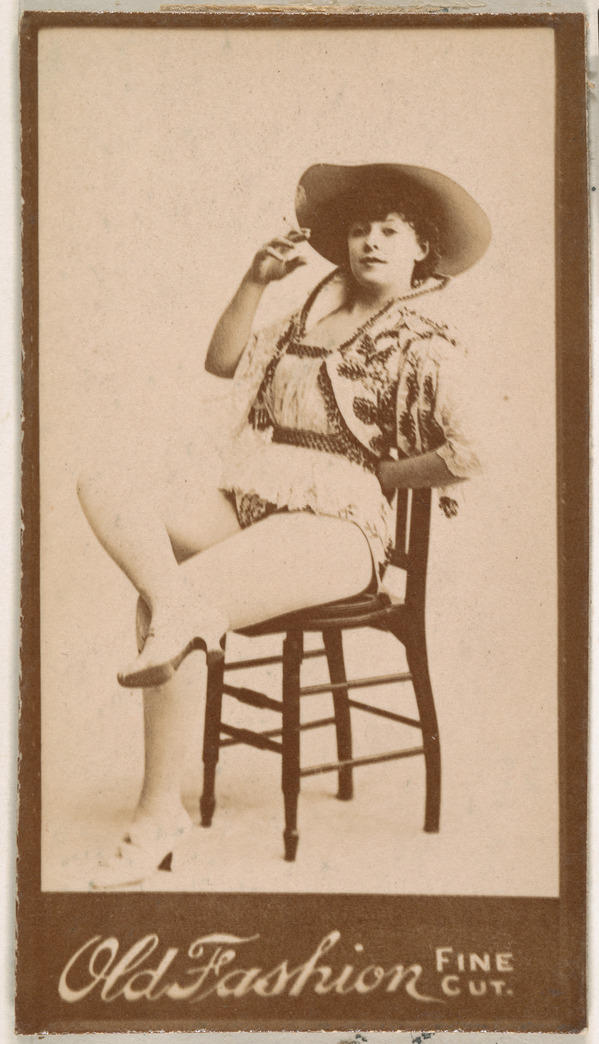
In the rarefied atmosphere of late 19th-century commercial photography, the albumen print served as both document and dreamscape. The subject—an actress adorned in a wide-brimmed hat from the Actresses series (N664), promoting Old Fashion Fine Cut Tobacco—transcends mere promotional ephemera. Within Katherine Fashion Lab's curatorial purview, this image is not a relic but a masterclass in proto-couture logic: the deliberate manipulation of volume, the strategic deployment of shadow, and the theatrical construction of identity. The sitter’s ensemble, frozen in silver salts, prefigures the haute couture principles of structure and spectacle that would define the next century.
The Hat as Sovereign Architectural Statement
The wide-brimmed hat is the undisputed pièce de résistance, functioning less as headwear and more as a mobile canopy of authority. Its circumference creates a geometric halo, effectively severing the subject from the mundane studio backdrop. In couture terms, this is a radical exercise in negative space—the brim operates as a horizontal datum line against which the verticality of the bust and neck are measured. The materiality of the hat, likely a stiffened felt or straw, is rendered with exquisite tonal gradation in the albumen print, revealing a surface that is simultaneously matte and lustrous. This is not passive decoration; it is a deliberate act of spatial conquest, framing the face as the central jewel within an elaborate, wearable architecture.
From a design methodology perspective, the hat’s brim introduces a tension between concealment and revelation. The shadow it casts across the actress’s brow is not an accident of lighting but a calculated drapery of darkness. This chiaroscuro effect pre-empts the surrealist manipulations of later fashion photography, where the accessory becomes a tool of psychological depth. The wide brim does not merely shield; it selects what the viewer may perceive, creating an intimate voyeurism that is both inviting and imperious. For the modern couturier, this is a lesson in the power of the accessory to dictate the wearer’s presence, transforming a simple portrait into a study of controlled visibility.
Garment Construction: The Corseted Logic of the Gilded Age
Beneath the monumental hat, the actress’s costume is a testament to the era’s rigorous tailoring. The bodice, likely of a lustrous silk or velvet, is cinched at the waist, creating the exaggerated hourglass silhouette that was the era’s sartorial signature. This is not merely a garment; it is an exoskeleton of social performance, a rigid structure that dictates posture, breath, and gesture. The albumen process, with its rich sepia and umber tones, captures the subtle sheen of the fabric, suggesting a material wealth that aligns with the tobacco brand’s aspirational marketing. The sleeves, full at the shoulder and tapering to the wrist, add a secondary volume that balances the hat’s breadth, creating a harmonious diagonal composition from brim to cuff.
The collar—high, standing, and likely trimmed with lace or a delicate ruffle—serves as a transitional element between the structured bodice and the exposed column of the neck. This detail is crucial: it softens the severity of the tailoring while reinforcing the era’s obsession with the neck as a site of erotic and aristocratic allure. In Katherine Fashion Lab’s analysis, this collar is a prototype of the modern “statement neckline,” a device that draws the eye upward without sacrificing the overall architectural integrity of the look. The absence of visible jewelry is notable; the reliance on fabric, cut, and silhouette alone elevates this from mere dress to haute couture in its nascent, pre-Worthian glory.
The Albumen Medium: A Couture of Light and Chemistry
To fully appreciate this image, one must consider the medium itself. The albumen print, with its egg-white binder and glass-negative source, produces a tonal range that is uniquely suited to capturing the nuances of dark, rich fabrics and pale skin. The photograph’s Global Heritage origin—a term that acknowledges the cross-continental exchange of photographic techniques and fashion ideals—is evident in the composition’s static, almost classical formality. This is not a candid snapshot but a staged tableau, a collaborative performance between photographer, sitter, and the unseen art director of the tobacco company.
The context of the “Old Fashion Fine Cut Tobacco” promotion is critical. The actress is not merely a woman; she is a branded vessel, her image commodified to sell a lifestyle of leisurely indulgence. Yet, within this commercial frame, the couture elements rebel. The hat’s audacious scale and the bodice’s exacting construction speak to a level of artistry that transcends the product’s utilitarian purpose. This is the paradox of early fashion media: the commercial imperative inadvertently produced some of the most sophisticated visual studies of garment and body in existence. The albumen’s glossy surface, when viewed under raking light, offers a tactile illusion—one can almost feel the brush of the brim and the stiffness of the silk.
Legacy: Echoes in Contemporary Runways
For the contemporary observer, this 19th-century actress is a ghostly foremother of the modern fashion muse. Her wide-brimmed hat finds direct descendants in the dramatic headpieces of Philip Treacy and the sculptural millinery of Stephen Jones. The corseted bodice, with its unapologetic construction, resonates in the architectural dresses of Balenciaga and the neo-Victorianism of Vivienne Westwood. The portrait’s insistence on the primacy of silhouette over ornament is a lesson that remains eternally relevant in an age of fast fashion and disposable trends.
Katherine Fashion Lab posits that this image is not a static artifact but a living blueprint. It demonstrates that couture is not defined by the label sewn into the seam but by the intentionality of the design, the quality of the material, and the confidence of the wearer. The actress’s direct, if slightly averted, gaze suggests a self-possession that is both alluring and defiant. She is not a passive mannequin but an active participant in her own representation, using the hat and gown as instruments of personal power.
In conclusion, this albumen photograph from the N664 series is a profound meditation on the relationship between body, garment, and image. It captures a moment when photography was emerging as the primary medium for fashion dissemination, and when the actress—a figure of both glamour and notoriety—was becoming the archetype of the modern celebrity. The wide-brimmed hat is more than a fashionable accessory; it is a crown of individuality, a shield of mystery, and a testament to the enduring power of a well-constructed silhouette. This is couture in its purest, most elemental form: the art of making a statement without uttering a single word.