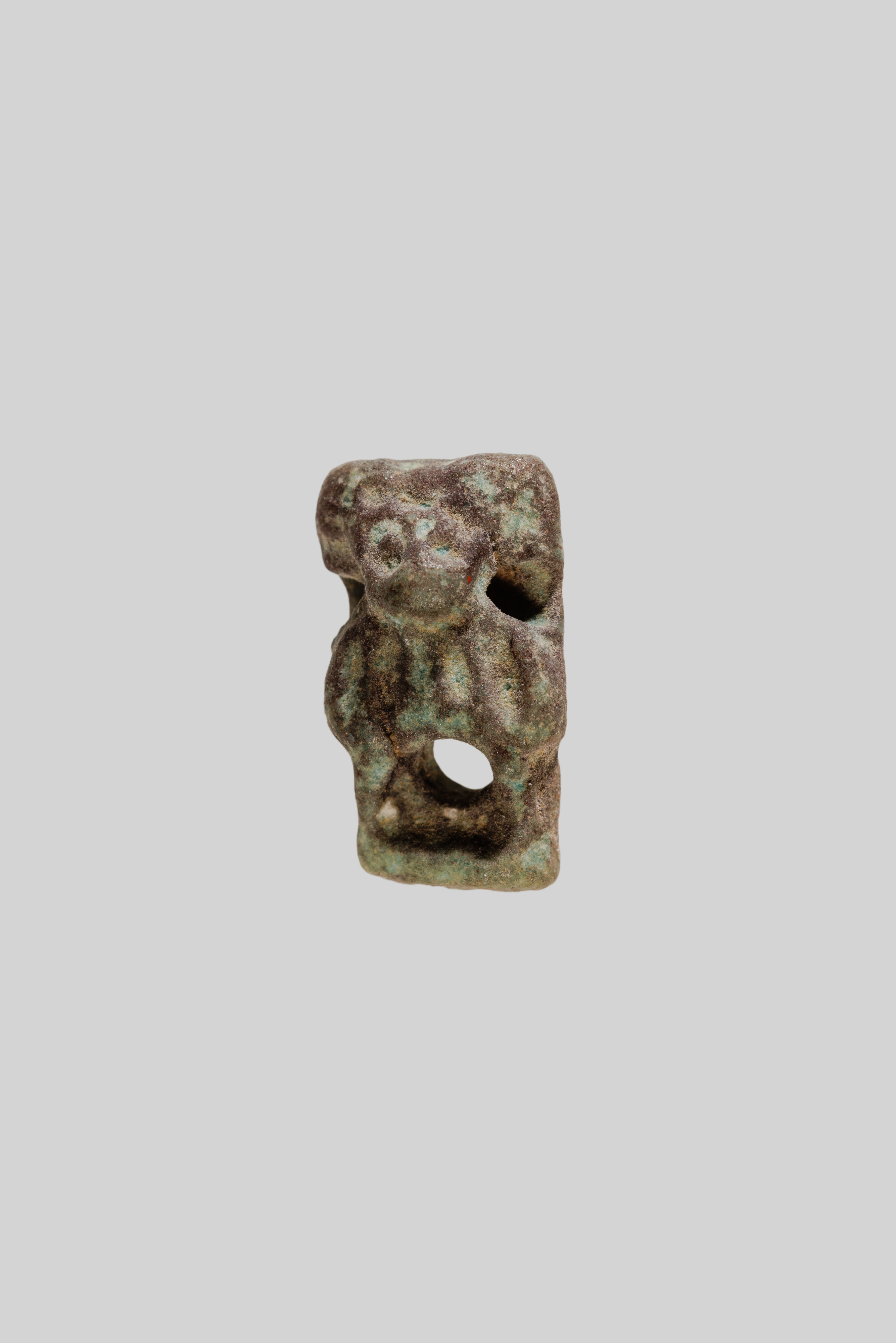
The Cynocephalus Amulet: A Heritage Analysis for Katherine Fashion Lab
The cynocephalus, or sacred baboon, amulet represents one of antiquity’s most potent and misunderstood symbols. Crafted in faience—a self-glazing, quartz-based ceramic that the ancients called tjehenet, meaning “that which shines”—this object was not mere ornament. For the Katherine Fashion Lab, the cynocephalus offers a strategic bridge between primal power and refined luxury, a narrative asset that transcends mere aesthetic appropriation. This analysis examines the amulet’s symbolic architecture, its historical role in adornment, its spiritual utility, and proposes a 2026 high-end strategy rooted in intellectual authenticity rather than surface-level trend adoption.
Symbolic Power: The Baboon as Cosmic Arbitrator
In the ancient Egyptian pantheon, the baboon held a paradoxical position—simultaneously chaotic and orderly, wild yet divine. The cynocephalus was most closely associated with Thoth, the god of wisdom, writing, and lunar cycles. Unlike the ibis, Thoth’s other avatar, the baboon embodied the raw, unfiltered intellect that precedes civilization. Its dog-like snout and pronounced brow suggested an animal perpetually on the verge of speech, a creature that had witnessed the dawn of time. Faience amulets of this type were not passive representations; they were activated vessels. The material itself—bright blue or green—mimicked the Nile’s life-giving waters and the sky’s regenerative vault. For the luxury consumer, this symbolism offers a counter-narrative to sterile minimalism: the amulet speaks to a form of intelligence that is instinctual, ancient, and unapologetically primal.
Critically, the baboon was also the guardian of the Weighing of the Heart ceremony, where the deceased’s soul was judged against the feather of Ma’at. The cynocephalus sat at the base of the scales, not as a passive observer, but as an enforcer of cosmic justice. This role positions the amulet as a talisman of accountability—a profound metaphor for a luxury house navigating modern ethical complexities. The 2026 consumer is not seeking mere decoration; they are seeking alignment. The baboon’s stare, rendered in faience’s unyielding glaze, offers a silent guarantee of discernment.
Historical Adornment: From Tomb to Body
Archaeological evidence places the cynocephalus amulet in both elite burial contexts and daily wear from the Early Dynastic Period (c. 3100 BCE) through the Ptolemaic era. The amulet was typically strung on linen thread or gold wire, positioned over the throat or chest. Its placement was deliberate: the baboon’s protective gaze was directed outward, warding off malign forces, while its association with Thoth ensured the wearer’s utterances were both eloquent and truthful. In life, it was worn by scribes, priests, and high officials—those who wielded power through words rather than weapons. In death, it accompanied the mummy as a heart scarab alternative, ensuring the deceased could recite the negative confessions without faltering.
For Katherine Fashion Lab, this historical context is a strategic goldmine. The amulet was never a mass-market object; its faience production required skilled kiln mastery, and its blue-green finish was a controlled coloristic achievement. This exclusivity maps directly onto high-end luxury principles. The amulet was not loud—it did not shout status through gold or gemstones. Instead, it whispered through material intelligence. The faience’s vitreous surface, when held to light, reveals internal micro-cracks and color gradients, a fingerprint of artisanal variability. In an era of machine-perfect production, this imperfection becomes the ultimate luxury marker.
Spiritual Meaning: The Amulet as Active Technology
Modern interpretations often reduce ancient amulets to “good luck charms,” a gross simplification that dilutes their functional complexity. The cynocephalus amulet was a technological device in the ancient metaphysical sense. Its faience body was believed to absorb solar energy during the day and release lunar energy at night, creating a continuous protective cycle. The baboon’s posture—often seated with paws on knees—mimicked the scribe’s pose, suggesting that wisdom was not innate but cultivated through discipline. The amulet’s presence on the body was a constant reminder to the wearer of their own intellectual and moral obligations.
This spiritual dimension offers Katherine Fashion Lab a unique positioning: the amulet as a wearable audit. In 2026, as consumers grapple with information overload and performative authenticity, a piece that demands internal accountability rather than external validation is profoundly disruptive. The spiritual meaning is not about faith in a deity but about faith in one’s own capacity for judgment. The cynocephalus’s unblinking gaze, frozen in faience, becomes a mirror. This is not a passive symbol; it is a call to action.
2026 High-End Luxury Strategy: The Cynocephalus Protocol
To leverage this heritage asset effectively, Katherine Fashion Lab must avoid the twin pitfalls of cultural appropriation and museum-piece replication. The strategy should be threefold: Material Storytelling, Limited Ritual Series, and Intellectual Patronage.
Material Storytelling: The Faience Revival
Rather than using modern ceramic substitutes, the Lab should commission a limited run of true faience, using a reconstructed ancient recipe—silica, copper oxide, and natron. This is not a marketing gimmick; it is a material fidelity that connoisseurs will recognize. Each amulet will be individually glazed, fired at low temperatures, and hand-polished. The result will be a subtle color variance between pieces, a deliberate departure from Pantone-matched uniformity. The amulet will be mounted on a recycled gold chain, not to elevate the faience, but to contrast its matte-vitreous texture with high-polish metal. The price point should be set at a level that signals scarcity—not because of artificial limitation, but because each piece requires three weeks of production. This is the anti-“drop” strategy: no announcement, no waiting list, only quiet availability to a private client list.
Limited Ritual Series: The Weighing of the Heart
Katherine Fashion Lab will introduce a “Weighing of the Heart” series, limited to 108 pieces—a number resonant with both ancient Egyptian multiples and contemporary numerological sophistication. Each amulet will be accompanied by a hand-bound booklet containing a modern translation of the Negative Confessions, recontextualized for contemporary ethics (e.g., “I have not used my influence to silence others”). This transforms the amulet from a standalone object into a participatory ritual. The client is not buying a trinket; they are enrolling in a personal accountability practice. The packaging will be a cedar-lined box, referencing the sacred barque of Thoth, but with a minimalist, brutalist exterior that appeals to modern luxury aesthetics. The unboxing becomes a ceremonial act, not a logistical one.
Intellectual Patronage: The Thoth Commission
To cement the amulet’s credibility, Katherine Fashion Lab will establish an annual “Thoth Commission,” a grant awarded to a contemporary scholar of ancient material culture. The grant’s purpose is not product development but knowledge generation. The commissioned research will be published in an open-access journal, with the Lab’s name appearing only as a discreet sponsor. This positions the brand as a steward of heritage, not a plunderer. It also creates a narrative shield against accusations of cultural exploitation: the Lab is actively contributing to the preservation and study of the very culture it draws from. In 2026, where provenance and purpose are inseparable, this is a strategic necessity.
Conclusion: The Amulet as a Future Artifact
The cynocephalus amulet is not a nostalgic relic; it is a blueprint for a luxury ethos that values discernment over display, material intelligence over logos, and spiritual accountability over hedonism. Katherine Fashion Lab’s 2026 strategy should treat this amulet as a foundational narrative, not a seasonal motif. By reviving faience production, embedding ritual meaning, and funding genuine scholarship, the Lab can create an object that is simultaneously ancient and futuristic. The baboon’s gaze, once fixed on the scales of judgment, now turns toward a new audience—one that is ready for adornment that demands something in return.