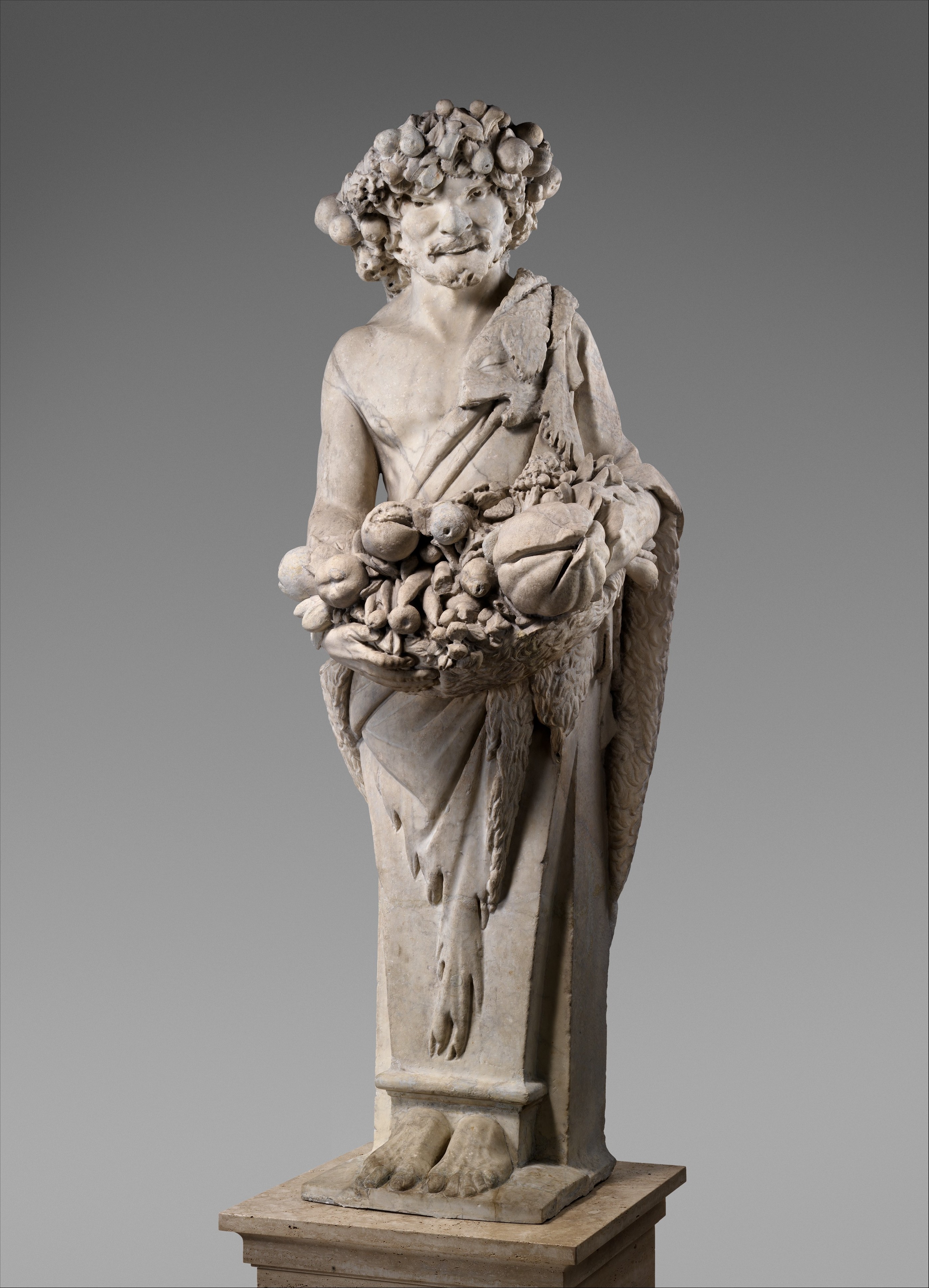
Autumn in the Guise of Priapus: A Study in Materialized Temporality
Within the hallowed halls of Katherine Fashion Lab, where the ephemeral is rendered permanent and the permanent is rendered provocative, the standalone study of Autumn in the Guise of Priapus presents a singular challenge to the contemporary lexicon of luxury. This Global Heritage marble sculpture—one of a pair—is not merely an artifact of antiquity; it is a precursor to the very grammar of haute couture. To analyze it solely as a classical relic is to miss its profound resonance as a text on drapery, fertility, decay, and the semiotics of abundance. Here, in the cold, unyielding medium of stone, we find a thesis on the warmth of seasonal transition, articulated with a precision that rivals any atelier’s finest hand-stitching.
The Sculptural Silhouette: Deconstructing the Fall Line
The immediate visual impact of Autumn is its masterful manipulation of the silhouette. In fashion, the autumn/winter line is traditionally characterized by structure, layering, and a certain architectural gravity. The sculptor of this piece understood this intuitively, centuries before the concept of a seasonal collection existed. The figure, draped in a chiton that clings and falls with an almost liquid realism, establishes a vertical axis that is both grounded and aspirational. The marble has been coaxed into a series of deep, rhythmic folds that function as the garment’s seams, creating a chiaroscuro effect that mimics the interplay of shadow and light on heavy silk velvet.
This is not the static drapery of a funerary stele. The folds are dynamic, suggesting a moment of motion—a turn of the torso, a gesture of offering. The fabric appears to be caught mid-fall, just as the leaves of autumn are caught in their descent. This is the genius of the piece: it freezes the transient. The standalone study format amplifies this, isolating the figure from narrative context and forcing the viewer to engage solely with the formal qualities of the garment-like stone. The chiton’s overfold, or apoptygma, creates a horizontal break that echoes the structural peplum of a modern couture jacket, providing a counterpoint to the vertical flow and grounding the figure in a sense of classical proportion.
Priapus and the Semiotics of Abundance
The guise of Priapus—a rustic god of fertility, gardens, and male generative power—infuses the work with a complex layer of meaning that directly parallels the ethos of high fashion. Priapus is not a god of ethereal beauty; he is a deity of raw, unapologetic fecundity. In this context, the sculpture becomes a meditation on the generative power of the seasonal wardrobe. The autumnal theme is not one of melancholic decay but of harvest, of the culmination of growth before the dormancy of winter. The fruits and vines that traditionally accompany such depictions are implied here through the swelling forms of the marble, the ripe, full curves of the musculature beneath the drapery, and the suggestion of a cornucopia of visual riches.
In the language of modern luxury, this translates to a celebration of material excess. The marble itself is the ultimate luxury textile—quarried, transported, and shaped at immense cost. Its cool, polished surface is a stark contrast to the warmth of the subject matter, creating a dialectic between the tactile warmth of wool or fur and the intellectual coolness of stone. The figure’s head, likely adorned with a wreath of vine leaves or fruit (now weathered or restored), would have completed this narrative of harvest, framing the face as the ultimate accessory. This is fashion as a form of worship—not of the gods, but of the seasonal cycle itself.
Materiality as Couture Technique
The choice of marble is critical to this analysis. Unlike bronze or terracotta, marble possesses a unique translucency, a depth that absorbs and reflects light in a way that mimics the luster of human skin and fine fabric. The sculptor’s technique—a combination of claw chisel for the initial roughing, flat chisels for the primary folds, and finally, abrasive powders for the high-polish finish—can be understood as a form of artisanal couture construction. The process is slow, deliberate, and irreversible. A misplaced stroke cannot be unpicked; it must be worked into the design. This mirrors the haute couture process, where a single error in a hand-sewn seam can compromise an entire garment, demanding a level of focus that borders on the monastic.
The contrast between the polished flesh and the slightly rougher, more matte finish of the drapery is a deliberate technical choice. It creates a hierarchy of textures, similar to the way a couturier might juxtapose a matte crepe against a lustrous satin. The skin appears alive, warm, and responsive; the fabric appears substantial, heavy, and tactile. This differentiation of surface treatment is the sculptural equivalent of a fabric swatch book, demonstrating a mastery of material that is the hallmark of both the ancient sculptor and the modern fashion house. The Global Heritage provenance further enriches this, suggesting a lineage of craft that transcends geographic boundaries, a universal language of form and texture.
The Pair and the Dialogue of Seasons
As one of a pair, this Autumn sculpture exists in a state of implicit tension with its missing counterpart—likely Winter or Spring. This duality is essential to its meaning. Fashion is inherently a system of binaries: covered/uncovered, structured/fluid, masculine/feminine. The standalone study, however, forces us to consider what is absent. The dialogue becomes internalized. We are asked to imagine the opposing season, to project the cold austerity of winter onto the lush abundance of autumn. This act of mental completion is precisely the work of a fashion editor or a stylist: to see the potential in a single piece, to understand its place within a larger, unseen collection.
In the context of Katherine Fashion Lab, this sculpture serves as a philosophical touchstone. It reminds us that fashion is not merely about clothing the body but about articulating the human condition through the manipulation of material. The autumnal guise is a metaphor for the moment of peak sophistication before the starkness of minimalism, the rich, complex layering of identity before the stripping away of the self. The marble’s permanence contrasts with the season’s transience, suggesting that true style is an eternal concept, repeatedly reissued in new materials and new contexts.
Ultimately, Autumn in the Guise of Priapus is a masterclass in the art of the fold, the poetry of material, and the power of the seasonal narrative. It is a testament to the idea that the most profound fashion is not worn but embodied, not displayed but lived. In this silent, stone-clad figure, we find the immutable blueprint of the autumn/winter collection—a celebration of abundance, a dialogue with time, and a monument to the enduring craft of transformation.