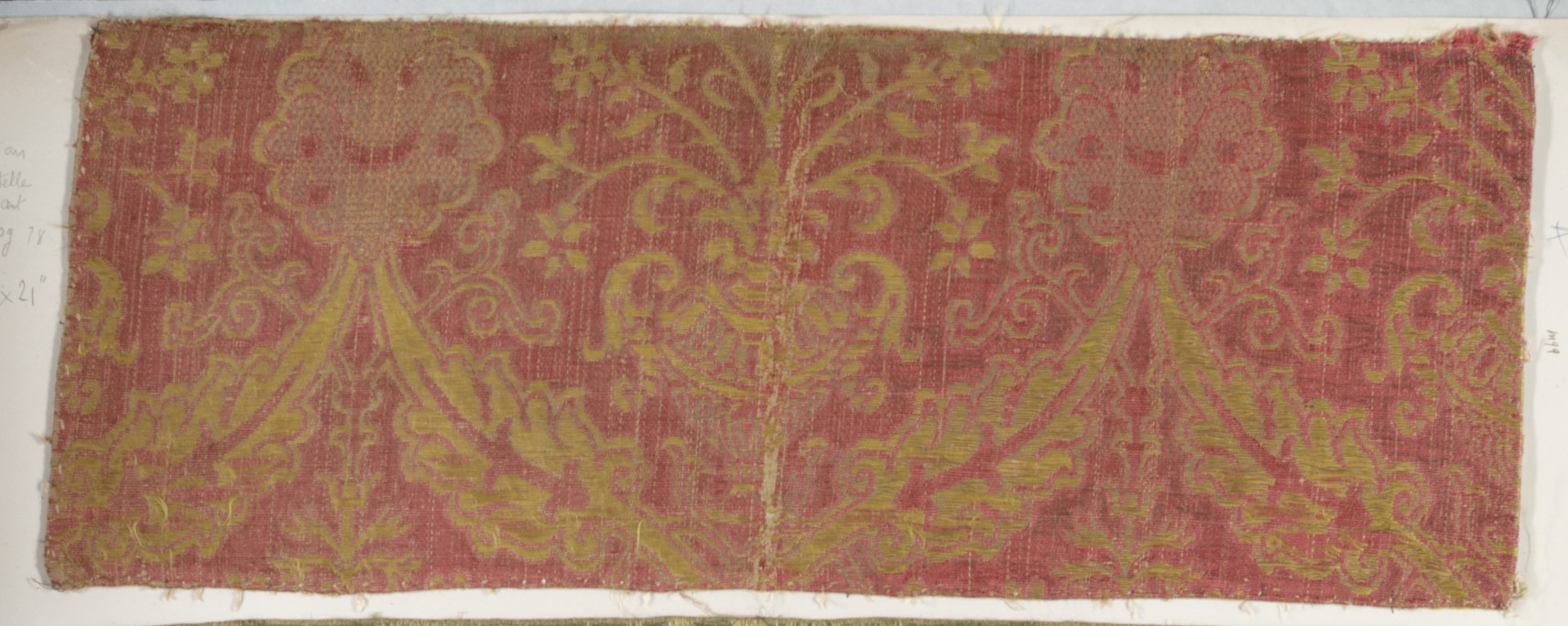
The Fragment as Fulcrum: Reconstructing Symbolic Power for Modern Luxury
In the rarefied echelons of high-end fashion, the pursuit of novelty often obscures a more potent resource: the archaeological fragment. For Katherine Fashion Lab, the study of a singular artifact—a piece of silk and metal thread from an ancient civilization—is not merely an exercise in historical cataloguing. It is a strategic excavation of meaning. This fragment, though physically incomplete, offers a complete lexicon of symbolic power, historical adornment, and spiritual intention. The following analysis deconstructs these layers to formulate a 2026 luxury strategy predicated not on replication, but on resonance.
I. Material Dialectics: Silk and Metal as Carriers of Cosmic Order
The medium of the fragment—interwoven silk and metal thread—is the first testament to its original sociopolitical gravity. In antiquity, silk was not a commodity; it was a diplomatic currency, a material manifestation of imperial reach along trade routes that connected disparate worlds. Its presence in a garment signified access to the exotic and the forbidden. The metal thread, likely gilded or drawn from precious alloys, served a dual function. Structurally, it provided rigidity and luminosity. Symbolically, it transformed the wearer into a terrestrial reflection of celestial bodies. The interplay of these materials creates a dialectic: the soft, organic fluidity of silk against the unyielding, inorganic brilliance of metal. This is not mere decoration; it is a philosophical statement on the duality of existence—mortality versus divinity, chaos versus order.
The Alchemy of Adornment
For the ancient elite, adornment was a technology of power. The fragment’s original garment would have been a locus of concentrated energy, designed to amplify the wearer’s aura. The metallic threads would catch lamplight and sunlight, creating a flickering, almost supernatural halo. This was intentional. The wearer did not simply wear a garment; they wore a portable firmament. The strategic use of metal thread in specific patterns—likely geometric or zoomorphic—served as a protective grid, warding off malevolent forces and anchoring divine favor. In this context, the fragment is not a piece of cloth but a surviving piece of a protective spell, a physical prayer woven into the body’s outermost layer.
II. Historical Adornment and the Architecture of Status
The historical context of this fragment reveals a sophisticated understanding of adornment as a hierarchical language. Every stitch and thread was a signifier of rank, accessible only to a sacerdotal or royal class. The density of the metal thread, the fineness of the silk, and the complexity of the weave were all encoded data points that communicated the wearer’s proximity to the divine or the throne. This is a crucial distinction for modern luxury: historical adornment was not about personal expression but about collective order. The individual was subsumed into a larger cosmological and social architecture. The fragment, therefore, is a remnant of a system that understood clothing as a binding contract between the mortal, the state, and the gods.
Spiritual Meaning as a Functional Asset
To the ancient mind, there was no separation between the aesthetic and the spiritual. The fragment’s spiritual meaning was its primary function. It was an amulet, a relic, and a status marker simultaneously. The choice of silk—a material derived from a living creature’s metamorphosis—carried connotations of rebirth and transcendence. The metal thread, often associated with solar deities, represented eternal, unchanging power. When combined, the garment became a talisman for navigating both the earthly court and the unseen realm. For a contemporary luxury house, this offers a critical insight: spirituality is not a trend but a foundational human need. The most enduring luxury objects are those that appear to offer protection, elevation, or a connection to something larger than the self.
III. Strategic Translation for 2026: The Luxury of the Incomplete
As Katherine Fashion Lab looks toward the 2026 market, the fragment offers a counter-intuitive strategy: the deliberate embrace of incompletion. In an era of mass production and digital saturation, perfection has become sterile. The fragment’s power lies in its negative space—the missing sections invite the viewer to complete the narrative. This is a profound psychological lever for high-end consumers who are fatigued by overt branding and seek intellectual engagement. The 2026 strategy should not attempt to reconstruct the original garment. Instead, it should harness the idea of the fragment as a design philosophy.
Product Architecture: The "Aura of Provenance"
The first strategic pillar is the creation of a capsule collection titled "Fragmenta." This line will feature garments and accessories that deliberately incorporate raw, unfinished edges, exposed metallic warp threads, and asymmetric cuts that mimic the artifact’s broken contours. The material palette will be restricted to pure silk and oxidized metal fibers, echoing the original medium. However, the execution must be flawless. The “fragment” look requires the highest level of craftsmanship to appear intentional, not damaged. This creates a new category of luxury: curated decay. The product is not sold as new; it is sold as a piece of history that has been re-tuned for the present.
Brand Narrative: The Wearer as Custodian
The second pillar is a shift in brand narrative from “ownership” to “custodianship.” The marketing language must pivot from acquisition to preservation. The consumer is not buying a dress; they are accepting the responsibility of carrying a fragment of ancient symbolic power into the modern world. This positions Katherine Fashion Lab not as a manufacturer but as an archaeological intermediary. The 2026 campaign will feature the fragment in high-resolution microscopy, revealing its intricate weave, alongside modern interpretations. The copy will emphasize the spiritual function—protection, transcendence, and connection—rather than mere aesthetic appeal. This elevates the purchase from a transaction to a rite.
Pricing and Exclusivity: The Value of the Void
The final pillar concerns pricing architecture. The “Fragmenta” collection should be priced at a premium that reflects not the material cost but the interpretive value. Each piece will be numbered and accompanied by a certificate detailing its specific design origin from the ancient fragment. To further leverage the spiritual dimension, a limited run of bespoke pieces will be offered where clients can commission a garment with a physical, modern-made “fragment” of silk and metal woven into the lining—a hidden talisman. This creates a private, almost secret layer of luxury, appealing to the collector who values esoteric knowledge over public display.
Conclusion: From Relic to Revenue
The ancient fragment is not a static object of the past; it is a dynamic blueprint for the future of high-end luxury. Its power resides in its material integrity, its historical function as a status talisman, and its profound spiritual resonance. For Katherine Fashion Lab, the 2026 strategy must be to treat the fragment as a strategic asset—a source of intellectual capital that differentiates the brand in a crowded market. By translating the fragment’s language of incompletion, protective adornment, and cosmic symbolism into a contemporary product line, the Lab can offer clients something that fast fashion cannot: a tangible connection to eternity, packaged with the precision of modern luxury. The fragment, once lost to time, becomes the fulcrum upon which a new era of meaningful, symbolic luxury is leveraged.