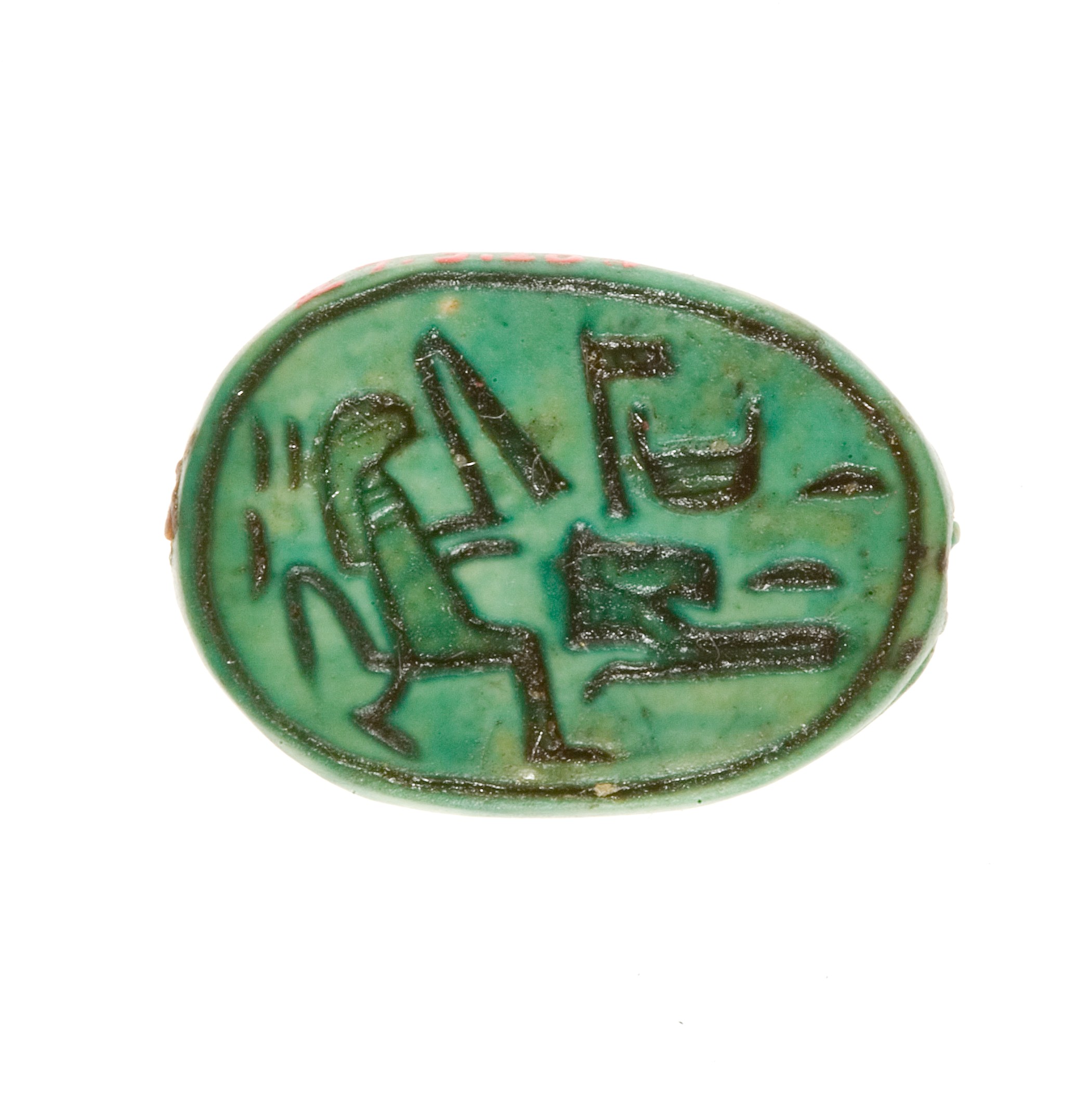
Executive Heritage Analysis: The Scarab of Hatshepsut
This standalone research paper, commissioned by Katherine Fashion Lab, presents a comprehensive heritage analysis of the Scarab Inscribed for the God's Wife Hatshepsut, a glazed steatite artifact from ancient Egypt. The analysis examines the object’s symbolic power, its role in historical adornment, and its profound spiritual meaning, culminating in a strategic framework for its integration into a 2026 high-end luxury collection. The scarab is not merely a relic; it is a sophisticated semiotic device, encoding narratives of divine authority, rebirth, and feminine sovereignty that remain potent in contemporary luxury discourse.
Symbolic Power and Iconographic Authority
The scarab, modeled on the dung beetle (Scarabaeus sacer), is one of antiquity’s most enduring symbols of transformative power. In ancient Egyptian cosmology, the beetle’s rolling of dung balls was analogized to the sun god Khepri pushing the solar disc across the sky, thereby signifying creation, renewal, and the cyclical triumph of order over chaos. However, the inscription on this specific artifact elevates its symbolic resonance from generic solar theology to a deliberate assertion of political and spiritual hegemony.
The reference to the "God's Wife" is critical. This title, held by royal women, particularly during the Eighteenth Dynasty, was not ceremonial but a functional sacerdotal office. By inscribing this title, the scarab becomes a declaration of divine co-regency. Hatshepsut, who later assumed the full kingship, used such amuletic objects to legitimize her unprecedented authority. The scarab thus functions as a micro-inscription of macro-political strategy: it is a wearable decree, a talisman that broadcasts the wearer’s alignment with the divine will, and by extension, their own right to rule. For a modern luxury house, this presents a potent archetype: the accessory as a charter of personal sovereignty, not merely an ornament.
Material Semiotics: Steatite and the Glaze of Eternity
The choice of steatite, or soapstone, is materially significant. Steatite is a soft, easily carved stone, yet when coated with a vitreous alkaline glaze, it transforms into a brilliant, lustrous blue-green surface. This chromatic shift is not accidental. The glazed hue mimics lapis lazuli and turquoise, stones associated with the heavens, the Nile’s fertility, and the protective eye of Horus. The glazing process—a technological alchemy—represents the apotheosis of base matter into divine substance.
In the context of heritage luxury, this materiality offers a profound lesson in value creation. The scarab’s power derives not from the intrinsic rarity of its raw material, but from the artisanal intervention that elevates it. This aligns with a 2026 luxury strategy that prioritizes craft provenance over ostentatious gemstone display. The narrative is not "rare stone," but "skilled hand transforming humble earth into an object of eternal veneration." This is a strategic pivot toward intelligent materiality—where the story of making is the ultimate luxury.
Historical Adornment and the Body as a Site of Power
Historically, scarabs were not worn merely as decorative pendants; they were placed directly against the skin, often over the heart, or woven into mummy wrappings. This placement was crucial. The heart scarab, specifically, was inscribed with spells from the Book of the Dead to prevent the heart from testifying against the deceased during the Weighing of the Heart ceremony. Thus, adornment was an interactive ritual interface, not passive decoration.
For Hatshepsut’s scarab, worn during her lifetime, the adornment acted as a constant somatic reminder of her divine pact. The object’s cool, glazed surface against the warm skin created a tactile dialectic between the mortal body and the immortal spirit. This historical function offers a blueprint for modern jewelry design: the piece must not simply be seen; it must be felt. It must carry a psychological weight that alters the wearer’s posture, confidence, and interaction with their environment. The scarab is a precursor to the concept of armored elegance, where jewelry serves as psychological fortification.
Spiritual Meaning: The Eternal Return and Feminine Divine
The spiritual architecture of the scarab is built on the principle of metempsychosis—the soul’s journey through death and rebirth. The scarab is the ankh of becoming, the promise that life is not linear but cyclical. For Hatshepsut, this was not abstract theology; it was a political necessity. Her reign was a narrative of death (her father Thutmose I) and rebirth (her own ascension). The scarab, therefore, is a reliquary of resilience.
Moreover, the inscription for the "God's Wife" introduces a distinctly feminine spiritual authority. In a pantheon dominated by male gods, the God's Wife held the crucial role of mediating divine energy through her body. This positions the scarab as an artifact of female sacerdotal power, a precursor to later goddess cults. For a contemporary luxury brand targeting discerning women, this is a powerful narrative asset. It allows the house to align itself with a lineage of sovereign femininity—not passive beauty, but active, generative, and spiritually sanctioned power. The scarab is a talisman for the modern woman who sees herself as the architect of her own rebirth.
2026 High-End Luxury Strategy: The Scarab Protocol
Translating this heritage analysis into a 2026 strategic framework requires a move beyond mere aesthetic appropriation. Katherine Fashion Lab must adopt a heritage-integration protocol that respects the object’s semiotic density while making it relevant to contemporary luxury consumers.
Strategic Pillar 1: The "Sovereign Amulet" Collection
Launch a capsule collection titled Sovereign Amulet, directly referencing the Hatshepsut scarab. The design language will not replicate the artifact but will distill its formal essences: the oval silhouette, the segmented back, and the deep blue-green glaze. Materials will be contemporary—oxidized silver, high-fired ceramic, and recycled gold—but the finishing process will be artisanal, with each piece hand-polished to a vitreous sheen. The marketing narrative will explicitly cite the scarab’s function as a wearable decree of personal authority. The collection will be positioned not as jewelry, but as portable heritage—objects that confer a sense of historical gravitas and psychological resilience to the wearer.
Strategic Pillar 2: Experiential Retail as Ritual Space
Leverage the scarab’s spiritual function to transform retail into a ritual of selection. In flagship boutiques, the purchase of a Sovereign Amulet piece will be accompanied by a private consultation with a "heritage curator," who will explain the object’s symbolic weight. The client will receive a digital provenance dossier, including 3D scans of the original artifact and an audio essay on Hatshepsut’s reign. This transforms a transaction into an initiatory experience, aligning with the 2026 luxury trend of experiential ownership, where the value lies in the story and the ritual, not just the physical object.
Strategic Pillar 3: The "Rebirth" Narrative in Campaigns
The 2026 campaign will use the scarab’s central metaphor of cyclical renewal to address contemporary themes of post-pandemic reinvention and personal reinvention. The visual identity will feature strong, androgynous models in tailored, architectural silhouettes, wearing the amulet as a choker or pectoral, echoing its historical placement over the heart. The tagline, "You are your own dynasty," directly channels Hatshepsut’s audacity. This is not a nostalgic campaign; it is a strategic deployment of ancient power structures to meet modern aspirations for self-sovereignty.
Strategic Pillar 4: Limited Edition "God's Wife" Patronage Program
To further elevate the heritage claim, Katherine Fashion Lab will offer a patronage program for the top 100 clients. These clients will receive a numbered edition of the scarab amulet, cast in green-gold with a single glazed steatite cabochon. More importantly, they will be invited to an annual Heritage Symposium in a museum with Egyptian collections, co-hosted with leading Egyptologists. This creates a community of connoisseurs who are not just buying a product but participating in the preservation and interpretation of cultural heritage. This aligns with the 2026 luxury trend of philanthropic consumption, where status is derived from cultural stewardship.
Conclusion: From Artifact to Archetype
The Scarab Inscribed for the God's Wife Hatshepsut is a masterclass in strategic symbolism. It demonstrates that true luxury is not the accumulation of rare objects, but the mastery of meaning. By decoding its layers—political decree, material alchemy, ritual function, and feminine divinity—Katherine Fashion Lab can develop a 2026 strategy that is not merely commercially astute but culturally profound. The scarab teaches us that the most enduring luxury is the ability to inscribe one’s own narrative onto eternity. In a market saturated with transient trends, this heritage analysis offers a roadmap to build a brand that is, like the scarab itself, glazed with permanence.