Deconstructing the Blazon: A Study in Global Heritage and Textile Alchemy
In the rarefied echelons of haute couture, where innovation often masquerades as disruption, Katherine Fashion Lab’s latest standalone study, Blazon, offers a profound recalibration. It is not a garment that shouts; it is a thesis that whispers—a meticulously argued meditation on provenance, materiality, and the semiotics of adornment. By isolating Blazon from a seasonal collection, the Lab positions it as an artifact, a controlled experiment in which linen and silk are not merely fabrics but protagonists in a dialogue spanning centuries and continents. This is couture as archaeology, where each stitch is a dig site and every thread a trace of a forgotten civilization.
The Heraldic Impulse: From Battlefield to Body
The titular concept, blazon, traditionally refers to the formal, codified language of heraldry—the precise description of a coat of arms. Katherine Fashion Lab’s appropriation of this term is deliberate and layered. Historically, the blazon was a tool of identification and lineage, a visual shorthand for power, allegiance, and territorial claim. In this piece, however, the Lab subverts the martial and aristocratic origins of heraldry, translating its rigid geometry into a fluid, organic expression that drapes the female form with the grace of supplication and the authority of a sovereign.
The garment’s silhouette is deceptively simple: a columnar, floor-sweeping gown with a high, sculpted neckline and an open back that falls to the sacrum. Yet, this architectural restraint is the perfect canvas for the piece’s true subject—the embroidered blazon that cascades from the left shoulder diagonally across the torso, terminating at the right hip. This is not a reproduction of a medieval crest; rather, it is a re-imagined lexicon. Abstracted lions, geometric chevrons, and stylized fleur-de-lis are deconstructed and reassembled into a pattern that evokes both Celtic knotwork and Mughal miniature painting. The Lab’s genius lies in this synthesis: the blazon is no longer a claim to a single bloodline but a testament to a global heritage, a visual passport that acknowledges that identity is not monolithic but a palimpsest of influences.
Material Dialectics: The Humility of Linen, The Opulence of Silk
The material selection for Blazon is a masterclass in conceptual contrast. The base is a heavyweight, garment-washed linen—a fabric historically associated with the peasantry, with the Egyptian fields, with the simplicity of monastic life. Linen is honest, breathable, and carries a natural slub that rejects the sterile perfection of synthetic textiles. It grounds the piece in a tactile reality, a sense of earth and labor. This is intentional. The Lab challenges the couture hierarchy that often places silk above all, arguing instead that the value of a material lies not in its intrinsic cost but in the narrative it can bear.
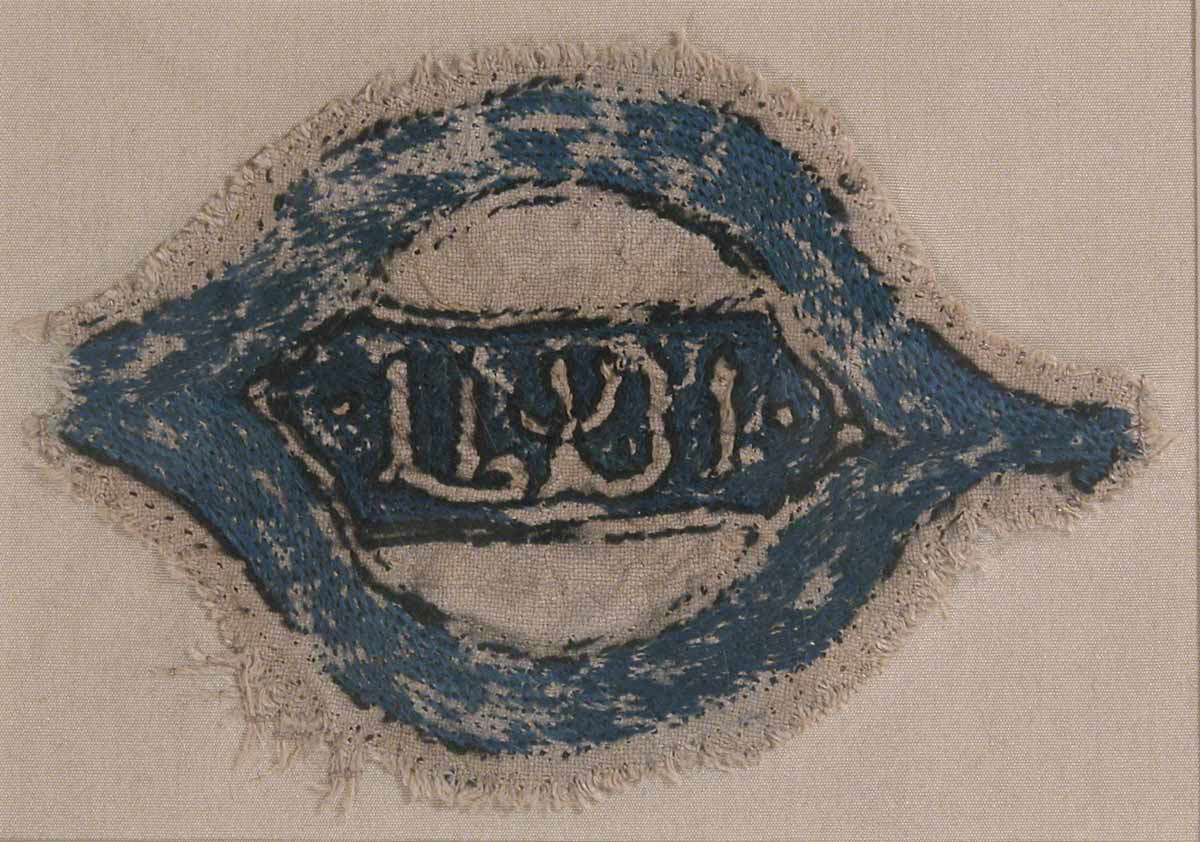
Upon this humble foundation, the artisans of Katherine Fashion Lab have executed an embroidery that is nothing short of miraculous. Using silk threads—some as fine as a single filament, others twisted into lustrous cords—they have created a relief-like surface that catches light with the iridescence of a dragonfly’s wing. The silk does not cover the linen; it converses with it. In some areas, the embroidery is dense and opaque, forming a solid, jewel-toned field of deep sapphire and emerald. In others, the threads are spaced, allowing the flaxen hue of the linen to bleed through, creating a shadow-play that gives the blazon a three-dimensional, almost holographic, quality. The contrast is stark: the rough, matte texture of the linen against the smooth, reflective pile of the silk. It is a dialogue between the agrarian and the aristocratic, the everyday and the ceremonial.
The Artisanal Process: A Cartography of Stitches
A standalone study of this nature demands an examination of its construction, for in couture, technique is content. The embroidery on Blazon is not applied as an afterthought; it is integral to the garment’s structure. The Lab’s atelier employed a hybrid of techniques, including broderie anglaise for the negative spaces, couched goldwork (using a silk-wrapped metallic thread) to outline the primary motifs, and point de Beauvais for the shaded, gradient areas. This is not a machine-driven process; it is a manual cartography, requiring over 400 hours of handwork. Each stitch is a deliberate mark on a map, charting a journey from the looms of Northern Ireland (where the linen was sourced) to the silk farms of Jiangsu, China.
The result is a garment with an undeniable physical presence. When worn, the weight of the embroidery pulls the linen into new, unexpected folds, creating a dynamic tension between the planned design and the spontaneous drape. The open back, devoid of any embellishment, serves as a moment of respite—a blank canvas that amplifies the intensity of the front. The wearer is not merely adorned; they are activated as a living monument to the skill of the human hand. The Lab’s refusal to use any synthetic or blended fibers further underscores their commitment to purity, ensuring that the piece remains biodegradable, a fleeting artifact meant to be treasured, not preserved in a museum case.
Contextual Significance: A Counter-Narrative to Fast Fashion
In the broader context of the contemporary fashion landscape, Blazon is a quiet but forceful polemic. It stands in direct opposition to the ephemerality of fast fashion and the algorithmic sameness of mass-produced luxury. Katherine Fashion Lab’s decision to present this as a standalone study—without the fanfare of a runway show or the pressure of commercial viability—is a radical act. It signals a return to the atelier as a site of intellectual inquiry, where garments are not products but propositions.
This piece asks a critical question: What is the future of couture in an era of climate anxiety and cultural appropriation? The answer, as proposed by the Lab, is not to retreat into insular tradition, but to embrace a global heritage with humility and respect. By merging the linen of the West with the silk and embroidery techniques of the East, Blazon does not claim ownership of either; instead, it creates a third space, a new heraldry for a borderless world. The garment becomes a symbol of cultural fluency, not appropriation—a nuanced acknowledgment that beauty is a shared inheritance, and that the most profound luxury is the time and skill required to honor it.
Ultimately, Blazon is a triumph of restraint. It does not seek to shock or to seduce. Its power lies in its quiet confidence, its intellectual rigor, and its unwavering belief that cloth can carry meaning. It is a garment for the connoisseur, the collector, the woman who understands that true couture is not about being seen, but about seeing—seeing the history in a thread, the labor in a loop, and the future in a single, perfect fold of linen and silk.