The Art of Material Memory: A Couture Analysis of Katherine Fashion Lab's "Sample"
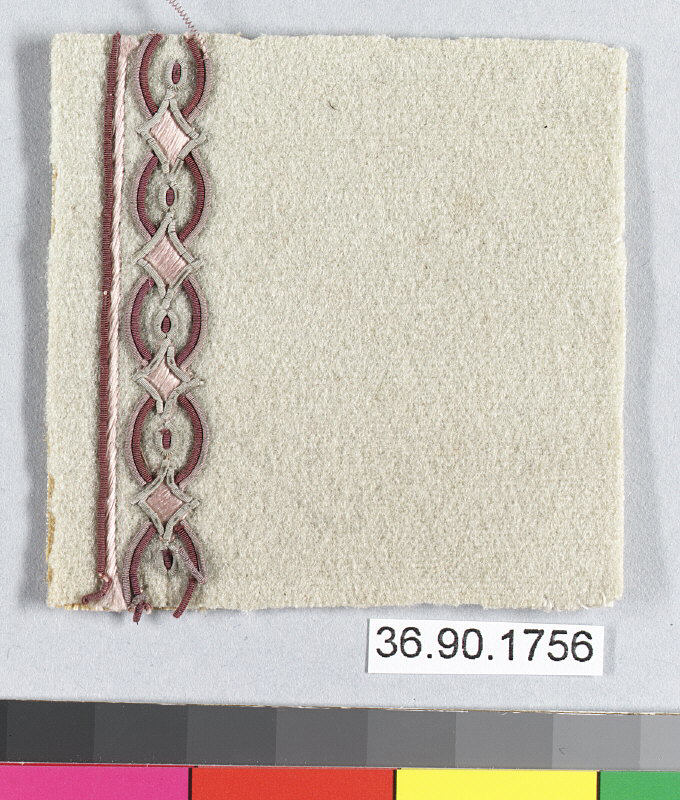
In the rarefied echelons of haute couture, where novelty often masquerades as innovation, Katherine Fashion Lab’s latest standalone study, titled simply "Sample," presents a radical proposition: that true avant-garde expression lies not in the rejection of heritage, but in its meticulous, tactile reinterpretation. This piece, a masterclass in material dialectics, transcends the conventional boundaries of garment construction to become a sculptural meditation on origin, displacement, and the enduring power of the hand. By juxtaposing the ethereal fluidity of silk with the structural rigidity of metal thread upon a humble felt ground, the Lab has engineered a work that is at once archaic and futuristic, a tangible paradox demanding a sophisticated reading.
Deconstructing the Material Trinity
The genius of "Sample" resides in its audacious material hierarchy. Felt, traditionally relegated to the utilitarian realm of insulation or craft, is elevated here to a foundational canvas of profound textural integrity. Its dense, non-woven matrix provides an unyielding, almost geological substrate—a stark departure from the diaphanous silks and crisp organzas that dominate contemporary couture. This choice is deliberate; it anchors the piece in a sense of primordial earthiness, a nod to the earliest forms of human textile production. The felt is not merely a background; it is the conceptual bedrock upon which a narrative of global confluence is embroidered.
Upon this grounded base, the Lab orchestrates a dialogue between two opposing forces. The silk, in its raw, unbleached state, introduces a liquid luminosity. It is manipulated not as a draped surface but as an architectural filament, drawn across the felt in sweeping, calligraphic gestures that mimic the flow of water over stone. This silk is not dyed but celebrated in its natural ecru tone, its subtle sheen catching light in a way that suggests internal illumination. Conversely, the metal thread—likely a fine gauge of silver or gold-plated copper—functions as the piece's skeletal system. Worked into the felt with a density that borders on obsession, it creates a topographical map of raised, glinting ridges. This is not embroidery as embellishment; it is embroidery as structural engineering, a metallic exoskeleton that both constrains and liberates the silk's organic drift.
Global Heritage as a Design Lexicon
The "Global Heritage" origin is not expressed through literal motifs or cultural pastiche. Instead, it is distilled into a sophisticated lexicon of technique and memory. One observes the disciplined precision of Japanese sashiko stitching in the parallel, reinforcing lines of metal thread, yet the execution deviates from its geometric rigidity into a more fluid, almost baroque curvature. Similarly, the layering of silk evokes the luxurious restraint of Mughal zardozi, but here the metallic work is stripped of its opulent, three-dimensional flourishes, reduced to a minimalist, almost brutalist line. The result is a synthesis of global craft traditions—from the nomadic felts of Central Asia to the refined silks of the Far East and the metallic opulence of South Asia—all filtered through a contemporary, post-industrial lens. The garment becomes a silent ambassador of cultural memory, not as a costume, but as a conceptual palimpsest inscribed with the techniques of countless anonymous artisans.
Structural Silhouette and the Sculptural Body
As a standalone study, "Sample" is liberated from the constraints of a full collection, allowing the silhouette to evolve as a pure expression of the materials. The garment eschews the conventional tailoring of shoulders, waist, and hip. Instead, it drapes as a monolithic, cocoon-like form, its volume dictated by the natural stiffness of the felt and the tensile pull of the metal threads. The piece appears less designed and more grown, as if the materials themselves dictated the final form. The silk, where it escapes the metallic grid, billows into soft, accidental-looking poufs, creating a dynamic tension between the hard and soft, the controlled and the chaotic.
This construction demands a renegotiation of the wearer's relationship with the garment. The felt's weight provides a grounding, gravity-defying presence, while the metal threads create a subtle, audible whisper with movement—a sensory soundscape that is rare in modern fashion. The garment does not conform to the body; rather, it creates a secondary architecture around it, transforming the wearer into a living sculpture. The internal structure, visible only upon close inspection, reveals a complex lattice of hand-stitched reinforcements, ensuring that the piece maintains its integrity without compromising its organic flow. This is couture at its most intellectual, where the internal engineering is as significant as the external aesthetic.
The Semiotics of the Unfinished
The title "Sample" is a provocative misnomer, deliberately invoking the transient, the experimental, and the unfinished. It challenges the very notion of a "finished" couture piece. By naming it a sample, the Lab questions the industry's obsession with perfection and finality. The raw edges of the felt are left unbound, the silk threads are occasionally left dangling, and the metallic grid fades into the textile's periphery as if dissolving into memory. These deliberate imperfections are not flaws; they are signifiers of process, offering a glimpse into the artist's hand and the intellectual labor involved. This aesthetic of the unfinished positions the piece as a perpetual work-in-progress, a living document open to reinterpretation.
This philosophical stance is reinforced by the color palette—or the deliberate lack thereof. The absence of chromatic color forces the viewer to focus purely on texture, light, and shadow. The interplay between the matte, charcoal-grey felt and the luminous, silver-toned metal creates a chiaroscuro effect that is both dramatic and contemplative. It is a monochromatic study in tonal variation, where the value shifts are created not by pigment but by the physical topography of the materials. The silk, catching ambient light, introduces a warm, ivory counterpoint, preventing the piece from becoming austere or cold.
Conclusion: A Future Forged in Heritage
Katherine Fashion Lab's "Sample" is a triumph of conceptual couture, a standalone study that resonates far beyond its physical form. It is a profound commentary on the sustainability of craft, the value of material authenticity, and the potential for heritage to inform a radical future. By elevating felt to a noble status and treating silk and metal as expressive, structural elements, the Lab has created a garment that is intellectually rigorous and visually arresting. It is not a dress for a red carpet; it is an artifact for a museum, a philosophical treatise on the nature of adornment, and a testament to the fact that in the hands of a master, even a "sample" can become a masterpiece of global consequence. The piece ultimately succeeds because it refuses to be a passive object; it demands engagement, contemplation, and a reevaluation of what couture can be in the 21st century. It is, in every sense, a wearable thesis on the enduring dialogue between material, memory, and the human hand.