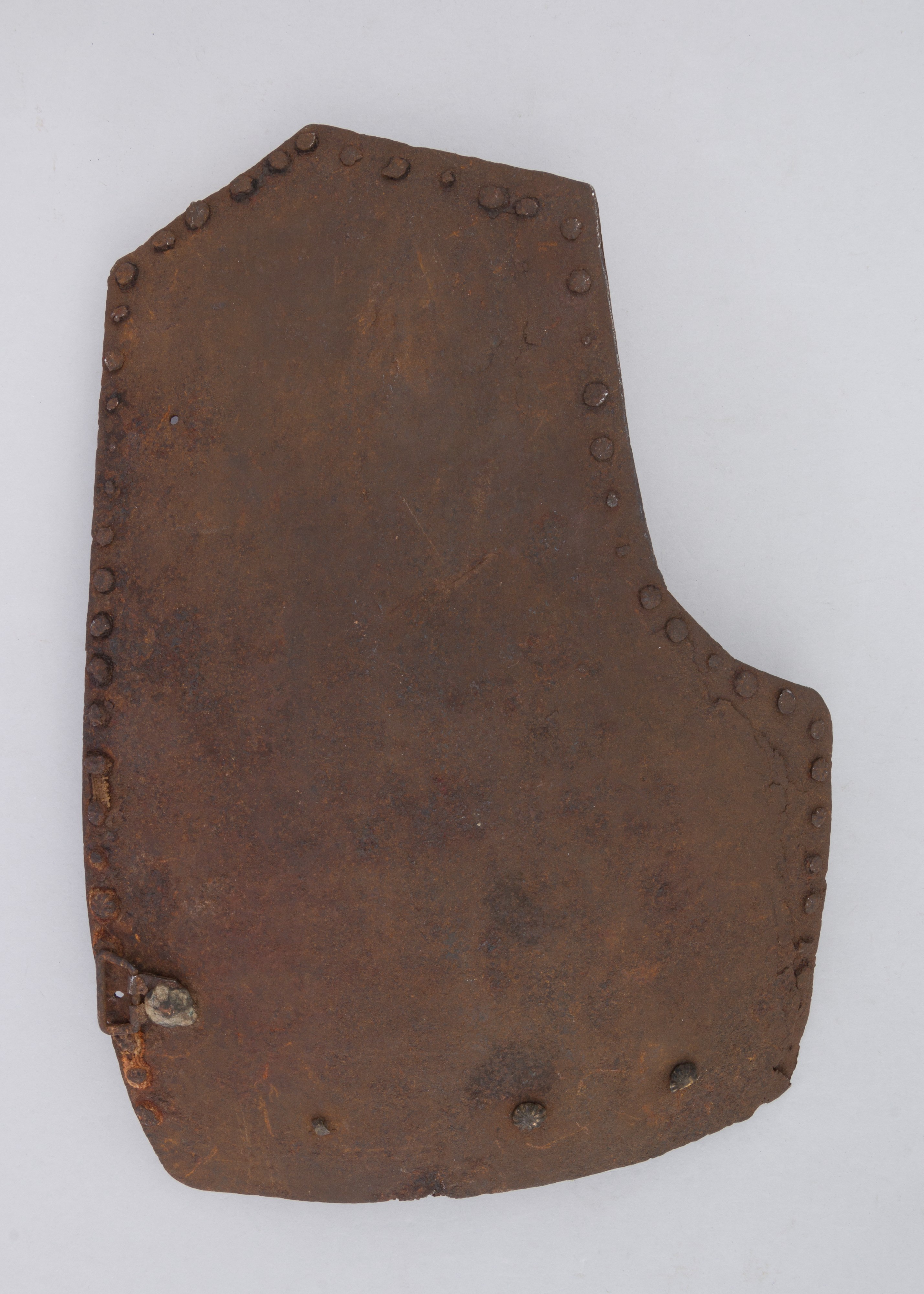
The Brigandine Plate: An Italian Masterclass in Materiality and Martial Elegance
Within the hallowed archives of Katherine Fashion Lab, the standalone study of a 15th-century Italian brigandine plate offers more than a mere archaeological curiosity; it presents a profound dialogue between form, function, and the nascent language of modern luxury. This artifact, composed of iron alloy, copper alloy, and bast fiber textile, transcends its martial utility to emerge as a pivotal ancestor of the structured, protective, and ultimately expressive garments that define contemporary high fashion. To dissect this piece is to understand the very DNA of couture construction—a lineage where resilience meets refinement, and where the unseen structural skeleton dictates the poetry of the silhouette.
Deconstructing the Composite: A Symphony of Materials
The genius of the Italian brigandine lies not in monolithic defense, but in its sophisticated composite architecture. Unlike the rigid, single-piece cuirass of earlier eras, the brigandine is a study in articulated flexibility and distributed strength. The iron alloy scales, meticulously overlapped like the plumage of a mythical bird, form the protective core. Each plate, individually shaped and tempered, is a testament to the metallurgist’s art, yet their true power is realized only in their aggregate. This system of overlapping lamellae allowed for unprecedented thoracic mobility—a crucial advantage in the dynamic chaos of melee combat. The choice of iron alloy, rather than higher-carbon steel, speaks to a pragmatic balance between availability, workability, and impact resistance, prioritizing a ductile resilience over brittle hardness.
However, the iron is merely the silent heart. The copper alloy elements—likely brass or bronze—serve a dual purpose that is both functional and aesthetic. Functionally, copper alloys are inherently more corrosion-resistant than ferrous metals. As such, they were strategically employed for rivets, hinges, and edge bindings, protecting the most vulnerable points of wear and mechanical stress from the ravages of moisture and friction. Yet, their role extends into the decorative. The warm, golden luster of the copper would have provided a striking visual contrast against the cool, dark patina of the iron and the muted tones of the textile. This metallic interplay, a chiaroscuro of precious and base, would have caught the light, subtly signaling the wearer’s status and discerning taste even beneath a surcoat.
The final, and arguably most revolutionary, component is the bast fiber textile—typically linen or hemp. This was not a mere covering, but the foundational garment itself. The textile acted as the matrix, the canvas upon which the metallic scales were riveted. This material choice was brilliant in its simplicity. Bast fibers are renowned for their exceptional tensile strength, breathability, and moisture-wicking properties. The textile provided a comfortable, non-abrasive interface between the cold metal and the wearer’s skin, while also absorbing and distributing the kinetic energy of a blow across a wider surface area before it reached the body. The construction process was, in essence, a form of proto-couture tailoring. The textile was cut, fitted, and sewn to the wearer’s exact measurements, creating a bespoke foundation. Only then were the hundreds of small plates individually riveted onto this fabric shell, a labor-intensive process that demanded immense skill and patience, mirroring the meticulous hand-finishing of a modern haute couture atelier.
Ergonomics and the Art of the Silhouette
The standalone analysis of this brigandine plate reveals a profound understanding of human ergonomics that predates modern sportswear design by centuries. The articulation of the plates was not uniform; it was strategically zoned. The upper chest and back, where protection was paramount, featured larger, more rigid plates. Conversely, the lower abdomen and sides, requiring greater flexion for bending and twisting, utilized smaller, more densely overlapped scales. This differential construction created a garment that moved with the body, not against it. The result was a second skin of steel, a functional exoskeleton that enhanced, rather than impeded, the wearer’s physical prowess.
This structural logic has a direct and profound corollary in contemporary couture. The modern power suit, with its structured shoulder pads and nipped waist, owes a silent debt to the brigandine’s engineering. The garment’s ability to sculpt the torso into a desirable V-shape—broadening the shoulders while cinching the waist—was a deliberate aesthetic choice as much as a functional one. The overlapping plates created a subtle, rhythmic texture on the surface, a visual rhythm that prefigures the intricate seaming and quilting found in the collections of masters like Balenciaga or Margiela. The brigandine was not merely armor; it was a tool of physical and psychological transformation, projecting an aura of invincibility and controlled power.
From Battlefield to Atelier: The Legacy of Protective Elegance
To view the brigandine solely as a weapon of war is to miss its profound contribution to the evolution of dress. It represents a critical juncture where clothing transcended its purely social or protective roles to become a technologically advanced, performance-driven system. The principles embedded in its construction—composite layering, articulated zoning, and the fusion of hard and soft materials—are the direct antecedents of modern technical outerwear. One can trace a clear line from the brigandine’s riveted plates to the bonded seams and high-tenacity fibers of a contemporary performance jacket.
Furthermore, the aesthetic language of the brigandine—the interplay of metallic gleam against matte textile, the suggestion of hidden structure beneath a fluid surface—continues to resonate. Designers frequently evoke this tension, using metallic hardware, boning, and architectural seaming to create garments that feel both protective and sensual. The copper alloy accents, in particular, foreshadow the use of grommets, zippers, and metal chainmail in avant-garde fashion, serving as functional embellishments that elevate the garment’s narrative. The bast fiber foundation, conversely, reminds us of the importance of the unseen, the craftsmanship that lies beneath the surface—a principle that is the cornerstone of true couture.
In conclusion, the Italian brigandine plate is far more than a historical relic. It is a masterclass in material intelligence, ergonomic design, and the symbiotic relationship between form and function. Its composite nature—the resilient iron, the lustrous copper, and the foundational bast fiber—represents a sophisticated triangulation of durability, aesthetics, and comfort. For the modern fashion scholar and practitioner, this piece serves as a timeless blueprint. It demonstrates that true innovation in dress arises not from fleeting trends, but from a deep, analytical understanding of materials, the human body, and the enduring human desire to project strength and elegance simultaneously. The brigandine is, in every sense, a foundational garment of the fashion canon.