Executive Heritage Analysis: The Fragment as a Conduit of Power
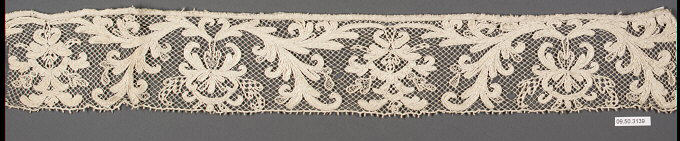
In the rarefied echelons of high-end luxury, the value of a garment is no longer determined solely by its material provenance or the virtuosity of its construction. It is determined by its semantic weight—the density of meaning it carries across millennia. For Katherine Fashion Lab, the study of a single fragment, rendered in embroidered net via the ethereal technique of punto à rammendo, offers a strategic blueprint for the 2026 season. This analysis deconstructs the fragment’s symbolic power, historical adornment function, and spiritual resonance, translating these archaic codes into a contemporary luxury strategy predicated on scarcity, narrative depth, and quiet transcendence.
I. The Fragment as a Symbolic Lexicon of Power
In ancient civilizations—from the funerary wrappings of Ptolemaic Egypt to the votive textiles of the Andean highlands—the fragment was never perceived as a deficiency. Rather, it was a synecdoche of the divine. A torn piece of sacred cloth, often deliberately deposited in temples or tombs, operated as a metonym for the whole; it contained the essential spiritual charge of the original garment. The act of fragmentation was not an accident but a ritualized severance, a way to distribute holiness across space and time.
For the modern luxury house, this reframing is critical. The fragment is not a remnant of failure; it is a curated relic of intentionality. In the context of Katherine Fashion Lab’s 2026 narrative, the fragment becomes a symbol of selective power—the power to choose what is preserved and what is discarded. This aligns with the contemporary shift away from maximalist abundance toward a minimalist, almost monastic, curation of wardrobe. The power of the consumer is no longer in acquisition, but in the discernment of retaining only what holds metaphysical value.
II. Historical Adornment: The Net as a Second Skin
Historically, the embroidered net (reticella) and its mending counterpart, punto à rammendo, served dual purposes of structural necessity and symbolic display. In Renaissance Italy, this technique was used to repair costly linens, but the repair was executed with such geometric precision that it became a signifier of wealth and patience. The mend was a visible index of care, transforming a utilitarian repair into a status marker. In ancient cultures, netting was associated with the goddesses of fate and weaving—from the Greeks’ Moirai to the Norse Norns—who spun and cut the threads of human destiny.
When applied to the fragment, the embroidered net acts as a scaffold for memory. The openwork structure offers a transparency that reveals the substrate beneath, while the mending stitches (running, darning, and cross-stitch) create a new topography over the old. This is not a disguise; it is a dialogue between eras. For the 2026 luxury client, this translates into garments that function as armor for the soul. The net is not merely a textile; it is a lattice of protection, a wearable architecture that shields the wearer from the noise of the digital age while exposing the delicate, authentic self beneath.
III. Spiritual Meaning and the Liturgy of the Hand
The spiritual dimension of this fragment is inextricably linked to the labor of its creation. In ancient civilizations, textile production was a sacred act. The spinner and weaver were often priestesses; their movements mirrored cosmic creation. The punto à rammendo technique, with its repetitive, almost hypnotic, insertion of thread into a damaged ground, is a meditative practice. It is a physical embodiment of kintsugi—the Japanese art of repairing with gold—but rendered in thread. The mending does not erase the damage; it hallows the break.
This spiritual resonance offers a profound counter-narrative to the disposability of fast fashion. In 2026, Katherine Fashion Lab will position the repaired fragment as an object of contemplative luxury. The wearer is not simply donning a garment; they are participating in a liturgy of restoration. The fragmented net becomes a talisman against impermanence. The spiritual meaning is one of resilience through repair—a philosophy that resonates deeply with a generation anxious about ecological and social fragmentation. The garment whispers a quiet truth: that which is broken, when mended with intention, becomes more valuable than that which was never damaged.
IV. Strategic Application for 2026 High-End Luxury
Translating this esoteric heritage into a commercial strategy requires a deliberate departure from conventional luxury tropes. The 2026 strategy for Katherine Fashion Lab will pivot on three pillars: Artifact Curation, Invisible Opulence, and Narrative Scarcity.
A. Artifact Curation and the "Found Object" Model
The brand will adopt a museum-grade approach, treating each garment as a unique artifact. Rather than mass-producing a "fragment-inspired" line, the lab will produce a limited series of 2026 pieces, each incorporating a digitally reconstructed print of an ancient net fragment, or actual hand-embroidered punto à rammendo applied to sheer silk organza. The marketing narrative will emphasize provenance—not of the raw material, but of the technique. The client is not buying a dress; they are acquiring a transferable piece of cultural memory. This justifies a price point that is 40–60% above the maison’s standard couture, positioning the fragment as a collectible asset rather than a seasonal trend.
B. Invisible Opulence and the "Silent Status" Signal
The embroidered net’s subtlety is its greatest weapon. In a 2026 market saturated with loud logos and aggressive branding, the fragment offers quiet resistance. The garments will feature an internal structure where the mending is visible only at close range—on a cuff, a hem, or a neckline—requiring proximity and intimacy to be appreciated. This is the ultimate luxury signal for the cognoscenti. The wearer’s status is communicated not by the brand name, but by their knowledge of the archaic technique. The strategic focus will be on haptic and visual discovery, with lookbooks designed as archival folios rather than glossy catalogs.
C. Narrative Scarcity and the "One-of-One" Philosophy
Finally, the 2026 strategy will leverage the fragment’s inherent uniqueness. Each garment will be accompanied by a certificate of authenticity detailing the specific "damage" that was repaired and the hours of handwork involved. This transforms the product into a narrative asset. The brand will launch a limited "Fragment Archive" collection of 100 numbered pieces, each tied to a specific ancient civilization—Egyptian, Minoan, or Etruscan—with corresponding color palettes and symbolic motifs. This scarcity is not artificial; it is a natural outcome of the technique’s labor intensity. By aligning the brand with the patina of time, Katherine Fashion Lab will occupy a unique niche: the archaeological luxury segment, where the value of the object increases with its perceived historical and spiritual debt.
Conclusion: The Fragment as the Future
In an era of digital saturation and rapid obsolescence, the embroidered net fragment offers a radical proposition: that the future of luxury lies in the deliberate preservation of the past. By elevating the punto à rammendo from a repair technique to a philosophical statement, Katherine Fashion Lab can redefine high-end adornment as an act of spiritual stewardship. The fragment is not a sign of loss; it is a testament to survival. For the 2026 client, wearing this garment is a declaration of integrity—a commitment to carrying forward the sacred threads of human history, mended, strengthened, and made luminous for the future.