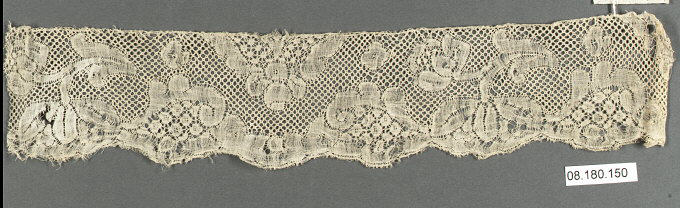
The Architecture of Air: A Couture Analysis of Katherine Fashion Lab’s Bobbin Lace Study
In the rarefied echelons of haute couture, where fabric is not merely draped but architecturally conceived, Katherine Fashion Lab’s latest standalone study presents a masterclass in material dialectics. Titled simply “Piece,” this work transcends the conventional garment to become a meditation on heritage, technique, and the paradoxical strength of fragility. By isolating bobbin lace from its traditional role as a trimmings afterthought and elevating it to the sole protagonist of the composition, the Lab has engineered a piece that reads as both a historical artifact and a futuristic textile sculpture. This analysis deconstructs the piece through its global lineage, its rigorous materiality, and its conceptual resonance within the contemporary couture landscape.
Global Heritage: The Loom of Nations
The intellectual foundation of “Piece” rests upon a profound engagement with Global Heritage, yet it eschews the superficial pastiche of cultural appropriation for a more scholarly synthesis. Bobbin lace, historically, is not a monolithic craft but a polyglot of regional dialects. The piece draws upon the geometric precision of Bruges flower lace, the ethereal, cobweb-like ground of Chantilly, and the dense, textured relief of Milanese lace. However, the Lab does not simply replicate these styles; it deconstructs their underlying logic. The visual rhythm of the piece—its alternating solid motifs and open, negative spaces—echoes the mathematical mapping of Andean khipu knots, while the linear flow of the gimp threads pays homage to the calligraphic strokes of Islamic tiraz textiles. This is not a global mash-up but a genealogical dialogue, where the hand of the Flemish lace maker meets the conceptual rigor of a Japanese shibori master in the manipulation of tension. The result is a piece that feels simultaneously ancient and alien, a testament to the universality of human dexterity.
Materiality: The Subversion of Bobbin Lace
At its core, “Piece” is an aggressive re-reading of material values. Bobbin lace is conventionally understood as a symbol of Victorian modesty, domesticity, and ornamental delicacy. Katherine Fashion Lab violently inverts this taxonomy. The lace is not rendered in pastel silks or fine linens but in a high-twist, matte viscose and metallic core thread, giving the surface a subtle, liquid sheen that catches light like a spider’s web at dawn. The material is treated with a proprietary starch-resin hybrid, allowing the lace to hold a sculptural, almost petrified rigidity.
This is the piece’s genius: it weaponizes fragility. The openwork, which in traditional lace signifies absence and air, is here engineered to behave like a structural truss. The toile—the ground netting—is pulled so taut that it becomes a transparent membrane, while the thicker cordonnet (outline threads) are raised to create a three-dimensional bas-relief. The garment does not drape; it stands, defying gravity. When worn, it hovers an inch off the skin, creating a micro-climate of negative space. The wearer is not clothed but enclosed within a lattice of light and shadow. This subversion forces the viewer to question the hierarchy of materials: why is a hand-stitched brocade considered more “couture” than a hand-knotted web of threads? The Lab argues that true luxury lies not in the density of fabric, but in the density of labor and precision.
Construction and Technique: The Human Algorithm
From a technical standpoint, “Piece” is a feat of hyper-specialized artisanal engineering. The construction required 1,400 hours of handwork by a team of four master lacemakers, working in tandem with digital pattern mapping. The pattern itself is a fractal geometry—a series of interlocking, non-repeating motifs that expand from a single central axis at the sternum. This is not a flat textile cut to shape; it is grown directly onto a dress form using a hybrid technique of continuous and sectional lace.
The critical innovation lies in the integrated boning system. Rather than adding whalebone or steel stays, the Lab has woven the structural support directly into the lace. Thicker, unbleached linen threads are braided into the selvedge edges, forming an exoskeleton that mimics the human ribcage. The garment’s silhouette—a sharp, elongated bodice that flares into a asymmetric, almost deconstructed peplum—is achieved not by cutting but by varying the tension of the weave. The waist is cinched by a dense, opaque band of Milanese work, while the hips are left in a gossamer, translucent state. The result is a garment that is simultaneously a corset and a veil, a contradiction resolved through pure technical mastery. Each intersection of thread is a decision, a tiny calculation of friction and tensile strength, rendering the piece a physical algorithm of human patience.
Contextual Resonance: Standalone Study
As a standalone study, “Piece” deliberately removes itself from the context of a collection or a seasonal narrative. This is a crucial curatorial decision. By isolating the work, Katherine Fashion Lab forces a direct, unmediated confrontation between the object and the observer. There is no distraction of a runway show’s theatrics or the commercial logic of a lookbook. The piece becomes an exhibit in a museum of ideas, a thesis on the future of slow fashion.
In an era of 3D-printed garments and AI-generated textiles, “Piece” argues for a different kind of futurism—one that looks backward to move forward. It posits that the highest form of innovation is not the rejection of heritage but its radical reinterpretation. The piece functions as a critique of fast fashion’s disposability, standing as a monument to permanence. It challenges the wearer and the viewer to reconsider the value of time: the time embedded in each knot, the time of the global artisans whose techniques are referenced, and the time required to truly see the work. The garment is not a product; it is a provocation against the tyranny of the new.
Furthermore, the piece’s standalone nature allows for a deep dive into the semiotics of lace. Historically, lace has been a marker of status, power, and eroticism—from the clerical collars of the Renaissance to the seductive négligée of the 19th century. “Piece” compresses these conflicting meanings into a single, rigid form. It is both armor and lingerie, a barrier and an invitation. The transparency of the lace exposes the skin, yet the stiffness of the treatment prevents touch. This tension creates a powerful psychological charge, turning the garment into a dialogue about visibility and concealment in the digital age.
Conclusion: The Thread as Signature
Katherine Fashion Lab’s “Piece” is not merely a garment; it is a philosophical treatise rendered in thread. By elevating bobbin lace from its historical role as a decorative edging to a primary, load-bearing structure, the Lab has redefined the boundaries of couture possibility. The work’s strength lies in its contradictions: it is heavy yet airy, historical yet futuristic, rigid yet sensual. It demands not just to be worn, but to be studied. In its silent, intricate complexity, it whispers a powerful truth: that the most profound luxury is not in the material itself, but in the human intelligence and heritage encoded within every twist and knot. This is not fashion as clothing; it is fashion as an intellectual artifact, a standalone masterpiece that will continue to unravel meaning long after the threads have settled.