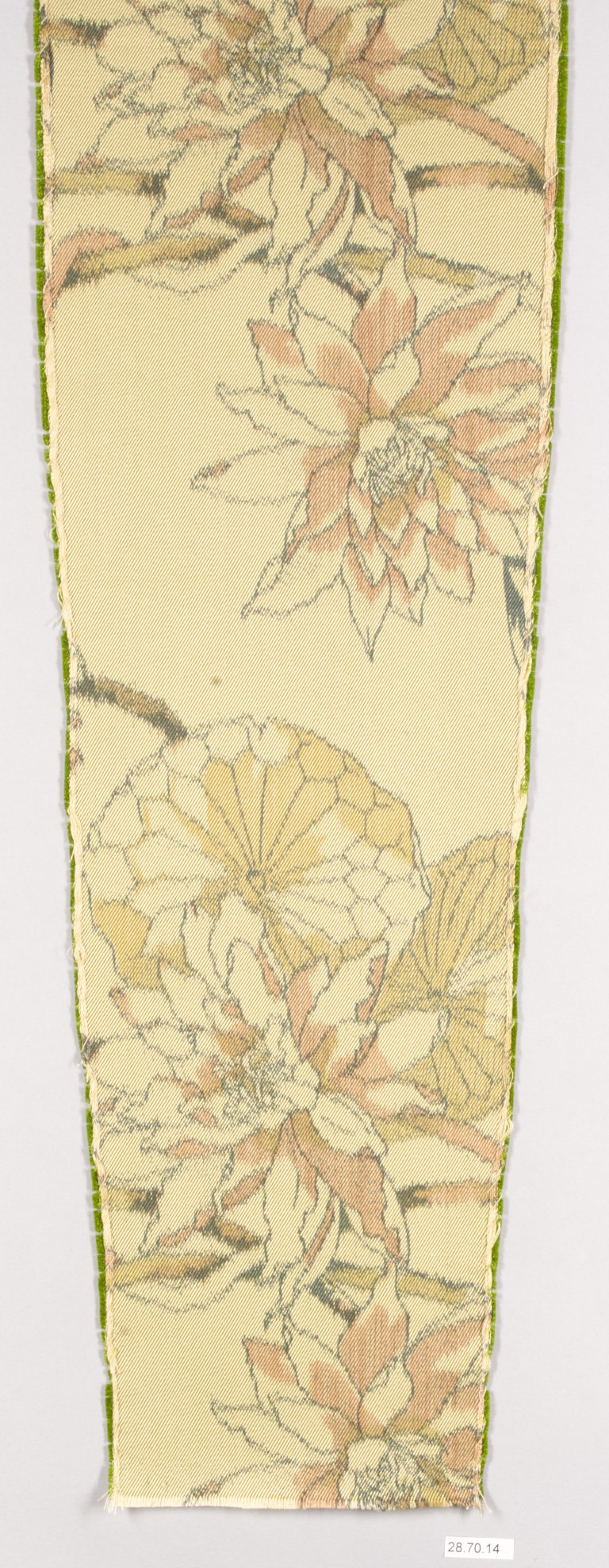
The Water-Lily Textile: A Heritage Analysis for Katherine Fashion Lab
The water-lily textile, rendered in woven and printed silk, represents a singular opportunity for Katherine Fashion Lab to align its 2026 luxury strategy with a distinctly American narrative of resilience, transformation, and quiet opulence. Unlike European floral motifs rooted in courtly hierarchy or Asian lotus symbolism tied to strict religious doctrine, the American water-lily carries a vernacular, democratic symbolism—born of wetlands, bayous, and the frontier imagination. For a heritage curator, the task is not merely to document this motif’s past, but to decode its latent power for a new generation of high-net-worth clients seeking meaning beneath material surface.
Symbolic Power: The Lily as an American Archetype
The water-lily (genus Nymphaea) is a paradox: it floats upon murky waters yet emerges immaculate, its petals unfurling with a geometric precision that has fascinated American naturalists from John James Audubon to Georgia O’Keeffe. In the American context, this flower does not signify passive beauty; it signifies triumph over adversity. The plant’s rhizome anchors deep in silt, while its bloom reaches toward solar light—a dual existence that mirrors the American ethos of self-invention. For Katherine Fashion Lab, this symbolic power translates into a narrative of disciplined elegance: the silk weave captures the lily’s structural integrity, while the printed pattern suggests the organic chaos of its native habitat. The 2026 client is not purchasing a flower; she is purchasing a state of being—rooted, resilient, and radiant.
From Wetland to Wardrobe: A Historical Adornment Trajectory
Historically, American adornment with water-lily imagery emerged in the late 19th century, coinciding with the Arts and Crafts movement and the rise of naturalist jewelry. Unlike European lilies (fleur-de-lis) that signified monarchy, the American water-lily appeared on hand-embroidered shawls, silver brooches, and silk sashes worn by suffragists and early conservationists. It was a badge of moral purity without religious dogma—a secular emblem of ecological awareness. In the 1920s, Art Deco designers abstracted the lily into geometric inlays on cigarette cases and evening bags, aligning it with jazz-age modernity. By the 1970s, the motif receded into folk art, considered too rustic for high fashion. This historical ebb and flow is crucial for Katherine Fashion Lab’s positioning: the water-lily is not a perennial classic, but a cyclical revival—which makes its 2026 reintroduction both unexpected and strategically potent.
Spiritual Meaning: The Lily as a Meditative Device
In American transcendentalist philosophy—particularly the writings of Ralph Waldo Emerson and Henry David Thoreau—the water-lily served as a meditation on purity of intention. Thoreau described the lily as “the flower of the water, the emblem of purity,” yet he was careful to note that its purity was not innocence but achieved clarity. This distinction is vital for luxury branding: the water-lily’s spiritual meaning is not passive or virginal; it is an active, daily practice of rising above the murk. For the 2026 luxury consumer, who increasingly seeks garments with contemplative resonance, the water-lily silk offers a wearable mantra. The tactile sensation of woven silk against skin—cool, smooth, substantial—mimics the lily’s leaf on water. The printed pattern, when viewed closely, reveals layered translucencies that evoke the play of light on a pond at dawn. This is not decoration; it is sensory theology.
Strategic Integration: The 2026 High-End Luxury Framework
Katherine Fashion Lab’s 2026 strategy must treat the water-lily textile not as a seasonal print, but as a signature house code—akin to Hermès’ silk carrés or Gucci’s botanical motifs. To achieve this, three pillars are essential:
Pillar One: Material Provenance. The silk must be sourced from a single, traceable American mulberry farm—ideally in the Mississippi Delta, where water-lilies flourish. This provenance story anchors the textile in a specific geography, lending authenticity that cannot be replicated by offshore mills. The weave should be a custom jacquard, with the lily’s petals rendered in raised satin against a matte ground, creating a tactile hierarchy that rewards touch.
Pillar Two: Limited Edition Narrative. The collection should be capped at 500 numbered pieces globally, with each garment accompanied by a hand-signed certificate referencing the specific wetland from which the lily was photographed for the print. This scarcity is not artificial; it mirrors the lily’s own seasonal bloom. The 2026 client is not buying a dress; she is acquiring a botanical artifact with a documented life cycle.
Pillar Three: Ritual-Based Marketing. Rather than a traditional campaign, Katherine Fashion Lab should launch the textile through a series of invitation-only “Dawn Viewings”—private events held at lakeside estates or conservatories, where guests observe real water-lilies opening at sunrise, then view the silk under natural light. This aligns the garment with a temporal ritual, reinforcing the spiritual dimension of the motif. Digital content should focus on macro-video of the lily’s bloom, paired with the sound of water—creating an audiovisual memory that transfers to the tactile experience of the silk.
Conclusion: The Lily as a Strategic Imperative
The water-lily textile, when placed within its American heritage, offers Katherine Fashion Lab a rare confluence of symbolic depth, historical resonance, and spiritual relevance. It is not a trend; it is a thesis. In a 2026 luxury market increasingly saturated with borrowed European motifs and digital gimmickry, the water-lily stands as an indigenous, contemplative, and structurally intelligent choice. By weaving this motif into silk with meticulous craft and framing it within a narrative of ecological and personal resilience, Katherine Fashion Lab can define a new category of American heritage luxury—one that speaks to the discerning client’s desire for garments that carry meaning, not just label. The lily has waited a century for its couture return; 2026 is its season.