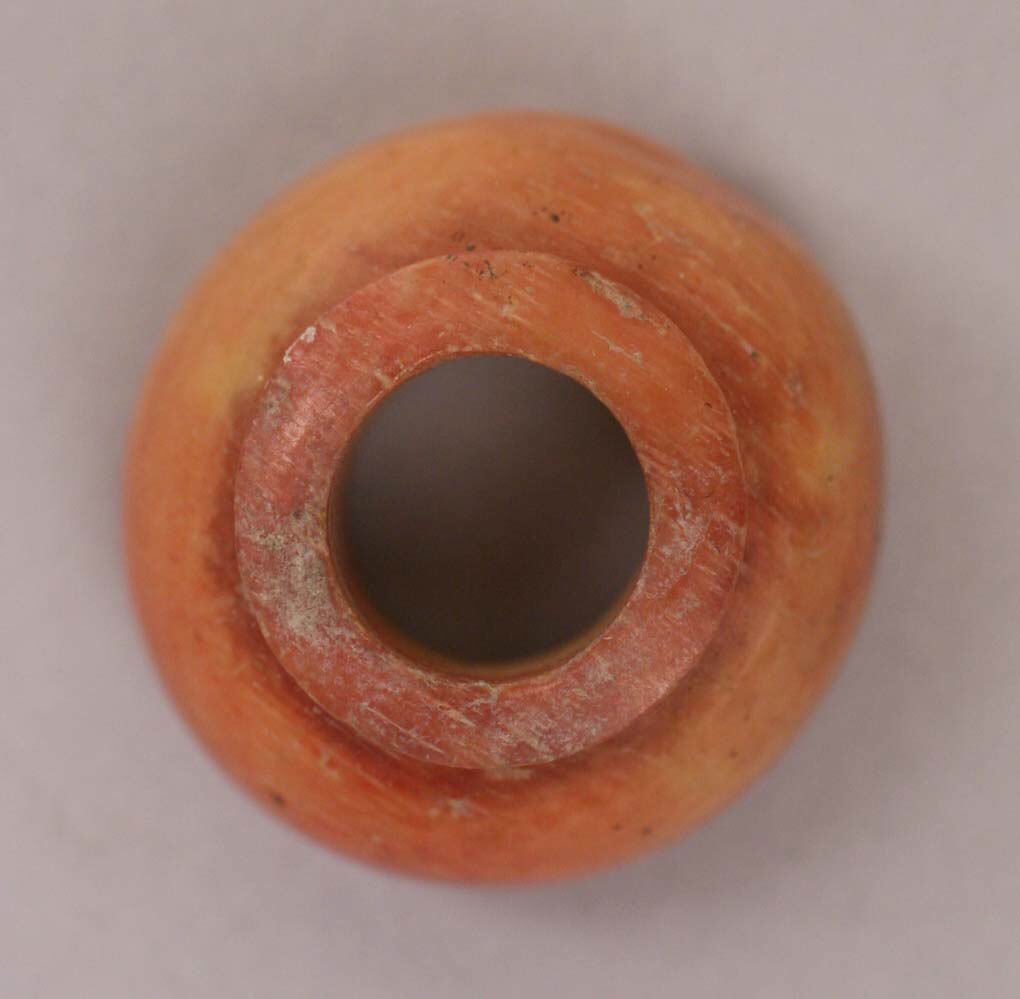
Button or Bead? Deconstructing a Singular Artefact of Adornment
Within the curated archives of Katherine Fashion Lab, certain objects defy immediate categorization, demanding a more profound interrogation of form, function, and cultural memory. The subject of this standalone study—a disc of bone, meticulously tinted, incised, and inlaid with paint—occupies this liminal space. Is it a button, a bead, or something else entirely? This analysis moves beyond superficial taxonomy to explore the artefact as a nexus of global heritage, material intelligence, and symbolic communication. Its very ambiguity becomes its most potent attribute, challenging contemporary design orthodoxy and revealing the deep-seated human drive to transform the utilitarian into the transcendent.
Materiality as Narrative: The Primacy of Bone
The choice of bone as a foundational material is the first and most critical text in this object's story. Unlike precious metals or gemstones, bone is a democratic, relational material. It is sourced from the animal world, a byproduct of sustenance, and thus carries an intrinsic narrative of life, death, and resourcefulness. Its selection speaks to a heritage of zero-waste ethos and symbiotic respect for the natural environment, principles that resonate acutely with modern sustainable luxury. The physical properties of bone—its density, its ability to be carved with precision, and its porous yet durable nature—dictate the techniques applied. It accepts tint, holds incised lines, and grips inlaid pigments, becoming a cooperative canvas. This is not a passive material but an active participant in the creative process, its organic variations in grain and texture ensuring that no two pieces are ever identical, embedding uniqueness at the molecular level.
The Alchemy of Surface: Technique as Cultural Syntax
The surface treatment of this artefact constitutes a complex language of craftsmanship, where each technique corresponds to a different chapter of global heritage. The tinting of the bone suggests a staining process, possibly using plant-based dyes or mineral pigments, a practice seen from the indigenous tribes of North America to the nomadic cultures of Central Asia. It provides a ground color, a mood, transforming the neutral bone into a specific hue that carries its own cultural codification—earth reds, ochres, or muted blues.
The incised lines are where narrative and geometry converge. This is not mere decoration; it is inscription. The precision of the grooves could reference the intricate *Jali* stonework of Mughal architecture, the symbolic scarification patterns of African cultures, or the Celtic knotwork of Northwestern Europe. Each line is a commitment, a permanent alteration requiring a steady hand and a pre-meditated design. It creates texture, captures shadow, and guides the eye.
Most compelling is the inlaid paint. This is not surface application but an act of insertion and filling, where pigment is lodged within the incised lines or specific recessed areas. This technique echoes the ancient practices of *cloisonné* (where wires contain enamel) or the lacquerware of East Asia. It demonstrates a mastery of containment and contrast, making the design elements pop with a deliberate intensity. The combination of these techniques—tint, incision, inlay—reveals a layered, patient approach to beauty, where value is accrued through cumulative acts of skilled handiwork rather than the mere cost of raw materials.
Function and Ambiguity: The Power of the Liminal
The central question—button or bead?—is deliberately unresolved because the object’s power lies in its functional ambiguity. As a potential button, it moves beyond fastening to become a focal point of closure, a ceremonial seal on a garment. It would engage dynamically with fabric, with a buttonhole, becoming part of a system of reveal and conceal. Its substantial nature would provide tactile weight and acoustic presence, a soft click serving as sensory punctuation.
As a potential bead, it becomes a unit of sequence and rhythm within a larger composition—a necklace, an embellishment on a cuff. In this context, its narrative is collective, its story woven with those of other beads, its incised patterns contributing to a cumulative visual tempo. This duality forces us to reconsider modern fashion’s often rigid categorization of trims and findings. In many indigenous and historical contexts, the same object could serve multiple purposes: adornment, currency, spiritual talisman, and fastener. This artefact embodies that holistic worldview, where an item’s utility is intertwined with its symbolic and aesthetic resonance.
Contextual Synthesis: A Standalone Study for a Collective Future
As a standalone study, this bone artefact is liberated from a specific ethnographic or temporal cage. It is not labeled "Victorian" or "Maasai," but is appreciated as a synthesis of techniques and philosophies that are the shared property of human ingenuity. It stands as a testament to a universal design logic: the transformation of a humble, organic material into a carrier of identity and beauty through disciplined, artisanal intervention.
For contemporary couture, the lessons are profound. It champions material-led design, where the substance informs the process. It advocates for slow, additive craftsmanship in an age of digital subtraction. Most importantly, it demonstrates that true luxury lies in narrative depth and tactile intelligence. A modern interpretation might see such elements used as statement closures on a minimalist wool cape, as central pendants in a deconstructed jewelry suite, or as intricate appliqués on a structured bodice.
In conclusion, the Katherine Fashion Lab artefact—bone, tinted, incised, and inlaid—transcends the binary of button or bead. It is a microcosm of global heritage, a physical manifesto of sustainable materiality, and a masterclass in symbolic surface treatment. It reminds us that in the highest expressions of adornment, the boundary between function and art dissolves, leaving only the enduring power of the human hand to imbue the ordinary with profound and lasting meaning.