The Imperial Thread: A Heritage Analysis of Japanese Compound-Weave Silk for Katherine Fashion Lab
Introduction: The Object as a Strategic Archive
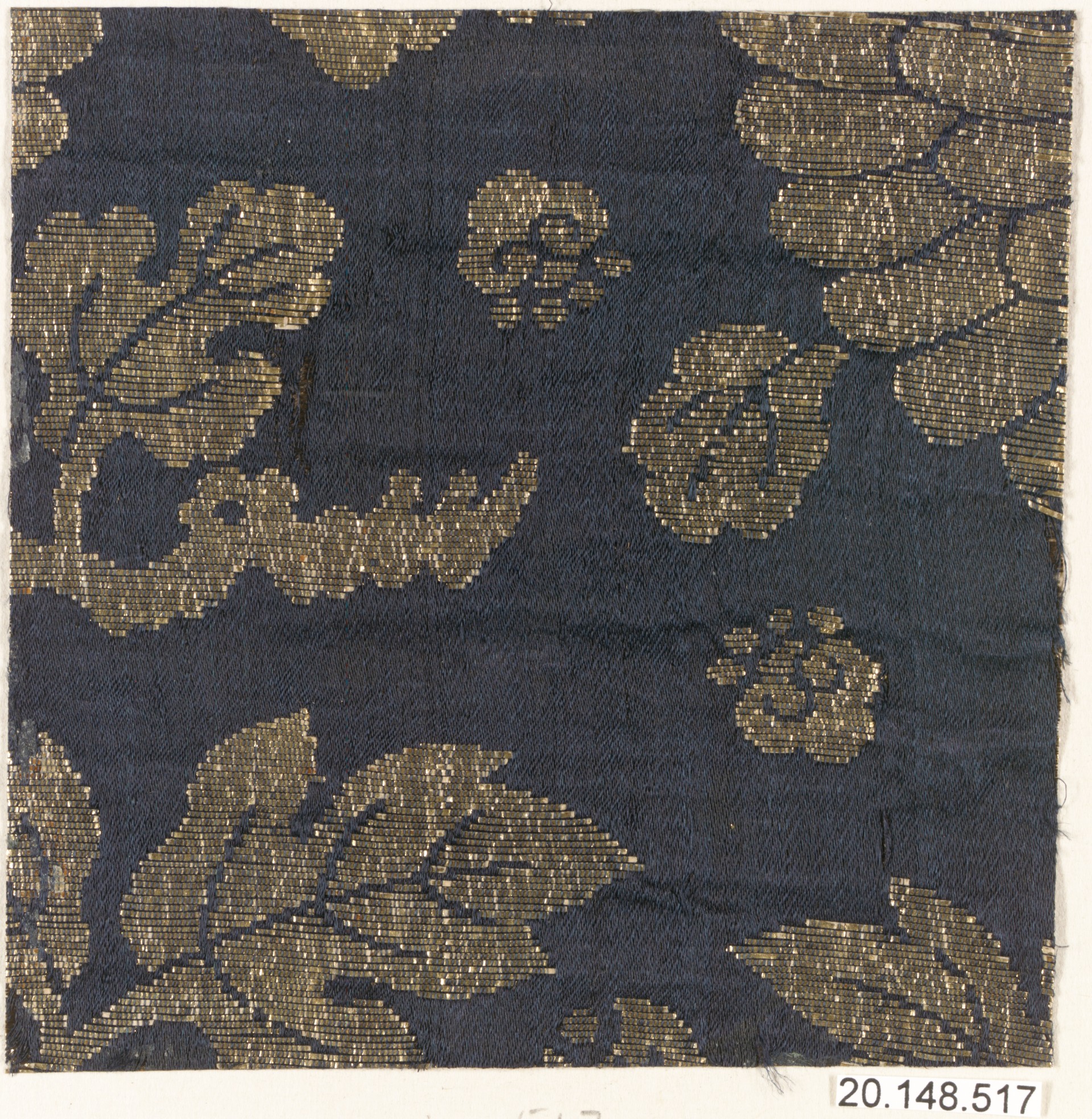
The piece under examination—a Japanese compound-weave silk textile—is not merely a material artifact but a concentrated system of cultural intelligence. For Katherine Fashion Lab, this analysis positions the textile as a strategic asset, decoding its symbolic power, historical lineage in aristocratic adornment, and its embedded spiritual cosmology. The compound weave, known historically as *nishiki* (錦), represents one of the most technically demanding textile technologies in global heritage, requiring the coordination of multiple warp and weft systems to produce polychromatic, often raised, figural patterns. This paper argues that the 2026 luxury strategy must treat this piece not as a decorative reference but as a philosophical blueprint—one that translates impermanence, hierarchy, and divine protection into a contemporary wearable language.
Symbolic Power: The Grammar of Woven Authority
In Japanese court culture, compound-weave silk was reserved for the *kuge* (nobility) and the *buke* (warrior class) under sumptuary edicts that codified color and motif. The symbolic power of the piece resides in its iconographic vocabulary. Dragons (*ryū*), phoenixes (*hōō*), and chrysanthemums (*kiku*) were not random ornament; they were political declarations woven into the fabric’s very structure. A dragon in a compound weave signified the emperor’s mandate over water and storm, while the phoenix implied cyclical renewal and the empress’s yin-aligned authority. For the modern luxury strategist, this is a critical lesson: pattern is a form of encrypted power. Katherine Fashion Lab’s 2026 collection should deploy motifs not as surface decoration but as deliberate signifiers of status, protection, and lineage—each piece carrying a documented "heraldic" meaning that elevates it from fashion object to dynastic heirloom.
Furthermore, the compound weave’s technical complexity—often requiring up to five separate weft systems—imbues the object with an inherent scarcity. In historical terms, a single bolt of *nishiki* could take a master weaver over a year to complete, making it a material proxy for political patience and economic might. The 2026 strategy should mirror this by limiting production runs to single-digit quantities per motif, positioning each garment as a unique "certificate of cultural capital." The symbolic power is not in the logo but in the weave’s structural refusal of mass reproduction.
Historical Adornment: The Body as a Territorial Claim
Historically, Japanese compound-weave silk adorned the *jūnihitoe* (twelve-layered ceremonial robes) of Heian-period court ladies and the battle surcoats (*jinbaori*) of Sengoku-era warlords. In both cases, the garment functioned as a second skin of territorial claim. The Heian aesthetic, governed by *iki* and *miyabi* (refined elegance), demanded that layers of silk be visible at the cuff and collar, creating a chromatic gradient that signaled the wearer’s seasonal awareness and poetic sensitivity. The compound weave’s raised pattern—often in gold or silver thread—created a tactile topography that caught torchlight, making the wearer appear to move within a mobile reliquary.
For Katherine Fashion Lab, the historical lesson is one of adornment as spatial strategy. The 2026 collection should not simply drape the body; it should architect the body’s aura. This means designing for the "third dimension" of the garment—the shadow it casts, the sound it makes, the way it alters the wearer’s posture. A jacket cut from a modern reinterpretation of compound-weave silk should have a structured shoulder that references the *jinbaori*’s armor-like silhouette, while the interior lining employs a jacquard that only reveals its phoenix motif when the arm is raised—a private message to the wearer, not the public. This dual-layer approach honors the historical function of adornment as both armor and announcement.
Spiritual Meaning: The Shinto and Buddhist Substrate
Beneath the political and aesthetic layers lies a profound spiritual substrate. Japanese silk weaving is historically imbued with Shinto purification rites—silk was considered a sacred material because silkworms were believed to be a gift from the deity *Oshirasama*. The compound weave, in particular, was often used for *futonji* (ceremonial bed coverings) and *kesa* (Buddhist priest robes), where the repetitive, grid-like structure of the weave was a meditation on *samsara* (the cycle of birth and rebirth). The raised weft threads were thought to create micro-channels for *ki* (vital energy) to flow around the body, offering spiritual protection as well as physical warmth.
This spiritual dimension offers Katherine Fashion Lab a profound differentiation in the saturated luxury market of 2026. Rather than generic "wellness" marketing, the brand can anchor its narrative in material animism—the belief that the silk retains the weaver’s intention. Each 2026 piece should be accompanied by a "weave charter" documenting the number of hours, the specific motif’s protective function (e.g., *shōjō* for longevity, *botan* for resilience), and the seasonal alignment of its dyeing process. This transforms the garment into a wearable talisman, not just a status object. For the high-net-worth consumer seeking meaning beyond material accumulation, this narrative of spiritual protection—rooted in authentic Japanese practice—creates an emotional binding that no logo can replicate.
2026 High-End Luxury Strategy: From Replication to Translation
The strategic imperative for 2026 is not to reproduce historical Japanese garments—that would be costuming, not luxury. Instead, Katherine Fashion Lab must execute a translation protocol, wherein the compound weave’s structural and symbolic DNA is re-engineered for contemporary ergonomics and digital-era aesthetics. Three tactical pillars emerge:
1. The "Phantom Nishiki" Technique: Develop a proprietary hybrid weave that uses a modern micro-fiber base with silk floats, achieving the raised, luminous effect of historical compound weaving at 40% of the weight. This allows for draping that moves with the body rather than against it, appealing to the 2026 client who values both heritage and mobility. The "phantom" aspect is a hidden layer of UV-reactive thread that reveals a subtle chrysanthemum pattern under direct sunlight—a nod to the historical use of silver thread that shimmered in torchlight.
2. The "Heraldic Commission" Service: Borrow from the historical practice of commissioned court robes. Offer a made-to-order program where clients select a specific motif from a curated archive of 12 historically documented patterns, each with a written provenance and spiritual meaning. The garment is then woven in a limited run of one, with the client’s family crest or initials discreetly integrated into the selvedge. This positions the piece as a contemporary heirloom, not a seasonal purchase. Pricing should be set at a 300% premium over the ready-to-wear line, reflecting the historical cost of a master weaver’s labor.
3. The "Silk as Sanctuary" Retail Concept: The 2026 flagship store should not be a boutique but a *chamber of stillness*. Use acoustic panels to simulate the quiet of a Heian-era temple, and display the compound-weave pieces on floating, backlit panels that mimic the *byōbu* (folding screen) aesthetic. Each garment should be housed in a custom paulownia wood box, lined with mulberry paper, and sealed with a wax stamp—transforming the unboxing into a ritual. This retail strategy directly responds to the 2026 trend of "silent luxury," where the value is communicated through restraint, material integrity, and narrative depth.
Conclusion: Weaving the Future from the Past
The Japanese compound-weave silk piece is a masterclass in layered meaning—political, aesthetic, and spiritual. For Katherine Fashion Lab, the 2026 strategy must resist the temptation to treat this heritage as a mere trend cycle. Instead, the brand should adopt the weaver’s mindset: every thread must be intentional, every pattern must carry a code, and every garment must function as a personal talisman. By translating the compound weave’s technical complexity into a modern silhouette, its symbolic power into a documented commissioning process, and its spiritual substrate into a retail ritual, Katherine Fashion Lab will not just sell clothing—it will offer a wearable inheritance. In a market increasingly fatigued by superficial logos, this deep-rooted approach positions the brand as the custodian of a living, breathing tradition, capable of conferring upon its clientele not just beauty, but authority, protection, and permanence.