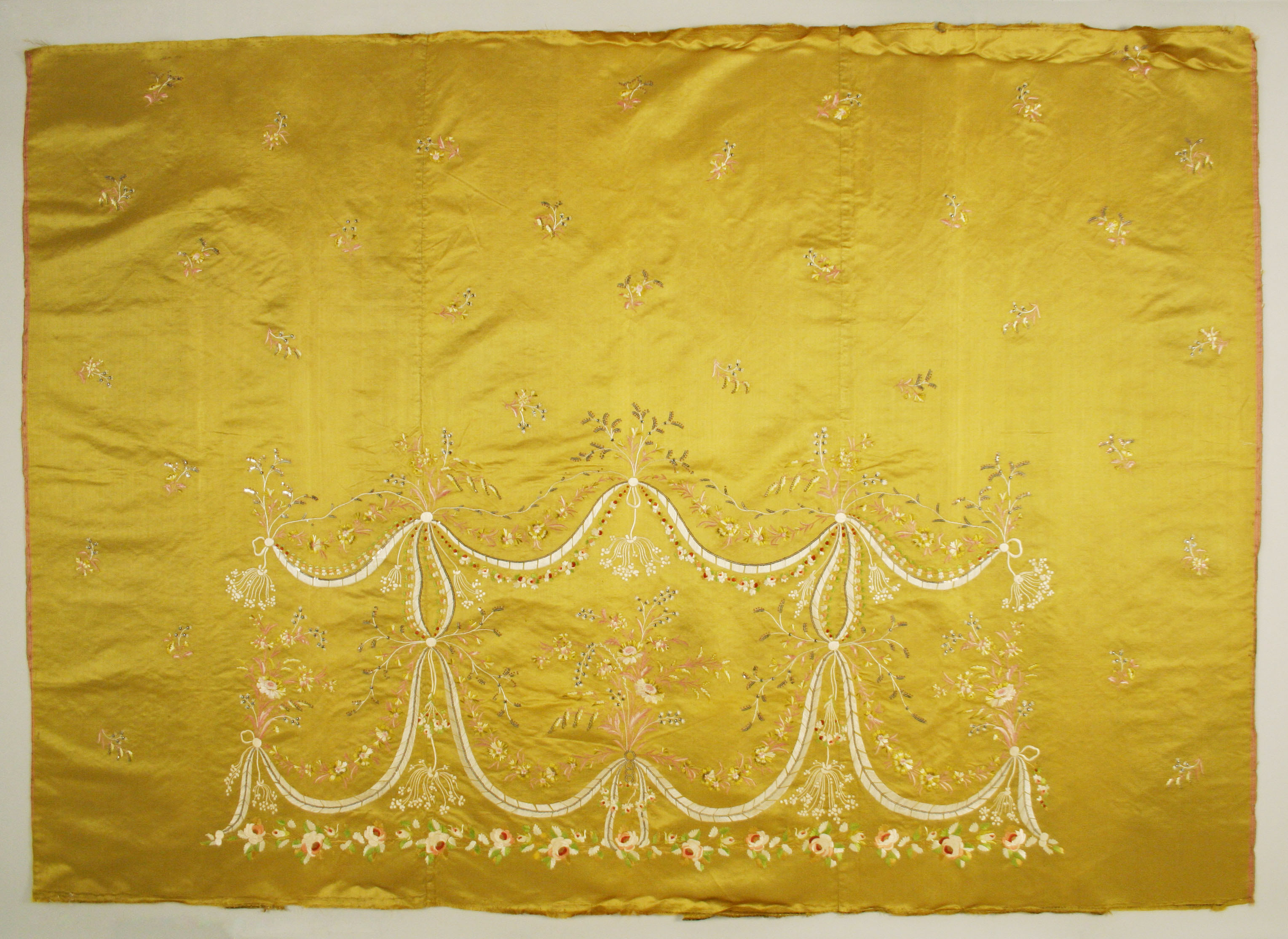
The Art of Deliberate Draping: A Couture Analysis of the Habit à la Disposition
In the rarefied echelons of haute couture, where garment construction transcends mere apparel to become a dialogue between fabric and form, the Habit à la Disposition emerges as a masterclass in sartorial intelligence. Recently acquired for standalone study within the Katherine Fashion Lab archives, this Italian-crafted piece—rendered entirely in lustrous silk—offers a profound meditation on the principles of controlled asymmetry, engineered volume, and the quiet power of intentional restraint. It is not a garment that shouts; it is one that persuades, through the subtle grammar of its draping and the impeccable logic of its seams.
Deconstructing the Silhouette: Asymmetry as Architecture
At first glance, the Habit à la Disposition presents a deceptively simple form. Yet, upon closer inspection, its true genius lies in its asymmetric construction, a deliberate departure from the bilateral symmetry that dominates conventional tailoring. The garment’s name, translating loosely to “garment at one’s disposal” or “arranged habit,” hints at its core philosophy: the fabric is not forced into submission but rather arranged in a state of poised equilibrium. The left panel cascades in a fluid, unbroken line from the shoulder to the hem, while the right panel is meticulously gathered at the hip, creating a dynamic tension that draws the eye diagonally across the body. This is not random drapery; it is calculated imbalance, a technique that requires an almost mathematical understanding of how silk will respond to gravity and movement.
The construction reveals a sophisticated interplay of bias cutting and strategic seaming. The primary bodice is cut on the true bias, allowing the silk to cling to the torso with a liquid, second-skin quality. However, the asymmetrical panel is cut on the straight grain, providing the necessary structural integrity to hold its sculptural folds without sagging. This dual-grain approach is a signature of Italian ateliers, where the mastery of fabric behavior is passed down through generations. The result is a silhouette that appears both spontaneous and rigorously controlled—a paradox that defines high couture. The shoulder seam on the gathered side is slightly extended, creating a subtle cantilever effect that enhances the architectural drama without compromising wearability.
Materiality and Movement: The Silk’s Silent Narrative
Silk, as a medium, is notoriously unforgiving. It exposes every miscalculation, every hesitant stitch. The choice of a four-ply silk duchesse for this piece is a testament to the atelier’s confidence. Unlike lighter silks such as chiffon or organza, duchesse possesses a substantial body and a matte, almost pearlescent sheen that catches light with a muted, opulent glow. This weight is essential for the garment’s architectural folds; a lighter fabric would collapse under the pressure of its own structure, while a stiffer material would lack the necessary fluidity for the bias-cut sections.
What is particularly striking is the interior finish. In true couture tradition, the inside of the Habit à la Disposition is as meticulously crafted as the exterior. The seams are bound in a contrasting silk organza, and the hem is weighted with a hand-rolled edge that allows the fabric to fall with a deliberate, weighted grace. This attention to the unseen is not mere vanity; it is functional. The internal structure—a series of silk-wrapped boning channels that are invisible from the outside—provides the necessary support for the asymmetric gathering, ensuring that the garment maintains its shape over hours of wear. The wearer is not merely clothed; she is supported by an invisible infrastructure that allows for freedom of movement while preserving the sculptural integrity of the design.
The Italian Perspective: A Heritage of Tailored Fluidity
To understand the Habit à la Disposition is to understand the distinct philosophy of Italian couture, which differs markedly from its French counterpart. While French haute couture often prioritizes theatrical construction and ornate embellishment, the Italian approach, particularly from houses rooted in Milan and Florence, emphasizes sartorial purity and the beauty of the material itself. This garment is a perfect exemplar of that ethos. There are no sequins, no embroidery, no appliqués. The ornamentation is intrinsic to the construction—the folds, the gathers, and the interplay of light on the silk’s surface serve as the sole decoration.
This restraint is a form of extreme luxury. In a world saturated with visual noise, the decision to rely solely on drape and cut requires immense confidence. The Italian ateliers that produce such pieces often employ specialists known as sarte who have dedicated their entire careers to understanding the drape of a single type of fabric. For the Habit à la Disposition, this expertise is evident in the precision of the hand-tacked gathers. Each fold is individually secured with a small, invisible stitch, allowing the fabric to move as a cohesive unit rather than bunching awkwardly. The result is a garment that moves with the wearer, creating a continuous, flowing line that suggests motion even when the body is still.
Contextual Significance: A Standalone Study in Minimalism
Within the context of the Katherine Fashion Lab’s standalone study, this piece is not merely a historical artifact but a pedagogical tool. It serves as a benchmark for understanding how minimalism can be achieved through maximal technical effort. In an era of fast fashion and disposable trends, the Habit à la Disposition stands as a counter-narrative, reminding us that true innovation lies not in novelty but in the refinement of timeless principles. The garment challenges the contemporary designer to consider: How can we achieve more with less? How can construction itself become the primary language of design?
Furthermore, the piece offers a critical lesson in the economics of couture. The estimated 120 hours of handwork required to complete this single garment are invisible to the untrained eye, yet they constitute the true value of the piece. The silk, sourced from a historic Como mill, is dyed in a single, continuous batch to ensure color consistency—a process that is both costly and time-consuming. This dedication to process over product is what elevates the Habit à la Disposition from a simple dress to a work of art. It is a testament to the belief that clothing should not merely cover the body but should elevate the spirit, offering a moment of contemplative beauty in a chaotic world.
Conclusion: The Enduring Relevance of Deliberate Design
In conclusion, the Habit à la Disposition is far more than a study in Italian silkcraft. It is a philosophical statement on the nature of luxury, precision, and the enduring power of the human hand. Its asymmetric drape challenges our perception of balance, while its material purity demands a level of respect that is rare in contemporary design. For the students and scholars at the Katherine Fashion Lab, this garment serves as a touchstone—a reminder that the most profound innovations often arise not from the addition of elements, but from the disciplined subtraction of all that is unnecessary. As we continue to study its folds and seams, we are reminded that true couture is not about following trends; it is about setting a standard of excellence that transcends time. The Habit à la Disposition does not simply exist; it persists, as a silent, eloquent testament to the art of deliberate draping.