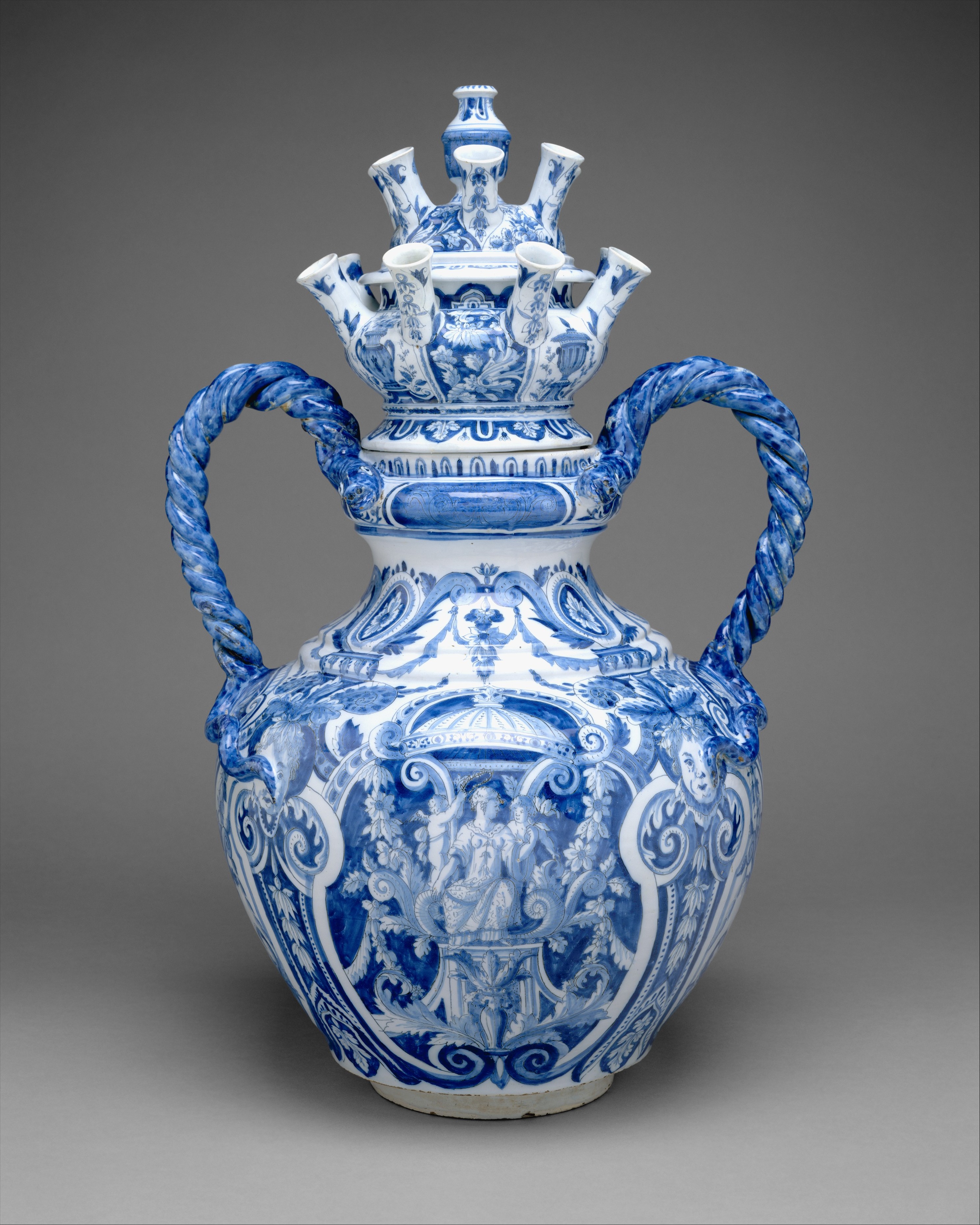
The Vase: A Study in Structural Poetry and the Architecture of Silence
In the rarefied echelons of couture, where fabric is not merely draped but *argued*, Katherine Fashion Lab has consistently distinguished itself through a rigorous interrogation of form. Yet, with its latest standalone study, "The Vase," the maison transcends the conventional boundaries of apparel to deliver a masterclass in applied sculpture. This is not a garment inspired by a vessel; it is a philosophical dialogue between the human silhouette and the immutable laws of containment, volume, and negative space. Drawing from the global heritage of tin-glazed earthenware—specifically the iconic Delftware tradition—the Lab has engineered a piece that functions as a habitable artifact, a wearable meditation on the tension between fragility and permanence.
Deconstructing Delft: From Ceramic to Couture
The choice of Delftware as a foundational muse is a deliberate act of intellectual provocation. Originating in the 17th-century Netherlands as a response to the influx of Chinese porcelain, Delftware represents a pivotal moment of cross-cultural synthesis—a European reinterpretation of an Eastern aesthetic. Katherine Fashion Lab seizes upon this historical hybridity, translating the ceramic's cool, milky glaze and its iconic cobalt-blue underglaze painting into a language of haute couture. The primary fabric, a double-faced silk gazar, is meticulously treated with a proprietary resin that imparts a subtle, porcelain-like stiffness—a “soft armor” that holds its architectural shape without sacrificing the breathability required for wearability.
The color palette is a study in restrained opulence: a base of chalk-white, evoking the pristine tin glaze, is overlaid with hand-painted motifs in a deep, lapis-lazuli blue. These are not mere floral appliqués; they are cartographic renderings of traditional Delft patterns, redrawn by the Lab’s atelier to mimic the brushstroke irregularities of 18th-century pottery. Each scroll, each tulip motif, is applied via a technique of *détrempe* on silk, a labor-intensive process involving multiple layers of pigment and fixative, ensuring the color remains luminescent yet anchored to the fabric’s surface. The result is a garment that reads as a museum piece, yet moves with a liquid, almost aqueous grace that defies its ceramic inspiration.
The Architecture of Containment: Silhouette and Structure
The genius of "The Vase" lies in its radical reinterpretation of the female form as a vessel. The silhouette is not body-conscious; it is volume-conscious. The jacket, the centerpiece of the study, is constructed with a pronounced, cylindrical torso that flares subtly at the hem, mimicking the ovoid profile of a classic ginger jar. The shoulders are not padded but *shaped*, using a cantilevered internal structure of horsehair canvas and featherweight steel boning that creates a clean, uninterrupted line from the neck to the wrist. This is not about accentuating the waist but rather about creating a negative space—a hollow interior that suggests containment, mystery, and the quiet power of holding something within.
The sleeves are a particular triumph of engineering. Cut in a single, seamless piece with the bodice, they are designed to hang with the stiff, vertical fall of a vase's handles. When the wearer raises an arm, the fabric does not crumple; it *folds* along pre-determined crease lines, echoing the faceted planes of a ceramic form. The collar is a high, standing band, reminiscent of the rolled lip of a vessel, which frames the face like a pedestal. This structural choice elevates the wearer not as a model displaying clothes, but as a living sculpture—a figure of monumental stillness in a world of frantic motion.
Material Alchemy: The Glaze and the Gaze
Beyond structure, the materiality of "The Vase" is its most profound achievement. The Lab has developed a proprietary finish called “Crackle Lumière”—a micro-embossed surface treatment applied to the silk gazar that replicates the fine, spiderweb-like crazing found on aged Delftware. This is not a print; it is a tactile topography. Under gallery lighting, the crackle pattern refracts light, creating a subtle, shimmering effect that mimics the reflective quality of a ceramic glaze. The effect is disorienting and mesmerizing: the fabric appears simultaneously soft and hard, warm and cool.
The internal lining, though unseen, is equally considered. A layer of raw silk, dyed in a deep indigo, provides a contrasting “interior glaze” that is revealed only at the cuffs and the back vent. This secret pop of color serves as a deliberate counterpoint to the pristine exterior, a reminder that the most profound beauty often resides in the hidden, the unobserved. It is a nod to the fact that a vase's interior is as important as its exterior—a space for potential, for holding, for secrecy.
Global Heritage, Contemporary Relevance
What elevates "The Vase" from a technical exercise to a piece of cultural commentary is its engagement with the concept of global heritage. Delftware is not a purely Dutch invention; it is a palimpsest of influences—Chinese porcelain, Middle Eastern metalwork, and European painting. Katherine Fashion Lab honors this lineage by incorporating subtle, geometric underlays in the pattern that reference Islamic star patterns, and a border motif that echoes the cloud-collar designs of Ming dynasty textiles. This is not cultural appropriation but cultural *synthesis*, a deliberate acknowledgment that true luxury is born from exchange and dialogue.
In an era of fast fashion and disposable trends, "The Vase" stands as a defiant counter-argument. It is a garment that demands time—time to create, time to wear, time to contemplate. It is a standalone study in the truest sense: a singular, non-reproducible object that functions as wearable art. The piece challenges the wearer to adopt a new posture, a new pace. One cannot rush in "The Vase"; its structured volume and deliberate weight impose a stately, measured gait. This is the ultimate luxury: the ability to inhabit a space with the quiet, unassailable confidence of a perfectly formed object.
Ultimately, Katherine Fashion Lab's "The Vase" is a triumph of conceptual rigor and technical mastery. It redefines couture not as the adornment of the body, but as the *architecture of presence*. By transforming a humble ceramic vessel into a garment of profound sophistication, the Lab reminds us that fashion, at its zenith, is not about covering the human form—it is about giving it a new, more resonant shape. It is a study in silence, volume, and the enduring beauty of a well-kept secret.