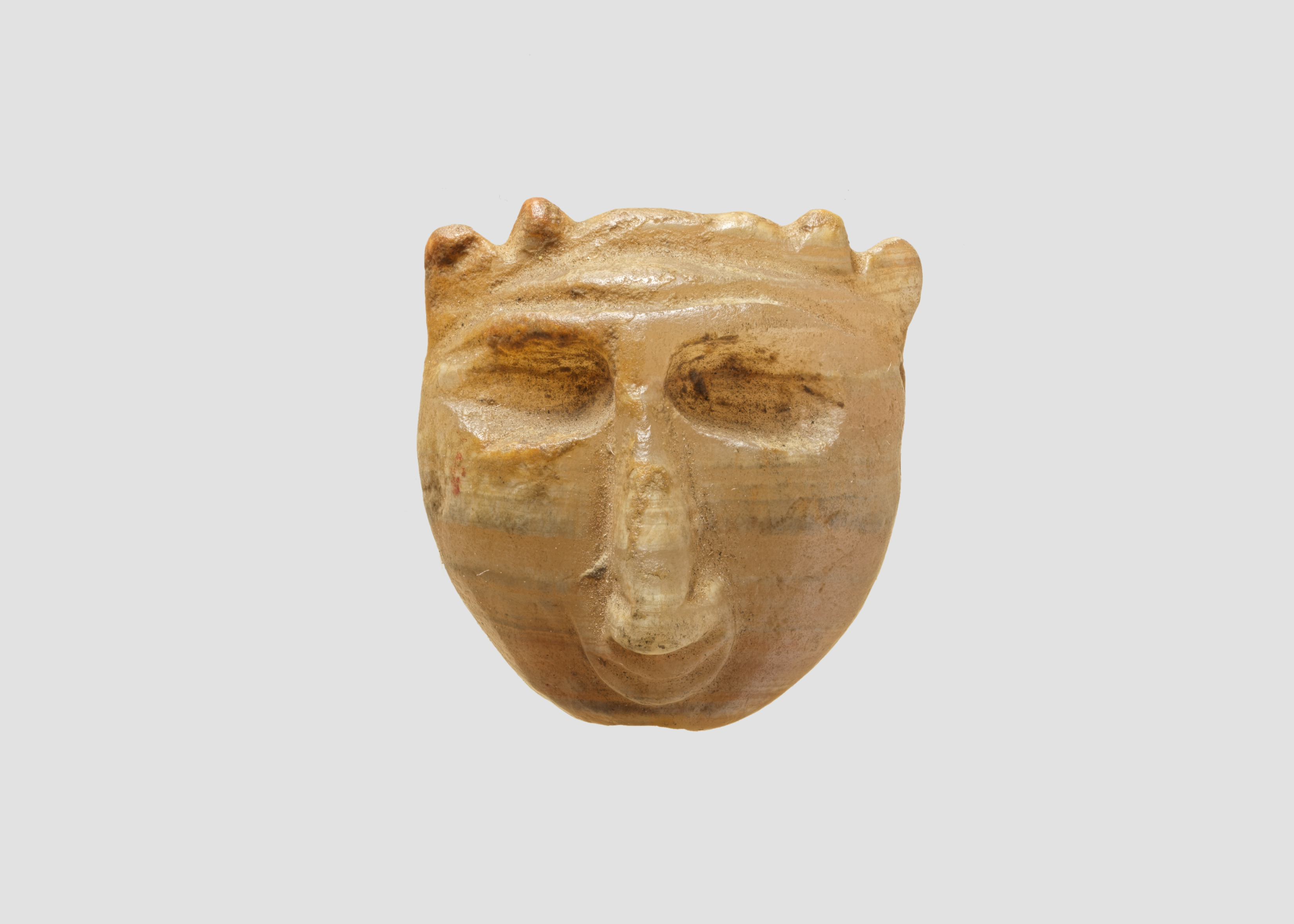
Executive Heritage Analysis: The Sumerian Demon-Headed Agate Amulet
Katherine Fashion Lab is positioned at the intersection of archaeological gravitas and contemporary luxury. The Sumerian demon-headed amulet, carved from banded agate, offers a singular opportunity to anchor a 2026 collection in the earliest recorded expressions of protective adornment. This analysis decodes the amulet’s symbolic architecture and translates its apotropaic function into a strategic asset for high-end consumers seeking talismanic depth rather than mere ornament.
I. Symbolic Power: The Demon as Guardian, Not Malevolence
The Western eye misreads the term “demon” as inherently negative. In Sumerian cosmology, the demon-headed amulet—often depicting Humbaba or a snarling lion-demon—operated as a fiercely prophylactic entity. Its grotesque visage was a deliberate deterrent, designed to frighten malevolent spirits away from the wearer. The demon was not the threat; it was the sentinel. This inversion of meaning is crucial for luxury positioning.
For Katherine Fashion Lab, this translates into a narrative of empowered protection. The amulet’s power lies in its aggressive, unapologetic gaze—a visual shout against chaos. In 2026, where consumers increasingly seek “quiet luxury” but also crave personal armor against digital and social anxieties, the demon head offers a counter-intuitive luxury: loud protection. The symbolic power is not in beauty but in efficacy. The wearer is not adorned; they are armed. This reframing allows the brand to market the piece as a psychological shield, a statement of sovereignty in a volatile world.
II. Historical Adornment: Materiality and Status Signaling
Agate, in the Sumerian world, was not a casual choice. Sourced via long-distance trade from the Indus Valley or the Caucasus, banded agate was a material of elite internationalism. Its hardness (6.5–7 on Mohs scale) demanded advanced lapidary skill, making each amulet a proof of technical mastery and economic reach. The demon head was typically drilled longitudinally for suspension, worn on a cord at the neck or wrist—visible, tactile, and intimate.
Strategically, this historical adornment pattern informs a 2026 product architecture. Katherine Fashion Lab should consider a dual-format release: a full-scale pendant for statement necklaces and a miniaturized version for a leather cord bracelet. The agate’s natural banding—each stone unique—serves as a biological passport of authenticity, a counterpoint to mass-produced luxury. The historical precedent of amulets as personalized objects (often inscribed with the owner’s name) suggests a limited-edition strategy: 500 pieces, each with a micro-etched provenance number on the clasp, invisible to the naked eye but verifiable via NFC chip. This merges ancient signal of status (rare stone, skilled carving) with modern blockchain verification, satisfying the 2026 collector’s demand for verifiable scarcity.
III. Spiritual Meaning: The Apotropaic Function as Daily Ritual
Beyond status, the amulet’s core function was ritualistic utility. Sumerians did not wear amulets for fashion; they wore them for survival—against disease, evil eye, and supernatural interference. The demon head was activated by touch, by the warmth of the skin, and by the wearer’s belief. This is a profound departure from decorative jewelry. The spiritual meaning is transactional: I give you my attention; you give me protection.
For Katherine Fashion Lab, this suggests a marketing and product ecosystem that honors ritual. The 2026 strategy should include a “Ritual Launch Kit”: the amulet, a small obsidian dish for nightly placement, and a printed card with a translated Sumerian incantation (e.g., “May the fierce face scatter the unseen”). This is not kitsch; it is experiential heritage. The brand can host private, by-appointment “activation sessions” in flagship stores where a curator explains the amulet’s history and guides the client through a minute of silent intention-setting. This positions the purchase as a rite of passage, not a transaction. In a 2026 market saturated with wellness claims, this archaeological grounding provides authentic spiritual capital that competitor brands cannot replicate without historical depth.
IV. 2026 High-End Luxury Strategy: From Artifact to Asset
The integration of this amulet into Katherine Fashion Lab’s 2026 portfolio requires a three-tier strategic deployment:
Tier 1: The Iconic Investment Piece
A high-jewelry version in 18-karat recycled gold, set with the original agate demon head (sourced ethically via certified antiquarian dealers). Priced at $18,000–$25,000, this is a collector’s anchor. It is marketed not as jewelry but as a “portable antiquity”—a wearable museum piece. The client receives a certificate of authenticity, a 3D scan, and a leather-bound dossier on Sumerian protective cults. This tier targets the ultra-high-net-worth individual who values cultural stewardship over trend.
Tier 2: The Accessible Talisman
A demi-fine line in sterling silver with a carved synthetic agate (to ensure ethical sourcing) at $450–$900. This tier democratizes the symbolic power without diluting the narrative. The design is slightly softened—the demon’s snarl abstracted into a geometric pattern—but the story remains aggressive. This tier drives volume and serves as a gateway for younger luxury consumers (Gen Z and elder Millennials) who prioritize meaning over material weight.
Tier 3: The Digital Extension
A “Phygital” layer: each physical amulet unlocks a private augmented reality experience via the Katherine Fashion Lab app. When the amulet is held to the camera, an animated Sumerian demon head appears, performing a protective “warding” gesture. This is not a gimmick but a digital ritual, appealing to a 2026 audience that lives between physical and virtual realms. The AR experience is also offered as a standalone NFT (non-fungible token) for $99, allowing non-owners to participate in the symbolic economy.
V. Strategic Risks and Mitigations
Two risks require executive attention. First, cultural appropriation claims. Mitigation: partner with a Mesopotamian heritage trust (e.g., the British Museum’s Middle East department) for co-curation and a percentage of proceeds to fund Iraqi archaeological preservation. This converts a potential liability into a corporate social responsibility asset. Second, aesthetic resistance—the demon face may be perceived as ugly or frightening. Mitigation: launch a pre-collection editorial campaign titled “The Face That Saves”, featuring high-fashion photography where models wear the amulet against stark, minimalist couture. The juxtaposition of the grotesque and the refined will generate press and position the piece as a fashion provocation, not a horror accessory.
VI. Conclusion: The Amulet as Strategic Differentiator
The Sumerian demon-headed agate amulet is not merely a historical artifact; it is a strategic blueprint for Katherine Fashion Lab’s 2026 luxury narrative. Its symbolic power—protection through ferocity—offers a fresh emotional register in a market dominated by soft minimalism. Its historical materiality—rare agate, masterful carving—provides a credible scarcity story. Its spiritual meaning—ritual utility—enables a deeper client relationship beyond the point of sale. By executing the three-tier strategy with cultural integrity and digital innovation, Katherine Fashion Lab can position this amulet as the defining talisman of the year: a piece that does not merely decorate the body, but guards the soul. This is luxury with a spine—ancient, fierce, and undeniably relevant.