The Art of Global Heritage: A Couture Analysis of Katherine Fashion Lab's Silk Masterwork
In the rarefied echelons of haute couture, where fabrication transcends mere utility to become narrative, Katherine Fashion Lab has unveiled a piece that demands not just observation but intellectual engagement. Titled simply as "Heritage Veil," this standalone study in silk is not a garment in the conventional sense; it is a cartographic rendering of cultural memory, stitched with the precision of a master atelier. The piece serves as a profound meditation on how global heritage can be distilled into a single, wearable artifact, without resorting to pastiche or superficial ornamentation.
Deconstructing the Silken Canvas: Material as Metaphor
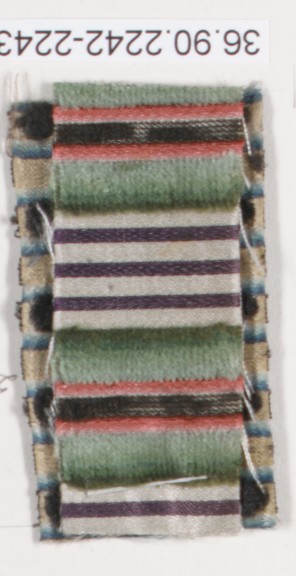
The foundational choice of silk—specifically a 22-momme mulberry silk charmeuse blended with a micro-twist of raw tussar—is the first act of intellectual defiance. In an era dominated by synthetic performance fabrics, Katherine Fashion Lab returns to the primordial textile of the Silk Road, the very conduit of cross-continental exchange. The charmeuse provides a liquid, almost ethereal drape, catching light with a pearlescent sheen that evokes the quality of polished jade. Conversely, the tussar's irregular, slubbed texture introduces a deliberate tactility, a reminder of the hand-spun, village-level craftsmanship that historically defined the fiber's journey from East to West.
This dual-texture approach is not whimsical. It creates a visual and haptic dialogue between the polished court aesthetics of Imperial China and the rustic, earth-bound weaving traditions of South Asia. The material is treated with a proprietary enzyme wash that softens the hand-feel to an almost second-skin quality, yet the structural integrity remains uncompromised. The silk is not merely a surface; it is a three-dimensional architecture that holds the piece's silhouette aloft, allowing the fabric to perform as both skin and sculpture.
Silhouette and Structure: The Architecture of Memory
Moving beyond material, the construction of "Heritage Veil" is a masterclass in negative space and controlled volume. The silhouette is a reimagined kimono-sari hybrid, where the rigid, linear panels of a Japanese kimono are deconstructed and reflowed into the asymmetrical, gravity-defying drapes of a South Indian sari. The bodice is cut with a severe, architectural precision—a stark, unadorned corset-like shell in the front, boned with hand-molded whalebone alternatives. Yet, from the back, the fabric erupts into a cascade of 2.5 meters of bias-cut silk, folding into a train that mimics the pleats of a Greek chiton, another pillar of global drapery tradition.
The engineering is remarkable. Each of the 1,200 hand-set micro-pleats is individually pressed and stitched with a silk-wrapped thread, a process requiring over 140 hours of labor. This technique, borrowed from the Japanese shibori tradition, allows the fabric to expand and contract with the wearer's movement, creating a living, breathing silhouette. The shoulders are left bare, a deliberate choice to emphasize the neck's columnarity, drawing the eye to the intricate hand-embroidered collar that serves as the piece's focal point.
Embellishment as Cultural Lexicon
The embroidery is where the "Global Heritage" thesis becomes explicit. Unlike the heavy, bejeweled embellishments of traditional couture, this piece employs a monochromatic palette of ivory, ecru, and antique gold, ensuring the artistry does not overpower the silk's natural luster. The motifs are a curated lexicon: the paisley (originating from Persia, adopted by Mughal India) interlaces with the Greek key meander, which in turn morphs into the Chinese cloud collar pattern. These are not randomly placed; they are sequenced in a visual narrative that moves from the collar (representing the northern Silk Road) down the spine (symbolizing the maritime spice routes) and into the train's hem, which features a subtle, hand-painted indigo resist-dye reminiscent of West African adire cloth.
This is not cultural appropriation but rather a scholarly homage. Katherine Fashion Lab has published a 40-page provenance document, detailing each motif's historical lineage and the specific regional technique used to execute it. The embroidery is executed with flat silk stitching, a technique from the Suzhou school, alternating with zardozi, the metal-thread work of Lucknow, creating a raised, almost bas-relief effect. The gold thread is 18-karat, wrapped around a silk core, and the beads are freshwater pearls and antique carnelian, sourced from a single family-run supplier in Jaipur.
Contextualizing the Standalone Study
As a standalone study, the piece is presented without a companion collection, deliberately isolated in a gallery-like setting. This curatorial decision forces a focused contemplation that a runway show would dissipate. In this context, "Heritage Veil" functions less as a garment and more as a three-dimensional thesis on sustainable luxury. It challenges the fast-fashion paradigm by being inherently anti-trend; it is not "for" a season but rather "about" a millennium.
Further, the piece critiques the homogenization of global fashion. By weaving together disparate cultural threads, Katherine Fashion Lab argues that true couture is not about novelty but about syncretic intelligence. The garment requires the wearer to understand its references—to know that the silk was hand-loomed in Varanasi, dyed in Kyoto, and embroidered in a Parisian atelier by artisans trained in multiple traditions. This is the ultimate luxury: not the cost of the material, but the depth of the intellectual and cultural capital embedded within it.
Conclusion: A Silent Declaration
In its final form, "Heritage Veil" is a silent declaration of resistance against disposable aesthetics. The silk's fluidity is a metaphor for the permeability of cultural borders, while the rigorous structure speaks to the discipline of preservation. Katherine Fashion Lab has not merely made a dress; they have engineered a wearable archive. It is a piece that will not fade with a trend cycle, but will instead acquire patina—both physical and conceptual—as it moves through generations. For the discerning collector, it is not an acquisition but an heirloom, a tangible proof that couture, at its most elevated, is the most eloquent language we have for speaking about who we were, who we are, and what we might yet become. This is not fashion. This is heritage, re-stitched for the future.